Some links in this article are affiliate links. The Court Scout may earn a commission if you buy through them. This doesn't affect our recommendations — we never accept payment to feature a product, and our rankings are based on independent research.
Why padel balls aren't just slow tennis balls
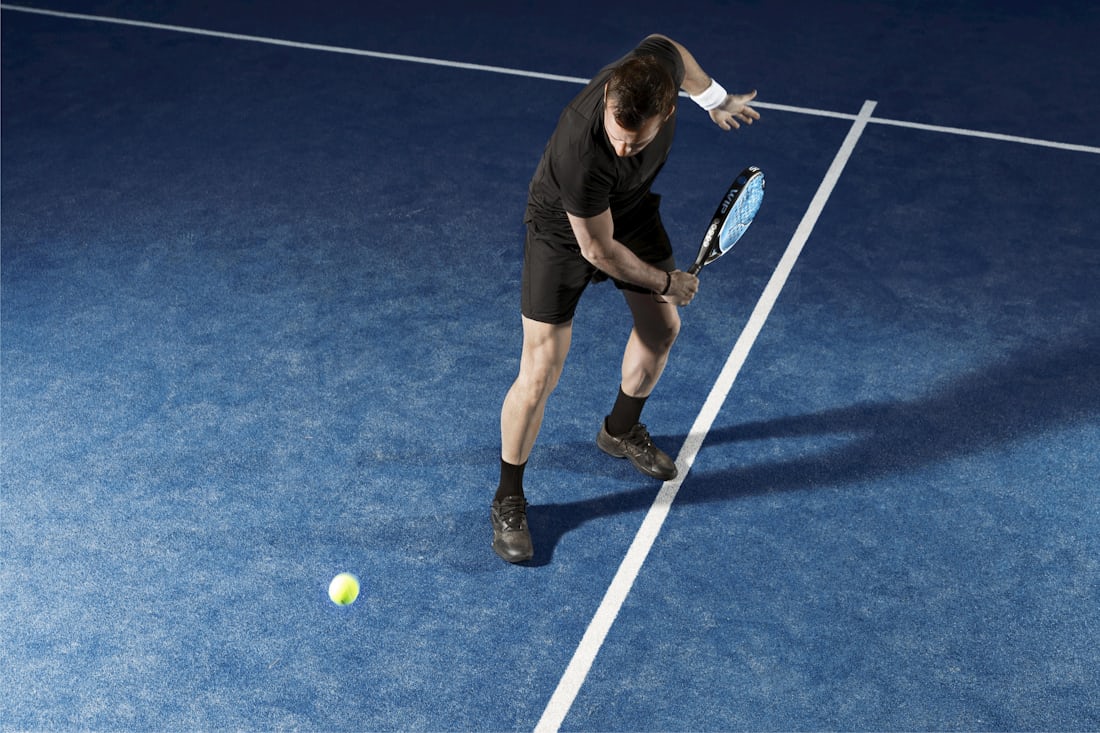
Padel balls look like tennis balls. They are not tennis balls, and using one for the other is a genuinely bad idea — a tennis ball is too pressurised and too lively for a padel court, and a padel ball is too soft to play meaningful tennis with. The International Padel Federation (FIP) regulates padel balls to a tighter window than tennis: a diameter of 6.35–6.77 cm, a weight of 56.0–59.4 g, and an internal pressure of roughly 10.1–11.4 PSI (the FIP rule book expresses it as 4.6–5.2 kg per 2.54 cm², which converts to that PSI range). For comparison, a tennis ball runs ~14 PSI. That ~3 PSI gap is exactly why the padel ball sits slower in the air, bounces lower off the back wall, and gives you the long, glassy rallies that make the sport feel like padel.
That pressure also explains the one trap every new padel player walks into: the ball starts depressurising the moment you pop the can. Even sitting in your bag unused, an opened can of padel balls loses bounce within a couple of weeks. After 1–3 matches of competitive play they no longer "pop" off the racket the way they should — the felt may still look fine, but the internal pressure is gone. League players go through a lot more balls than tennis players for this reason alone.
For competition, only FIP-certified balls can be used in official FIP tournaments and FIP-recognised events (Premier Padel, CUPRA FIP Tour, FIP Promises, national federation play). For league nights and club ladder matches, your club typically specifies one of the major brands below. For casual matches, any FIP-approved ball is overkill in a good way — quality is consistent, bounce is true, and the per-ball cost difference between tournament-grade and budget is small enough that "buy the good one" almost always wins.
Every pick below is FIP-approved unless flagged otherwise. We've split them into tournament balls (what you bring to a sanctioned match) and training/everyday balls (high-volume, drill-friendly, slightly cheaper per ball).
Tournament-grade FIP-approved balls
HEAD Padel Pro S — the Premier Padel benchmark
The HEAD Padel Pro line is the official ball of the Premier Padel tour — the top-tier global circuit where the world's best players compete every weekend. The Pro S is the variant designed for slightly slower play (longer rallies, more spin tolerance) and is the version most non-professional FIP-approved tournaments and serious leagues default to. The "S" stands for slow; HEAD also makes a Pro (faster, for high-altitude or hot conditions). For 95% of US and EU club play, the Pro S is the one to buy. Felt durability is at the top of the category, the bounce stays true longer than most rivals, and you get the legitimacy of using the same ball brand the pros use on TV.
Pros
- Official ball of Premier Padel — the most recognisable name in tournament padel
- FIP-certified for sanctioned international and federation play
- Excellent felt durability vs. cheaper tournament balls; consistent bounce over 2–3 matches
Cons
- More expensive per can than mid-tier alternatives (~30–40% premium over Dunlop Pro)
- The "S" (slow) variant can feel sluggish if you've come from a faster ball or play at altitude; consider HEAD Padel Pro (no S) for those conditions
Who it's for: Tournament players, league players whose club specifies HEAD, anyone who wants the most recognisable ball in the sport.
Price (Amazon): Check current price on Amazon
Wilson Padel X3 — the second Premier Padel ball
Wilson partnered with Premier Padel and the FIP starting in 2024 to co-develop Wilson Premier Padel balls; the Wilson Padel X3 is Wilson's commercial line that shares the same Dura-Weave felt construction. FIP-approved, used at the highest level of professional padel, and noticeably brighter (Wilson's HiVis yellow coating tracks better against glass walls and busy backdrops than the slightly duller HEAD finish). For players who already trust Wilson from tennis, this is the seamless crossover ball.
Pros
- FIP-approved, shares R&D with the Wilson Premier Padel tournament balls
- HiVis felt coating — easier ball tracking against glass walls and varied lighting
- Wide US availability via Wilson's existing tennis distribution channels
Cons
- Slightly lighter feel than HEAD or Babolat — some players find it less "thuddy" off the racket
- Pressure loss after the can is opened is on the faster side of the category; play them fresher
Who it's for: League players who already use Wilson tennis gear, players who prioritise visibility, anyone whose club ships in Wilson products.
Price (Amazon): Check current price on Amazon
Babolat Court Padel — the A1 Padel tour ball
The Babolat Court is the official ball of A1 Padel (the second-largest global pro tour, formerly the APT Padel Tour). FIP-approved, durable felt, and a livelier bounce than the HEAD Pro S — Babolat tunes the Court for a quicker, more aggressive game, which suits hard hitters and players who like to drive the ball flat off the back wall. The same compound and felt construction that Babolat uses in its premium tennis balls, adapted for padel pressure.
Pros
- Official ball of A1 Padel — FIP-approved for international tournament play
- Slightly livelier than the HEAD Pro S — rewards aggressive baseline-style padel
- Babolat's quality control is excellent; ball-to-ball consistency is among the best in the category
Cons
- The livelier bounce can be hard to control on faster (concrete-base, low-humidity) courts — choose the slower HEAD Pro S if your home club plays fast
- US availability is improving but still patchier than HEAD or Wilson
Who it's for: Aggressive players, anyone whose league or club uses Babolat, players coming from a heavier-hitting tennis background.
Price (Amazon): Check current price on Amazon
Dunlop Pro Padel — the federation-approved value pick
Dunlop's Pro Padel is approved by both the FIP and the Spanish Padel Federation (FEP) — which matters because Spain is the largest padel market on earth, and FEP-approved balls have to satisfy the most demanding national federation in the sport. The Pro Padel is engineered for a faster flight and higher rebound than Dunlop's classic line, putting it firmly in tournament-grade territory while typically pricing 20–30% below the HEAD Pro S in 3-can packs. The shaved sliver of brand prestige you give up gets you noticeably better dollar-per-can economics, and the playing quality is genuinely comparable.
Pros
- FIP + FEP approved — legitimately legal for sanctioned play in Spain and at FIP events
- Best price-to-quality ratio of the tournament-grade balls
- Tournaments, leagues, and training all stated as approved use cases by Dunlop
Cons
- Brand recognition in the US is lower — opponents may not recognise the ball; expect "what's that?" at the club
- Felt wears slightly faster than the HEAD Pro S over very long matches
Who it's for: Budget-conscious league players, club-buyers stocking communal balls for drop-in nights, anyone who wants FIP approval without the Premier-Padel premium.
Price (Amazon): Check current price on Amazon
Training and everyday balls
Bullpadel Premium Pro — the Madrid Federation pick
Bullpadel is one of the most recognisable padel-specific brands in the sport (most players know them for rackets), and the Premium Pro is the official ball of the Madrid Padel Federation. It's a serious tournament-grade ball pretending to be a training pick because it's typically sold in case quantities at strong per-can pricing — making it the favoured choice for clubs that need to stock dozens of cans at a time. High-density rubber core engineered to delay pressure loss; synthetic felt blend designed for maximum speed without sacrificing durability over the course of a long session.
Pros
- Official ball of the Madrid Padel Federation — federation-grade pedigree
- High-density rubber core extends usable life vs. cheaper "training" balls
- Strong dozen/case pricing — popular with clubs and drill-pack buyers
Cons
- Amazon US stock is inconsistent — currently shown as available but goes in and out; have a backup pick
- The fast/lively profile is less forgiving for beginners than the HEAD Pro S
Who it's for: Drill-heavy players, club managers stocking communal cans, intermediate-to-advanced players who want speed.
Price (Amazon): Check current price on Amazon
adidas Padel Speed Rx (case of 72) — the bulk training answer
For anyone running serious drill sessions, coaching, or a club that burns through balls weekly, the adidas Padel Speed Rx case of 72 (24 cans × 3 balls) is the cleanest bulk option on Amazon US. The Speed Rx is FIP-approved at 58 g and 6.75 cm — squarely in the regulation window — with a 50% wool felt blend that wears slower than cheaper training-only balls. Designed for speed, which makes it a good "fast practice" ball for intermediate-to-advanced players. Beginners should pair it with a slower ball (the HEAD Pro S above) for a balanced practice diet.
Pros
- FIP-approved (legal for sanctioned play despite being marketed as a training/all-court ball)
- 72-ball case unit pricing is the lowest per-ball cost in this guide
- Wool-felt blend extends usable life vs. all-synthetic training balls
Cons
- The "Speed" profile is fast and lively — best for advanced/intermediate; beginners may struggle for control
- Only sold by the case on Amazon US; awkward if you only want 3 balls
Who it's for: Coaches, club managers, players who train 3+ times a week, anyone running padel drill nights.
Price (Amazon): Check current price on Amazon
FIP approval — what it actually means
A padel ball with the FIP Approved badge has been laboratory-tested and certified by the International Padel Federation against the technical regulations in the official Rules of Padel (2026 revision). The published thresholds:
- Diameter: 6.35–6.77 cm
- Weight: 56.0–59.4 g
- Internal pressure: 4.6–5.2 kg per 2.54 cm² (≈ 10.1–11.4 PSI)
- Bounce: 135–145 cm when dropped from 2.54 m onto a hard surface
Only FIP-certified balls may be used in FIP-sanctioned tournaments — that includes Premier Padel, the CUPRA FIP Tour, FIP Promises events, and all FIP World/Continental Championships. Most national federations (FEP in Spain, the Federazione Italiana Padel, US Padel Association, etc.) defer to or shadow the FIP list for their own sanctioned events.
For recreational and league play it doesn't strictly matter — your Tuesday-night drop-in won't ask to see your ball's certificate. But it's a real signal of quality: certified balls have been through the same dimensional and bounce tests the pros' balls passed, and the brands that bother with certification are the same ones investing in serious felt and rubber R&D. The non-certified discount balls you'll find on Amazon for $4 a can are rarely worth the savings.
Lifespan and when to replace
Honestly: shorter than you'd hope, and shorter than tennis balls.
The dominant failure mode is pressure loss, not felt wear. Even an unopened can starts losing pressure slowly through the seal; once opened, the rubber wall lets pressure escape continuously, accelerated by every hit on the wall and racket. A new padel ball compressed in your hand should feel firm and bouncy back — a "soft squeeze" ball has already lost the pressure that makes it play right.
Realistic replacement cadence:
- Tournament/competitive league play: Open a fresh can per match; rotate in a second can if the rally pace is high. Top pros may use 3 cans across a 3-set match. Expect ~1–3 matches per can before bounce noticeably drops.
- Recreational rec/drop-in play: A can of 3 lasts ~3–5 sessions of casual play before they feel dead. The felt usually still looks decent at that point — it's pressure that's gone.
- Drill / coaching / wall-hit practice: Balls die fastest here — constant high-impact contact accelerates pressure loss. A drill-only ball may last 2–3 sessions before you want to retire it from competition-style use (it can keep being a "wall-hit ball" forever; it just won't have tournament bounce).
Signs to retire a ball:
- The squeeze test — it gives too easily under thumb-and-finger compression.
- The bounce test — drop from shoulder height onto a hard floor; if it comes back below knee height, it's dead.
- The pop test — a healthy padel ball "pops" audibly off the racket strings; a dead one thuds.
- Visible felt damage (peeling, bald spots, splits in the rubber) — rarer than pressure death, but a hard retire.
Pressurisers (HEAD's Pressurizers, the TuboX3 Crystal, Ball Rescuer, Bounce Tube) seal balls in a high-pressure chamber between sessions and can extend usable life by ~30% according to manufacturer claims. They cost $30–80 and are genuinely worth it for anyone playing 2+ times a week — the math on extended ball life pays them back inside a couple of months.
How we picked
We didn't run a lab certification — that's literally what the FIP exists to do. What we did was cross-reference the FIP-approved balls list with independent reviews and the lived experience of competitive padel players. Specifically:
- FIP official documents — the published rules (
Rules of Padel, 2026 revision) define the regulation specs every ball must meet, and the FIP publishes the certified balls list directly. - Premier Padel and A1 Padel — the two main pro tours each have an official ball partner (HEAD for Premier Padel, Babolat for A1). Those balls have survived the most demanding play environment on earth, week in, week out.
- Padel World Press, Padel Rules, Padel Addict — independent padel publications covering tournament results, ball reviews, and federation news; we leaned on their coverage of brand-tour partnerships and ball comparisons.
- Manufacturer specification pages — HEAD, Wilson, Babolat, Dunlop, Bullpadel, and adidas each publish weight/diameter/pressure specs for their padel lines, which we cross-checked against the FIP regulations.
No brand paid for placement. We have no relationship with HEAD, Wilson, Babolat, Dunlop, Bullpadel, or adidas. The Amazon links earn us a small commission if you buy, but the picks are the picks regardless — see the disclosure at the top.
Sources
- International Padel Federation — Rules of Padel (2026 revision): https://www.padelfip.com/wp-content/uploads/2025/12/FIP_Rules-of-Padel.pdf
- FIP — Approved Padel Balls list: https://www.padelfip.com/documents/
- FIP — Game Ball Certification Process: https://www.padelfip.com/wp-content/uploads/2024/04/Game-Ball-Certification-Process.pdf
- Wilson — Introducing the New Wilson Premier Padel Balls: https://www.wilson.com/en-us/blog/padel/wilson-labs/introducing-new-wilson-premier-padel-balls
- Padel Addict — Premier Padel selects Wilson as the official ball supplier of the tour: https://www.padeladdict.com/en/premier-padel-selects-wilson-as-the-official-ball-supplier-of-the-tour/
- Bullpadel — FIP's Official Ball: https://www.bullpadel.com/gb/blog/bullpadel-fip-s-official-ball-n229
- Dunlop Sports — Pro Padel Balls (product page): https://us.dunlopsports.com/dunlop/padel/balls/pro-padel-balls/T060704.html
- Babolat — Padel Balls (product line): https://www.babolat.com/us/padel/balls.html
- Padel Rules — Padel Balls Guide 2026: https://padel-rules.com/padel-equipment/padel-balls-guide/
- Padel World Press — covering pro tour balls and federation news: https://padelworldpress.com/
Need a court to break those new balls in? Find padel clubs near you on The Court Scout — every venue verified against a primary source, with real Google ratings and honest cost-and-hours info.