Some links in this article are affiliate links. The Court Scout may earn a commission if you buy through them. This doesn't affect our recommendations — we never accept payment to feature a product, and our rankings are based on independent research.
Pickleball is the friendliest racquet sport in America. There are still unwritten rules.
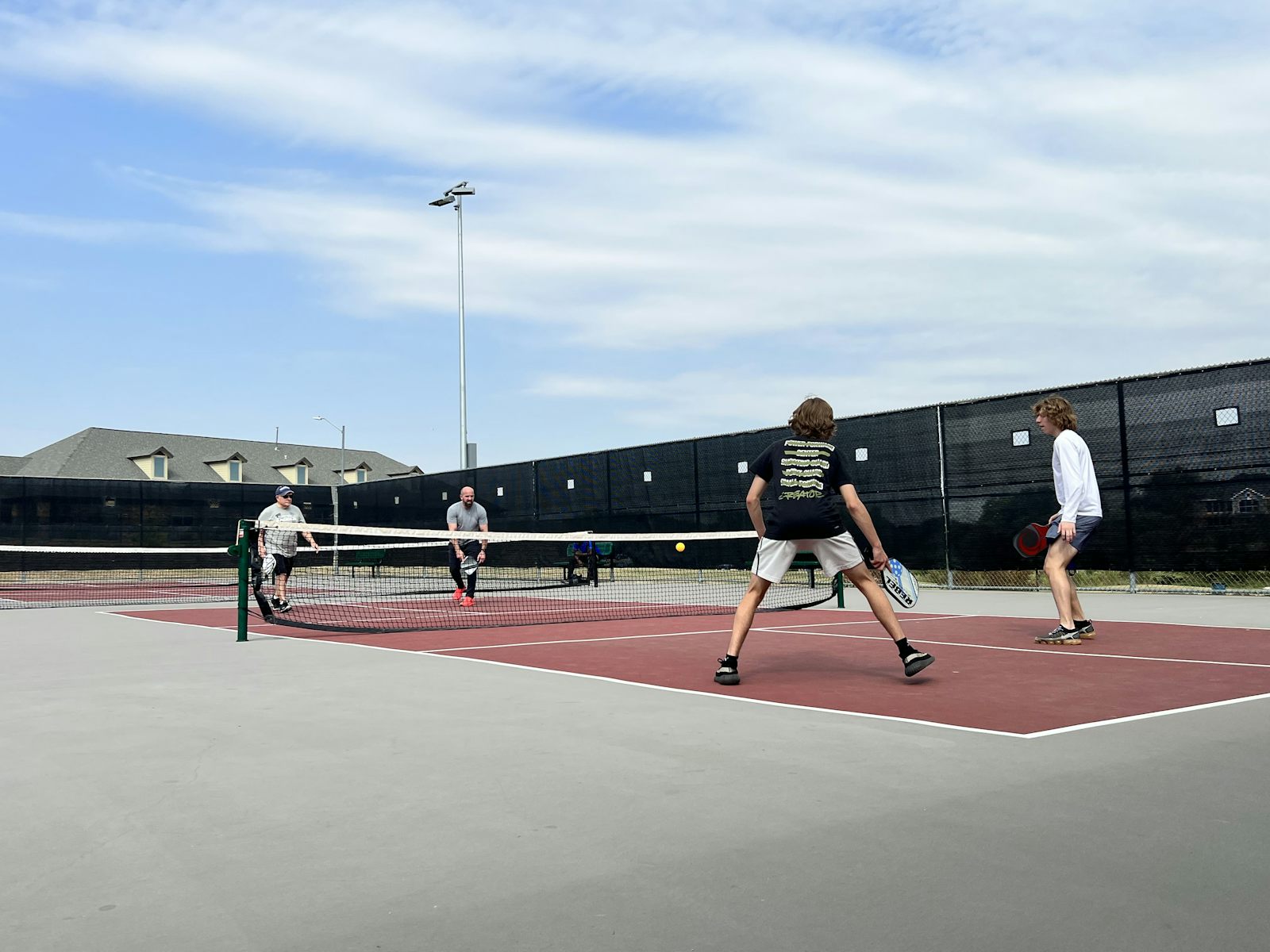
Walk onto any open-play court in the country and someone will say hello before you even unzip your bag. That's the sport. It's how pickleball grew from a backyard family game on Bainbridge Island into 19 million American players: by being welcoming. Beginners get invited into games. Strangers become regulars in two visits. Nobody cares what paddle you brought.
And yet every court runs on a set of unwritten rules that nobody writes down on a sign at the gate. They're the difference between "that new player was great, let's invite them back" and the long awkward silence when you do the wrong thing without realizing it. Most of these rules exist because pickleball is played in tight spaces with four people, and the courtesy is what keeps the whole thing from devolving into chaos. A few exist because USA Pickleball formalized them in the official Code of Ethics. All of them are easy to learn in one read.
This guide covers the 10 things every beginner should know before their first open-play session, the unwritten community norms about skill level and inviting new players in, what the dress code actually looks like (spoiler: there isn't one for most courts), and one piece of gear that helps with the most universally awkward part of every game: the post-match handshake when your hands are dripping with sweat.
The 10 etiquette rules
1. Call the score loudly and clearly before every serve
Before you serve, announce three numbers in this order: your team's score, the opponents' score, and the server number (1 or 2). So if your side has 4 points, the other team has 2, and you're the second server on your side, you call: "Four, two, two."
Why it matters: pickleball scoring is genuinely confusing for the first 10 games (server-number tracking, side-out rules, the "2 only at 0-0" exception), and announcing the score is how everyone on court — including you — keeps the rally legitimate. If you serve without calling the score, the receiver can legally stop play and ask for it. If you mumble it under your breath, expect to be asked to repeat. Call it like you mean it: loud enough that the people on the next court could hear you if they wanted to.
This is also a fairness gate. Mis-called scores get noticed and fixed before the serve goes in; mis-served scores after a silent serve become arguments three points later. Loud and clear avoids all of that.
2. Stack your paddle at the gate and wait your turn
At open-play sessions where there are more players than courts, the convention is to lean your paddle against the fence or rack at the gate and wait your turn for the next open court. New paddle goes at the back of the line; the front of the line gets the next available court.
There are local variations on how rotation works once you're playing. Two common formats:
- Win-and-stay: the winning team stays on, the losing team comes off, the next two paddles in the queue come on as a new team. The staying team gets to keep playing — but they're playing whoever comes next, not their old partners.
- Everyone off: after every game, both teams come off and the next four paddles take the court. Less reward for winning but faster rotation.
Ask before you assume. The first time you arrive at a new venue, find someone running the session (or a friendly regular) and ask: "What's the rotation here?" Most clubs post the rules on a small board near the gate, but the word-of-mouth answer is usually faster.
What you don't do: walk onto an open court ahead of the paddle queue. Even if a court just freed up and your paddle is the third one back, wait for the first two paddles to claim it. Cutting the line in a paddle-stack system is the closest thing pickleball has to a cardinal sin.
3. Don't walk behind a live court
If a court is in the middle of a rally, do not walk behind the baseline, even if it's the fastest route to the bathroom or the water fountain. Walking behind a live court breaks the players' line of sight on the ball — the back player's eyes are tracking the ball over the net, your body crosses their field of view, and the next shot becomes a missed read.
Wait at the side or the back of the court until the rally ends (it usually takes 5-15 seconds), then walk across between points. If you have to cross multiple courts to get somewhere, plan the path between rallies, not through them.
This applies even at outdoor parks where there's no formal walkway. If you have to choose between cutting across an active baseline and walking 40 extra feet around the fence, walk the 40 feet. Every time.
4. Retrieve loose balls promptly and return them on one bounce
When a ball from another court rolls onto your court mid-rally, the polite thing is to stop play (call "ball on" loudly so everyone freezes), let them retrieve it, then replay the point or start fresh with whichever team called it. A ball on your court is a safety hazard — stepping on a pickleball mid-stride is one of the fastest ways to a rolled ankle in the sport.
When your ball rolls onto someone else's court, retrieve it as soon as their rally ends — don't wait for them to throw it back across three courts. And when you're returning a ball that landed on another court, bounce it back one time so the receiver can catch it cleanly. Throwing a ball directly to someone's face level when they're not expecting it is how someone takes a pickleball to the eye.
A loose ball that nobody's claiming gets a friendly shout: "Whose ball?" If nobody answers in five seconds, set it aside on the fence. Someone will come for it.
5. Make line calls honestly — close calls go to your opponent
USA Pickleball's official Code of Ethics is explicit about this one: the team on the side where the ball lands makes the call, and any ball you can't clearly see as out should be called in. This is not gamesmanship — it is the rule.
In practice, this means:
- If the ball was definitely out, call "out" right away (and ideally point to where it landed for the other team).
- If you didn't see it clearly, or you saw it but you genuinely can't tell — call it in. The benefit of the doubt always goes to your opponent.
- Don't call your own side's balls in or out unless asked. The opposing team calls their own line; you don't get to overrule them by saying "no, that was in."
- Don't appeal close calls more than once. If you disagree with their call, you can ask "are you sure?" — politely, once — and then accept whatever they say.
The whole social contract of recreational pickleball depends on this working. Hooking calls is the single fastest way to get a reputation that follows you across every open-play session in your zip code. Just call them honestly.
6. Don't coach unsolicited — ask first
You will play with beginners who are making fixable mistakes. You will see exactly what's wrong. You will be tempted to say something. Don't, unless they ask.
The right move when you sense a beginner would welcome a tip: ask permission first. "Hey, do you want a quick tip on the dink stance? It really helped me." If they say yes, give one specific, actionable thing — not a 10-minute lecture. If they say no thanks, drop it instantly and don't bring it up again.
Coaching is one of the most well-intentioned ways to make a new player feel bad. They're already nervous about being the worst player on the court; the last thing they need is unsolicited corrections from three different partners over the course of one rotation. The exception: if they specifically ask "what am I doing wrong?", you have permission to be honest.
This rule also applies to your own partner mid-game. Don't coach your partner between points unless they've explicitly invited it. Most partners want encouragement ("nice shot," "we'll get the next one"), not technical critique mid-game.
7. Apologize for body shots and ATPs — even legitimate winners
Two situations call for an automatic "sorry":
- You hit your opponent with the ball (a body shot, intentional or not). Even if it was the right shot — a body bag at the kitchen is sometimes the only legal angle — you raise your paddle and say "sorry" or tap your paddle on your chest. The opponent will almost always wave it off and say "good shot," but the apology is non-negotiable.
- You hit an ATP (Around The Post — a ball that travels around the outside of the net post and lands in your opponent's court). It's a legitimate, fully legal winner. It's also one of the most "ugh, really?" shots in the sport because it bypasses your opponent's positioning entirely. Apologize for it. Then enjoy the point.
You also apologize for net cords (when the ball clips the top of the net and dribbles over for a winner) and for any shot that pulls a lucky bounce off a sideline that you didn't really earn. The phrase is "sorry, lucky shot" or just a raised paddle. It costs nothing and it's the universal language for "I know that wasn't fair to you, and I'm not gloating."
8. Wait for the rally to end before walking on or off court
This is the same logic as rule #3, but specific to the rotation moment. Don't walk onto a court while the previous rally is still in progress, and don't walk off mid-rally either. Wait at the gate until the point ends, then exchange places between points.
The exception is medical — if someone twists an ankle or feels chest tightness, you stop play immediately and go help. But for a normal between-game changeover, time it to the natural breaks.
If you're entering a court for the next game, walk in with your paddle visible, say hello to everyone on the way to your side, and introduce yourself if you don't already know everyone. "Hey, I'm Alex" takes two seconds and dramatically improves the social temperature of the next 11 points.
9. Greet partners and opponents before the game; paddle-tap after
Before the game starts, greet everyone — partner and both opponents. A handshake or paddle-tap, a name exchange, a "good luck." This sets the tone that you're here to play, not to compete to the death over a recreational game in a public park.
After the game ends, the universal sign-off is the paddle-tap at the kitchen line: all four players walk to the net, tap paddles in the middle, say "good game." A real handshake is still common too, especially among older players or in tournament play. A high-five is fine if everyone's into it.
What's changed post-pandemic and ongoing: a lot of players prefer paddle-taps to handshakes, period. Some have immunocompromised family at home. Some just don't want to share sweat with three strangers every game. Read the room. If your opponent extends a fist, fist-bump them; if they hold out a paddle, tap it; if they offer a hand, shake it. Don't insist on the version of the greeting that you prefer — meet them where they are.
If you genuinely can't tell which the other player wants, the paddle-tap is the safe universal default in 2026.
10. In tournaments, don't argue calls aggressively
Tournament play is more formal, but the etiquette is largely the same as rec play with two important upgrades:
- Don't argue line calls aggressively. If you disagree with a call, ask once, politely: "Are you sure on that one?" If they confirm, accept it and move on. If you legitimately believe the call was wrong and it's a critical moment, you can request a referee (in officiated matches) or a line judge (in higher-level tournaments). Don't yell. Don't slam your paddle. Don't shake your head and mutter for the next three points.
- Call faults on yourself. If you serve a foot fault and the referee misses it, you call it on yourself. If your paddle touches the net on a put-away and only you noticed, you call it on yourself. This is in the USAPA Code of Ethics. Players who self-correct earn enormous respect over a tournament weekend; players who hope to get away with infractions earn a reputation in the opposite direction.
Tournaments also surface a less obvious one: don't celebrate aggressively on errors. Fist-pumping a winner is fine; fist-pumping when the other team double-faults or hits an unforced error into the net is bad form. Celebrate your own play; respect theirs.
The unwritten community norms
A few things that don't make the formal etiquette list but absolutely affect how you're received at any new court.
Communicating your skill level honestly
In rotation play and especially in skill-segregated open play (2.5 court, 3.0 court, 3.5+ court), be honest about your DUPR or self-rated level. The temptation to sandbag — to say "I'm a 3.0" when you're really a 3.5 because you want easier games — is real, and other players see through it within two rallies. They will not tell you to your face. They will tell the organizer, and you will not be invited back to that level's session.
The flip side is also bad: don't claim a 4.0 when you're a 3.0 because you want to play with better players. You will be the bottleneck on the court, the higher-level players will be visibly frustrated, and the social experience is bad for everyone.
The honest answer is almost always best: "I'm probably a low 3.0, but I'd love to try playing up if there's room." Most groups will accommodate that gracefully. If you're truly unsure, say so — "I'm new to the sport, I don't have a rating yet, I think I'm somewhere in the 2.5-3.0 range" — and let the group sort you in.
Inviting newer players in respectfully
If you've been playing for two years and you see a beginner standing awkwardly at the gate with a brand-new paddle and a Starbucks cup, invite them in. "Hey, we've got a court — want to join?" is how the entire community grew. Don't make them ask.
The corollary: when you're hosting a beginner in your foursome, adjust your game. Don't drive third shots at them. Don't hit the body bag you'd take on any other rally. Play a few dinks, hit some catchable returns, give them a chance to find the rhythm. You're not throwing the game — you're playing the version of the game that will keep them coming back.
The whole sport benefits from this and it costs you nothing. You can play hard in the next rotation.
Dress code reality
This is one of the most over-asked beginner questions and the honest answer is: for almost every court in America, there is no dress code. Pickleball is come-as-you-are.
- Public courts and most rec facilities: athletic clothes of any kind. Shorts, leggings, t-shirts, tank tops. Court shoes recommended (not strictly required, but running shoes will give you blisters and increase ankle injury risk).
- Most private clubs and dedicated pickleball venues: same — athletic wear, no collared-shirt requirement, no specific colors. Tennis whites are not a pickleball thing. If you show up in tennis whites, you'll be welcome, but nobody else will be wearing them.
- A small number of country-club-affiliated pickleball facilities: may have a collared-shirt requirement carried over from the club's tennis or golf dress code. Always rare; always posted on the club's website if it exists. If you're playing as a guest, the member who invited you will tell you.
Don't overthink this one. Comfortable athletic clothes, supportive court shoes (or cross-training / tennis shoes), and a hat or sunglasses if you're outdoors. That's it.
The one piece of gear that fixes the most awkward etiquette moment
The most universally awkward moment in pickleball is the post-game paddle-tap or handshake when your hands are dripping with sweat. Indoor courts in summer, outdoor courts in any humid climate, two hours of play in — your grip is soaked, your paddle handle is slick, and the handshake with three strangers is genuinely unpleasant for everyone.
The fix is an absorbent overgrip on your paddle that keeps the sweat in the grip and off your palm. The gold standard for this in racquet sports for 40+ years is the Tourna Grip XL Original. Unlike tacky overgrips (which feel grippy when dry but get slipperier when your hand sweats), Tourna Grip is a dry-feel grip that actually absorbs moisture and gets more grippy as your hand gets wetter. It's the most-used overgrip on the ATP and WTA tours for exactly this reason, and it works identically well on pickleball paddles. A 3-pack runs about $9 and each grip lasts most players 3-6 months.
Tourna Grip XL Original Dry Feel (3-pack) — fits longer pickleball handles cleanly, comes with finishing tape. Wrap from the butt end up to the throat with about 50% overlap.
If you want the full grip walkthrough (how to find continental, what pressure to use, when an overgrip helps vs. swapping the whole handle), our how to grip a pickleball paddle guide covers it in depth.
What good etiquette actually buys you
Pickleball etiquette is not about being uptight. It's about being the kind of player other people want to play with — the partner that doesn't bark at you when you miss, the opponent who calls their own faults, the regular who waves the new player in instead of pretending not to see them. Every one of the 10 rules above exists because someone, somewhere, learned the hard way that the alternative makes the game worse for everyone.
The good news: you don't need to memorize a checklist. After three or four sessions, all of this becomes automatic. Call the score loud, stack your paddle, walk around live courts, return loose balls, call your lines honest, hold your tongue on the coaching, apologize for the lucky ones, time your transitions, greet everyone before and after — and read the room on the handshake-vs-paddle-tap question.
Do those nine things and you will be invited back to every court you visit.
Keep building the game
If you've got the etiquette covered and you want to work on the actual gameplay next, our pickleball strategy basics for beginners walks through the third-shot drop, court positioning, when to drive vs. dink, and how to win at the kitchen line. And if you're still piecing together your kit, our pickleball beginner gear guide covers everything you actually need (and what you can skip).
When you're ready to find a court, The Court Scout maintains a verified directory of pickleball courts across the US — search by zip code or city to find indoor and outdoor courts near you with hours, surface type, and drop-in info.
Sources
This guide draws on USA Pickleball's official Code of Ethics, the published etiquette guidance in Pickleball Magazine, instructional content from established pickleball coaches who teach the social-conventions side of the game on YouTube, and our own observations across hundreds of open-play sessions at the verified courts in our directory. We have not invented player surveys or testing claims — every rule above is a real, citable convention from the sources listed below.