Some links in this article are affiliate links. The Court Scout may earn a commission if you buy through them. This doesn't affect our recommendations — we never accept payment to feature a product, and our rankings are based on independent research.
Your paddle is probably more dead than you think
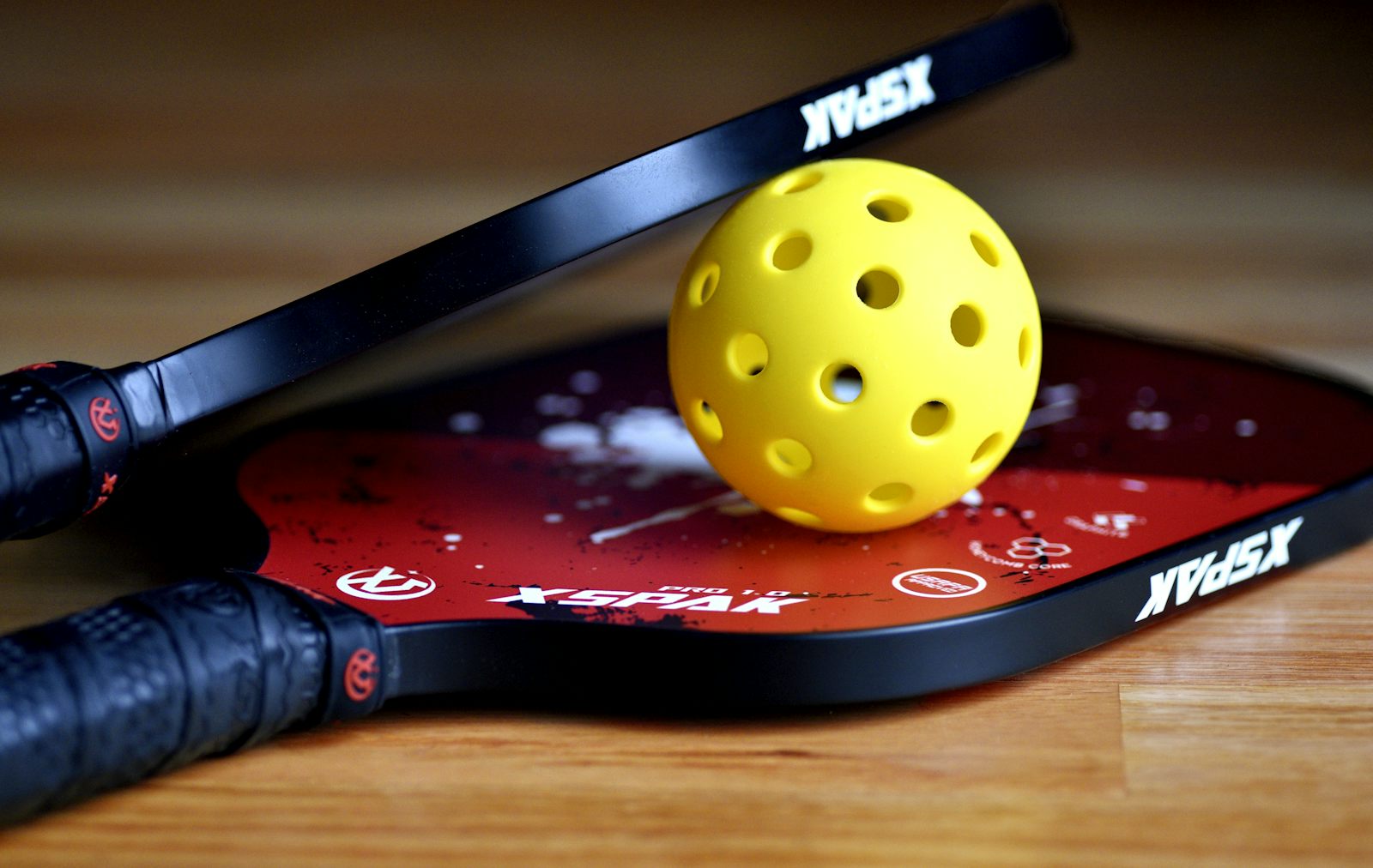
Almost every rec player keeps their paddle longer than they should. The handle still feels familiar, the face still looks fine, and the paddle didn't break — so why replace it? The answer is that pickleball paddles, like running shoes and tennis racquets, are consumable performance equipment. The materials that make a modern paddle work — polypropylene honeycomb cores, thin carbon-fiber or fiberglass face sheets, the adhesives bonding them together — degrade with every hit. The degradation is silent and gradual until, one day, you realize you've been losing rallies you used to win and wondering what happened to your game.
Touring pros know this. Many of them swap paddles roughly every month of competitive play, and most tour pros are on at least a fresh paddle per major event. Recreational players, on the other hand, will routinely play 18-24 months on the same paddle because nothing is obviously broken — meanwhile the paddle has been dead for the back half of that time and they're blaming themselves for the lost pop.
This guide walks the six clear signs your paddle is finished, what realistic lifespans look like by play frequency, why the premium thermoformed paddles you spent the most on actually wear out faster than the older traditional designs, and what to do with your old paddle when you upgrade (please, please don't throw it in the trash).
The 6 signs your paddle is dead
1. Dead spots on the face
A dead spot is an area of the paddle face — usually somewhere near the center or just above it — that no longer pops the ball off the way the rest of the face does. Shots that land on a dead spot come back short, with less zip and less spin, even though your swing felt identical.
The quickest test is the tap test: hold the paddle by the handle, let it dangle, and tap the face with your knuckle (or another paddle's edge) in a grid pattern. A healthy paddle gives a consistent, lively "ping" everywhere on the face. A dead spot sounds dull and flat — more "thud" than "ping." If you find one or more clearly different-sounding areas, the paddle's structural integrity has localized failure. It's not coming back.
2. The sweet spot has shrunk
Distinct from dead spots, this one is harder to notice because it happens gradually. A new paddle's sweet spot — the area where you get full pop and full control — covers a wide central zone. As the core wears, that zone shrinks toward the geometric center, and shots even slightly off-center start feeling mushy. If you've noticed that you need to make cleaner contact than you used to just to get the same depth on a drive or the same touch on a reset, that's the sweet spot collapsing inward. It's the most common reason rec players quietly lose 1.0 DUPR points over a season without changing anything else.
3. Inconsistent ball response
A healthy paddle is predictable. The same swing gives the same shot. As a paddle degrades, the response becomes inconsistent — sometimes a drive flies long, sometimes it dribbles into the net; sometimes a reset floats up gently, sometimes it pops off the face like a power shot you didn't ask for. This is especially insidious because it feels like you are inconsistent, not the paddle. If you've recently picked up a friend's similar-spec new paddle and immediately felt more in control, the variable was the paddle, not the user.
4. Visible face delamination
Delamination is the structural failure where the face sheet separates from the core underneath. You can sometimes see it: bubbling, peeling, or unevenness on the paddle face when you look at it edge-on under a light. Press lightly on the face with your thumb — if any area feels soft, spongy, or gives more than the rest of the face, that's delamination starting.
Delamination is more than a cosmetic issue. A delaminated face produces a "trampoline effect" where the loose layer flexes on contact, then snaps back, launching the ball with extra power. That extra power is exciting for about three games until you realize you can't control your shots anymore — and importantly, a delaminated paddle often exceeds the USA Pickleball rebound limits and becomes illegal for sanctioned tournament play. If you play in any sanctioned league or tournament, a delaminated paddle isn't just dead — it's a rules violation.
5. Loud crack or change in sound
Most paddles sound a particular way when struck — a sharp pop with a hint of woody timbre, depending on the construction. If your paddle suddenly starts sounding different — a louder, hollower crack on contact, or a buzzy rattle, or a kind of metallic ping that wasn't there before — that's a sound signature of internal damage. The change usually traces to either delamination (face separating, causing the loose-flap snap) or a hairline crack in the face that you can't see but the acoustics expose. Either way, the structural integrity is gone.
Many players first notice this when their playing partners or opponents comment on it ("your paddle sounds different lately"). Trust the comment. The human ear is remarkably good at picking up frequency shifts, and other people hearing it before you means it's real.
6. Edge guard separating or core delamination at the edge
Look at the paddle edge — the rubbery or plastic strip wrapping the perimeter. If you see the edge guard lifting away from the face, peeling, or with visible gaps, the underlying core has shifted or compressed and is no longer sitting tight against the guard. The same goes for any visible separation at the corner where the face meets the edge. This is often the first visual sign that the core has been crushed (more on core crushing below) and the paddle's structural envelope has started to fail.
You can sometimes re-glue a lifting edge guard with a small amount of CA glue (super glue) as a stopgap, but if the edge guard is lifting because the core has shifted, the glue fixes the cosmetic issue while the underlying problem keeps progressing. Treat a lifting edge guard as a "start shopping for a replacement" signal, not a repair project.
Realistic lifespan by play frequency
These are honest ranges, not marketing-friendly numbers. Some paddles last longer; some die faster. Quality, climate, how you store it (a 130-degree car trunk in Phoenix kills a paddle in months), and the specific paddle's construction (thermoformed vs. traditional — more on this below) all shift the timeline. But for a typical mid-tier paddle in normal conditions:
- Once a week (~50 sessions/year): 2-3 years. The classic recreational profile — Saturday morning open play, maybe a weekday evening if the weather's nice. Paddles last a long time at this volume because the cumulative impact count is relatively low.
- Three times a week (~150 sessions/year): 12-18 months. League players, weekend tournament players, retirees with regular court time. This is where most engaged recreational players land, and 12-18 months is also the most common interval for noticing the slow-degradation pattern (shrinking sweet spot, inconsistent response).
- Five times a week (~250 sessions/year): 6-12 months. Serious club players, drill-heavy practice schedules. You're putting significant impact load on the paddle, and the core honeycomb starts collapsing within a year.
- Daily / competitive / tournament play: 3-6 months. Touring pros, sponsored players, anyone playing 6+ days a week with practice + competition. At this rate, you'll feel the paddle decay through a single tournament season.
A reasonable rule of thumb: if you can remember when you bought the paddle, and the answer is "more than a year ago," it's worth running the tap test and the visual inspection. If you genuinely can't remember when you bought it, you're definitely due.
Why premium thermoformed paddles wear out faster
This is the counterintuitive piece, and it surprises everyone. The $250-300 thermoformed paddles — the JOOLA Perseus, the Selkirk Power Air, the Six Zero Double Black Diamond, the Bread & Butter line — generally have shorter useful lifespans than the older $120-180 paddles built with traditional sandwich-construction methods. The newer, more expensive, more powerful paddles die sooner. Why?
Thermoforming is a manufacturing process where the carbon-fiber face is heated and pressed onto a foam-injected polypropylene core under high pressure. The result is a stiffer, more responsive, more powerful paddle with a unibody feel — exactly what the modern game demands. But the process subjects the core to extreme stress during manufacturing. Pickleball Science and several manufacturers have noted that the polypropylene honeycomb cells inside thermoformed paddles arrive already partially compromised by the heat-and-pressure cycle of production, which means they have less structural margin before in-play impact crushes them further.
The result is "core crushing" — the honeycomb cells lose their rigidity, the paddle softens, and you start getting the trampoline-effect inconsistency that signals a dead paddle. Many high-end thermoformed paddles develop noticeable core crushing within 4-8 months of competitive play, sometimes faster. Traditional cold-pressed paddles, the ones with more conservative power profiles, often hold their feel for 18 months or longer because their cores weren't pre-stressed at the factory.
This isn't a knock on thermoformed paddles — they're objectively better playing tools when fresh. It's a reality check on the ownership cost. A $280 thermoformed paddle that lasts 8 months is roughly the same cost-per-month as a $140 traditional paddle that lasts 16 months. Budget accordingly, and don't be surprised when your premium paddle needs replacing on a shorter clock than the cheap one your friend bought last year.
What to do with your old paddle (please don't trash it)
When you replace a paddle, the dead paddle still has a home. A paddle with a shrunken sweet spot and a slightly inconsistent face is fully sufficient for someone who's never played before — they're not going to notice the difference, they're just learning to make contact at all. Some practical options for retirement:
- Donate to a junior pickleball program. Most metro areas now have school district pickleball programs, parks & rec youth leagues, or YMCA junior pickleball classes that are perpetually short on paddles. A kid getting started on a "dead" intermediate paddle is light-years better off than a kid trying to learn on a $15 wood paddle from a department store.
- Donate to a local pickleball nonprofit or community court. Many community courts have a loaner-paddle bin for visitors who show up without gear. Your old paddle there gets a second life.
- Hand it to a beginner friend. The friend who keeps saying "I'd play but I don't have a paddle" — fix the excuse. They'll either fall in love with the sport (and buy their own paddle within a season) or they'll politely return it.
- Travel paddle / car paddle. Keep one in your trunk for spontaneous play. A dead paddle is still better than no paddle when someone calls and says "courts are open in 20 minutes."
- Backup / lend-out paddle. A dead but functional paddle is what you bring when your nephew visits, when a coworker wants to try the sport, or when your main paddle's edge guard pops off mid-session.
What you should not do is throw the paddle in household trash. Carbon fiber, polypropylene cores, and the various adhesives in a modern paddle are not landfill-friendly materials, and pickleball as a sport now generates a meaningful equipment waste stream that nobody talks about. Even a "dead" paddle has years of life as someone's first paddle — find it a new home.
When you do replace: what to consider
Before you click "buy" on the same paddle you've had — or on whatever paddle the latest YouTube reviewer pushed — take 20 minutes to think about what you actually want from the next one. Your game has changed since your last paddle. You probably hit a different style now than you did 18 months ago. Paddle technology has moved on. Match the next paddle to who you are now, not who you were when you bought the last one.
For a full decision framework on paddle weight, shape, core thickness, face material, and how those translate to power, control, and spin, see our guide to how to choose a pickleball paddle. For a current shortlist of paddles that consistently rank well across independent reviewers, see our flagship best pickleball paddles roundup. And if you're not sure your current paddle is actually dead — sometimes it's not the paddle, it's the grip — try the cheapest possible intervention first.
The low-cost interim move: refresh your overgrip
Before you spend $200+ on a new paddle, spend $10 on a fresh overgrip and see if that fixes the problem. A worn-out overgrip makes a paddle feel slick, harder to control, and weirdly heavier (because you're gripping it tighter to compensate). Players regularly mistake "old grip" for "old paddle" and spend the wrong money.
Tourna Grip is the consensus best overgrip on the market — the famous light blue dry-feel grip that's been the pro tennis tour standard for decades. It works identically well on pickleball paddles, absorbs sweat without going slick, and a three-pack runs about $10 and lasts a typical rec player 4-6 months. If you've had your current paddle more than 6 months and haven't changed the overgrip, do this first and see if "the paddle" suddenly feels alive again. Sometimes the answer is just a $10 piece of cotton tape.
If the overgrip refresh doesn't fix it — and the tap test still shows dead spots, the sweet spot is still shrunken, and the ball still responds inconsistently — then it's the paddle. Time to upgrade.
How we picked the timing data
We didn't run a controlled longitudinal study on paddle lifespans (nobody has — paddles vary too much by construction and use pattern). Instead, this guide synthesizes the convergent timing recommendations from the independent pickleball technical-review ecosystem: Pickleball Effect's paddle-longevity coverage, Pickleball Science's published research on thermoformed paddle delamination and core crushing, Selkirk University's own paddle-lifespan piece (notable that even the manufacturer agrees premium paddles wear faster than budget ones), The Pickler's recurring "is your paddle dead" guides, manufacturer FAQ pages from Selkirk, JOOLA, and CRBN, and the recurring discussion threads on r/Pickleball where competitive players document their actual paddle-swap timing.
The 6 signs are the consistent set that show up across every credible source — they are the signs the testing labs use, the signs the manufacturers acknowledge in their warranty fine print, and the signs that experienced players actually use to decide it's time. The lifespan ranges are the median of what those sources report; your specific paddle could fall outside them in either direction.
Sources
- Pickleball Science — Thermoformed Paddle Delamination
- Pickleball Science — Thermoformed Paddle Delamination Revisited
- Pickleball.com — How to Spot a Dead Paddle
- Selkirk University — How Long Does a Pickleball Paddle Last?
- PickleballCentral — Understanding Delamination in Pickleball Paddles
- The Pickler — Pickleball Gear & Paddle Blog
- USA Pickleball — Equipment Standards
- The Pickleball Studio — Core Crushing Explained
- r/Pickleball — Community Discussions
- Tourna Sports — Grip Specifications
Find a court, retire your old paddle, and break in the new one
When you've made the call to replace, the best break-in for a new paddle is hours on court. The Court Scout maintains a verified directory of pickleball courts across the US and internationally — search by zip or city, find what's near you, and put the new paddle through real play. And if you've got a dead paddle sitting in the garage, find a local junior program or community court bin to drop it in. Someone is looking for their first paddle right now.