The choice that shapes every rally before you even serve
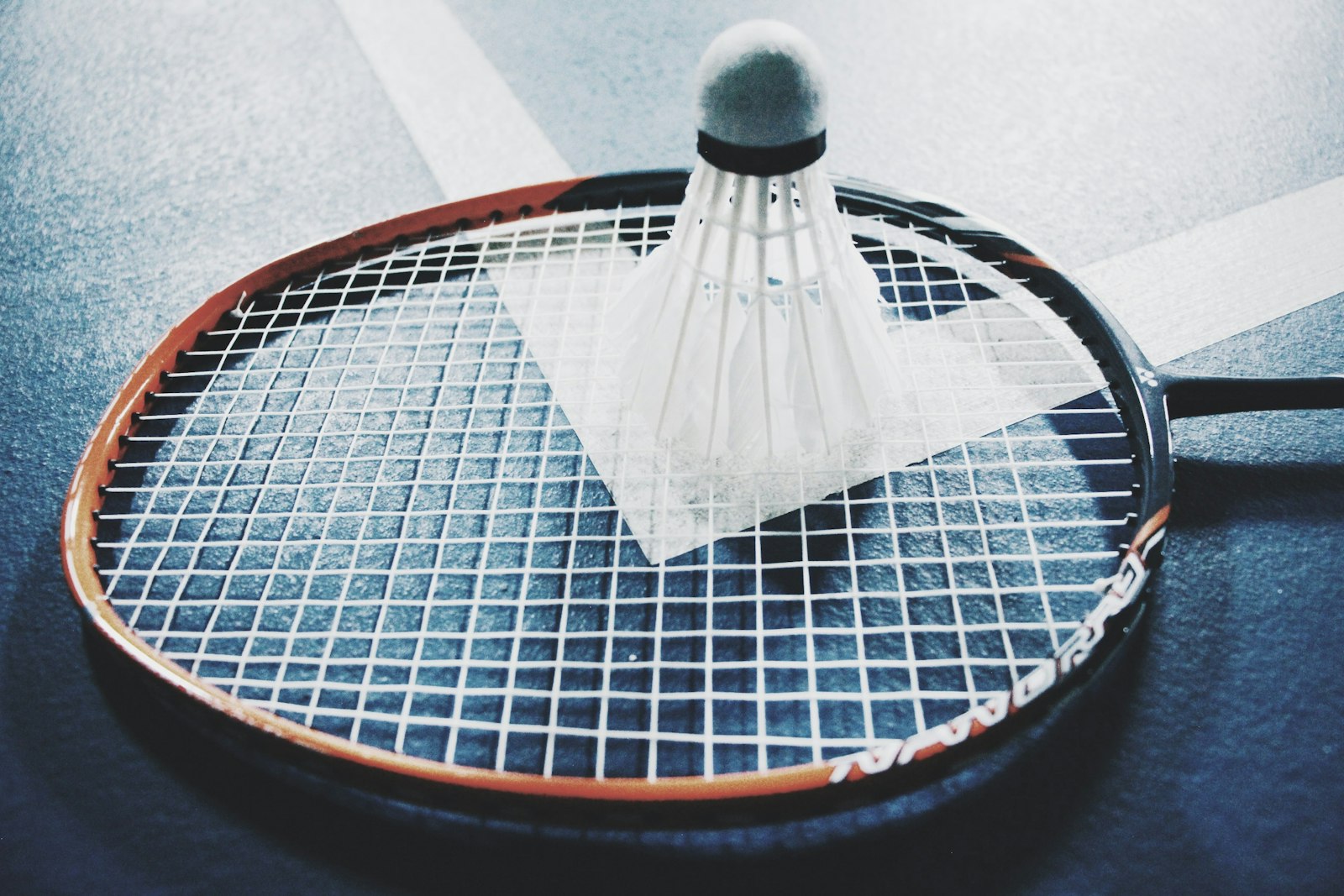
Racket shopping gets all the attention, but the piece of equipment you'll actually replace most often — sometimes multiple times per session — is the shuttlecock. And unlike a racket, where the "right" choice is mostly about your own swing, the right shuttlecock is a genuine tradeoff between flight quality, durability, and cost. Get it backwards and you'll either overpay to shred feathers in a casual weekly game, or show up to a tournament never having felt how a real feathered shuttle flies.
This guide covers the two shuttle types, what the printed speed number on the tube actually means, and how to match both to your level — all checked against the Badminton World Federation's official Laws of Badminton rather than assumed from habit.
What a shuttlecock is actually required to be
Before splitting feather from synthetic, it's worth knowing what BWF Law 2 actually specifies, because the rule is the reason both types exist as legitimate alternatives rather than one being "real" and the other a toy. The law states plainly that a shuttle "shall be made of natural and/or synthetic materials," with one condition: whatever the material, "the flight characteristics generally shall be similar to those produced by a natural feathered shuttle with a cork base covered by a thin layer of leather." Feather is the reference standard the law is written around; synthetic shuttles are legal precisely because they're built to imitate its flight, not because the rules treat them as a looser category.
The law also sets hard numbers for a feathered shuttle: 16 feathers fixed in the base, each a uniform length of 62–70 mm, with the feather tips lying on a circle 58–68 mm in diameter; a rounded base 25–28 mm across; and a total weight of 4.74–5.50 grams. For non-feathered shuttles, the skirt (the synthetic "simulation of feathers") has to hit the same base, length, and weight targets — but the law explicitly allows up to a 10 percent variation, because synthetic material has a different specific gravity than feather and can't be tuned to hit the exact same numbers as precisely.
Feather shuttlecocks: the tournament standard
A feathered shuttle is built from 16 real feathers — almost always goose or duck — hand-sorted for matching curvature and stiffness, then set into a cork base wrapped in thin leather. This is what every top-level BWF event is played with, and the reason comes down to physics as much as tradition: individual feathers, each with its own natural taper and slight flex, produce a more consistent aerodynamic spin and a truer, more predictable deceleration through the air than a single molded synthetic skirt fully replicates. Players who train at a high level can feel the difference on contact — feather shuttles are generally described as softer and more responsive off the racket face, which matters when shot placement is judged in centimeters.
Feather quality itself isn't uniform. Goose feathers are firmer and hold their shape and flight consistency longer, which is why they dominate tournament-grade shuttles; duck feathers are a step down in stiffness and are more commonly found in training-grade shuttles aimed at club and practice use rather than officiated competition.
The durability tradeoff is real and unavoidable. Feathers are natural material: they fray, split at the quill, and lose shape under the repeated impact of hard smashes, and they're sensitive to humidity — a feather shuttle played in damp air noticeably changes its flight as the feathers absorb moisture and soften. A single feather shuttle can go from "match-ready" to "needs replacing" within one high-intensity game, which is why serious players buy them by the tube (dozen) rather than one at a time, and why competitive events cycle through many shuttles per match rather than trying to make a handful last.
Synthetic (nylon) shuttlecocks: the durable, practical default
A synthetic shuttle keeps the same rounded base but replaces the 16 individual feathers with a single molded plastic or nylon skirt shaped to approximate a feathered shuttle's profile. Under BWF Law 2.3, that skirt has to land within 10 percent of a feathered shuttle's length, base diameter, and weight specs — close enough that a well-made synthetic shuttle is a legitimate legal substitute, not a toy version of the real thing.
The appeal is durability and cost. A molded nylon skirt doesn't fray, split, or individually snap the way a natural feather quill does, so a synthetic shuttle routinely survives many multiples of the rallies a feather shuttle would. It's also indifferent to humidity in a way feather shuttles aren't, which makes it the practical choice in variable conditions — a garage, a community center with inconsistent climate control, or outdoor recreational play. That durability is also why synthetic shuttles cost meaningfully less per hour of actual play, since you're not replacing them every game.
The tradeoff is flight fidelity, not legality. A synthetic skirt is a single rigid piece rather than 16 independently flexing feathers, so its deceleration curve and spin response are close to a feathered shuttle's but not identical — players who've hit both describe synthetic shuttles as feeling slightly harder off the racket and marginally less precise as they slow through the back third of their flight. For recreational rallies, beginner drilling, and casual club play, that gap rarely limits anyone's game. It matters mainly once you're training specifically for competition, where the shuttle you practice with should behave like the one you'll compete with.
Speed ratings: why the number on the tube matters
Feather shuttle tubes are printed with a speed number — commonly something in the 74–79 range, sometimes shown instead as a slow/medium/fast grade. This isn't a BWF rule number itself; it's a manufacturer convention built to help players and clubs pick the right shuttle for their actual playing conditions, and it exists because of a real, physical problem the Laws of Badminton acknowledge directly.
Law 2 closes its shuttle specification with a telling allowance: modifications to the standard shuttle "may be made with the approval of the Member Association concerned, in places where atmospheric conditions due to either altitude or climate make the standard shuttle unsuitable." That's the official acknowledgment that a shuttle doesn't fly the same everywhere. Air density changes with both altitude and temperature — thinner air at high elevation or in hot conditions offers less resistance, so a shuttle hit with the same swing travels noticeably farther than it would at sea level in cool air. Denser, colder air does the opposite, dragging the same shot shorter.
Manufacturers compensate for this by grading shuttles to fly at a consistent effective speed across different conditions: a lower-numbered (slower) shuttle is built to be used where thin air would otherwise make a standard shuttle fly too fast — hot climates and higher elevations — while a higher-numbered (faster) shuttle compensates for the opposite problem in cold, dense, low-altitude air. The goal in either case is the same: the shuttle should land in the correct range regardless of the room or the weather.
That "correct range" is exactly what BWF Law 3 defines, and it's the actual test underlying the whole rating system. To test a shuttle for speed, a player uses a full underhand stroke to hit it from directly over the back boundary line, at an upward angle parallel to the sidelines. A shuttle of correct speed lands "not less than 530 mm and not more than 990 mm short of the other back boundary line." That's the real, official standard a "correctly speed-rated" shuttle is built to satisfy for a given set of conditions — the printed number on the tube is a manufacturer's shorthand for choosing the shuttle likely to pass that test in your gym, not an arbitrary marketing label.
Practically: if you're playing in a hot or high-altitude venue and shuttles seem to sail long constantly, drop to a lower speed number. If you're in a cold gym near sea level and shots feel like they're dying short, move up. Most indoor sea-level clubs in temperate conditions land in the middle of the range, which is why a mid-grade speed is the safe default when you don't yet know your venue's tendencies.
Which shuttle should you actually buy?
Beginner or casual recreational player. Buy synthetic. You're not yet swinging hard or consistently enough to punish a feather shuttle's fragility in a way that would justify the cost, and durability matters far more than marginal flight fidelity while you're still building basic contact and rally consistency. A tube of mid-speed synthetic shuttles is the right, unglamorous default.
Regular club or intermediate player. A mixed approach makes sense. Keep synthetic shuttles for warm-ups, drilling, and casual games where durability and cost matter, but play some sessions with feather shuttles — ideally duck-feather, training-grade — so your shot feel and timing develop against the flight you'll eventually meet in more competitive play. This is also where dialing in the right speed rating for your usual venue starts to matter, since you'll notice mismatches between shuttle speed and conditions.
Competitive or tournament-track player. Feather, and increasingly goose-feather specifically, played at whatever speed rating suits your training venue's altitude and typical temperature. If you're specifically prepping for a sanctioned event, check what shuttle the tournament uses — many competitions specify a particular BWF-approved model — and train with the same one when you can, since flight feel genuinely transfers less between shuttle types than it does within them.
Glossary
- Feather shuttle: A shuttlecock built from 16 real feathers (goose or duck) set into a cork base wrapped in thin leather — the flight-quality reference standard the Laws of Badminton are written around.
- Synthetic (non-feathered) shuttle: A shuttlecock using a single molded nylon or plastic skirt in place of individual feathers, built to the same base, length, and weight specs as a feathered shuttle within a 10 percent tolerance.
- Skirt: The flared, feather-like structure below a shuttlecock's base that catches air and produces its characteristic decelerating flight — made of real feathers or a molded synthetic simulation.
- Speed rating: The manufacturer-assigned number (commonly in the 74–79 range) or slow/medium/fast grade printed on a shuttle tube, indicating which altitude/temperature conditions the shuttle is tuned to fly correctly in.
- Correct speed test (BWF Law 3): The official method for verifying shuttle speed — a full underhand stroke hit from the back boundary line should land between 530 mm and 990 mm short of the opposite back boundary line.
- Specific gravity: A material-density property that differs between natural feathers and synthetic skirts, which is why the Laws of Badminton permit a weight/measurement tolerance for non-feathered shuttles rather than requiring an identical match.
The honest bottom line
Neither shuttle type is objectively "better" — they're built to satisfy different priorities the Laws of Badminton were written to allow for. Feather gives you the flight fidelity competitive play is judged against, at a real and unavoidable durability cost. Synthetic gives you a legal, durable, weather-proof default that's the right call for the vast majority of recreational play. Buy for how and where you actually play, not for what looks more "authentic" on a shelf — and if a venue's shuttles seem to fly consistently long or short, check the speed number before you assume it's your swing.
Sources
- Badminton World Federation — BWF Statutes, Section 4.1: Laws of Badminton, Law 2 (The Shuttle) and Law 3 (Testing a Shuttle for Speed)
- Badminton World Federation — Equipment Approval Scheme
- Badminton World Federation — Approved Shuttlecocks
- Badminton World Federation — Statutes
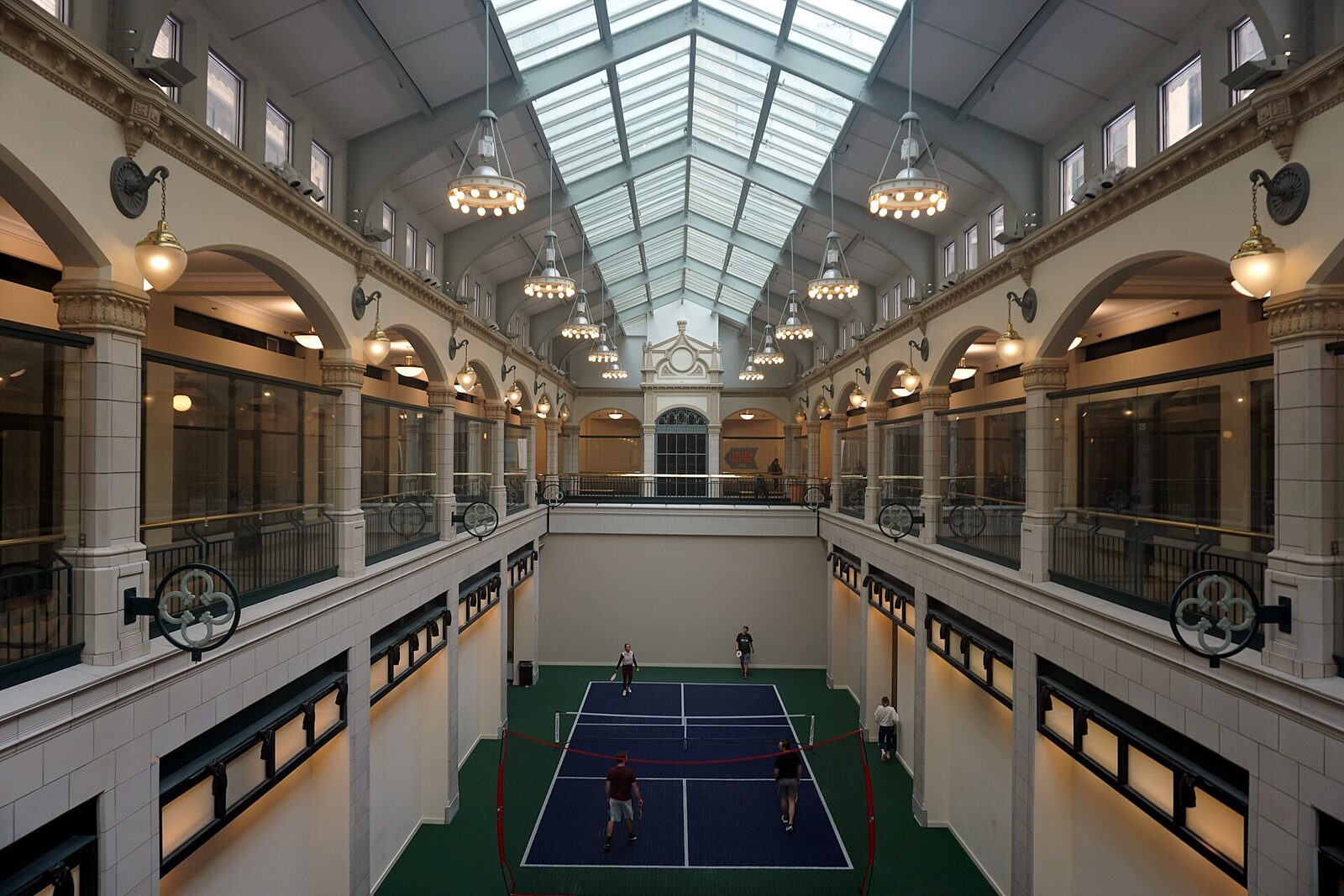
Racket sorted, shuttle sorted — now you need somewhere to play. For the other half of your kit, our badminton racket buying guide breaks down weight, flex, and grip the same tradeoffs-first way. And The Court Scout maintains a verified directory of badminton courts, with every venue confirmed against a primary source. Find badminton courts near you and put both to use.