Every club starts the same way: one person, one court, one weekly slot
Almost no pickleball club begins as a club. It begins as one person who plays a few times, likes it, and can't find enough regular partners nearby — so they post in a local Facebook group, show up at a park with a rolling cart of paddles, and a year later there are forty names on a text thread and a waitlist for Tuesday nights. That's the actual founding story behind most of the clubs in The Court Scout's directory, not a business plan or a grant application. This guide covers the five things that turn "a few of us play sometimes" into an organized, sustainable club: getting real court access, building your first cohort of players, picking a structure that matches your ambitions, buying the minimum gear to stop turning people away, and understanding — in plain terms, not legal advice — what liability looks like once you're the one calling the shots. None of it requires deep pockets or nonprofit experience, mostly patience with a parks department, a decent group chat, and a willingness to show up early and set up nets for the first several months.
Step 1: Secure real court access before you build anything else
A club without reliable court time isn't a club — it's a group of people who occasionally manage to play together. Court access is the one piece you cannot substitute with enthusiasm, so it comes first.
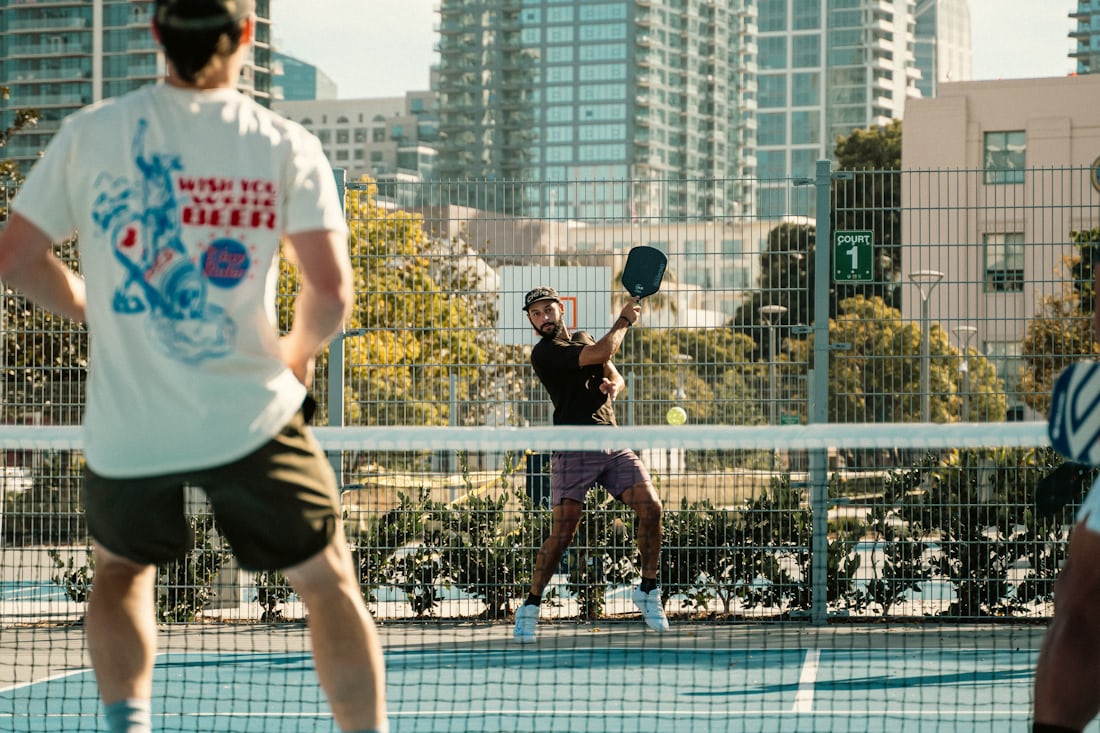
Option A: Get pickleball lines added to existing tennis or multi-use courts. This is the most common path — it doesn't require new infrastructure, only convincing whoever owns the courts (usually a municipal parks and recreation department) to paint additional lines and, ideally, install portable or permanent nets. A standard tennis court (36 × 78 feet) fits four regulation pickleball courts, which is why striping conversions are the cheapest, fastest way most communities have added pickleball access.
How to actually make this happen:
- Find the right contact. Every city or county parks department has a facilities or athletics division. Email or call directly rather than posting on social media and hoping someone official sees it — a specific ask to a specific person moves faster than a general complaint.
- Bring evidence of demand, not just enthusiasm. Parks departments respond to numbers: how many people would use the courts, how many already drive to the nearest existing ones, whether nearby cities converted courts and saw turnout. A petition or sign-up sheet with 50+ names carries real weight in a budget meeting.
- Bring the technical spec, too. USA Pickleball and the American Sports Builders Association publish an official Courts Construction and Maintenance Manual covering line dimensions, surfacing, and net specs — handing an administrator a document answering "what exactly are we building" signals you've done homework.
- Expect the noise objection. It's the most common pushback on pickleball specifically (the paddle-ball sound carries further and at a different frequency than tennis), and some departments only stripe courts well away from homes for this reason. Have an answer ready — off-peak hours, temporary striping, or a different court.
- Ask about a temporary pilot first. Departments are far more willing to approve tape/chalk lines and a portable net for a season than a permanent repaint — a successful pilot is the best argument for making it permanent.
- Look into grant funding if cost is the blocker. USA Pickleball Serves runs the Grow the Game Grant (equipment bundles for community organizations) and the Play It Forward Grant (funding toward court installation or conversion, including a $25,000 award to standout applicants) — see usapickleball.org/grants. A department that likes the idea but lacks budget may co-apply.
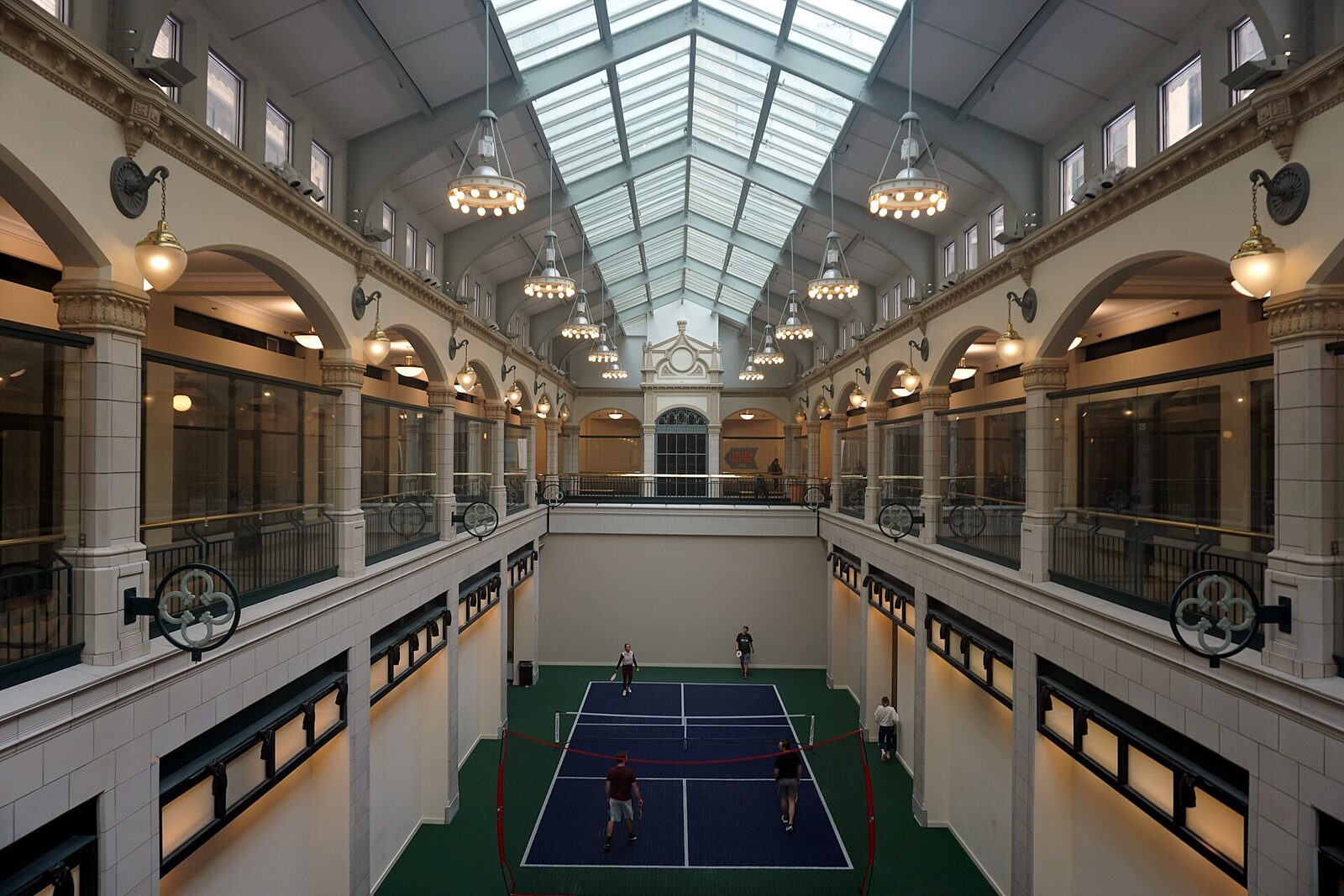
Option B: Partner with a gym, YMCA, or rec center for indoor courts. Indoor access solves the weather and evening-light problems outdoor courts can't, and gyms already have the flat, hard-court real estate — the ask is usually about scheduling, not construction. Approach the facilities manager directly (not the front desk) with a specific proposal: a recurring weekly or twice-weekly block, off-peak if possible, and an estimate of how many players you'd bring. Facilities already running open-gym time for basketball or volleyball can often slot in pickleball with tape lines and portable nets, and a recurring booking from an organized group is attractive to a facility trying to fill off-peak hours.
Whichever path you take, get it in writing — even an email confirmation of the time slot. Verbal arrangements evaporate when facility staff turn over, and a club that shows up to a locked gate on a Tuesday it thought it had booked doesn't survive long.
Step 2: Build your first cohort of players
Court access without players is just an empty, well-striped rectangle. The good news: pickleball's word-of-mouth growth is real and fast, because the sport is easy to demo and hard to play badly enough to feel embarrassed.
- Start with a local Facebook group, whether or not one already exists. Search for "[Your City] Pickleball" first — many mid-size and larger metros already have an active group with hundreds of members, and posting your new court time there beats building an audience from zero. Facebook groups remain the primary organizing tool for local pickleball communities; create one if nothing turns up.
- Post specifics, not vibes. "We got lines painted at Riverside Park — Tuesdays 6–8pm, all levels, loaner paddles available" recruits actual attendees. A vague "anyone interested in starting a pickleball group?" mostly collects likes.
- Word of mouth compounds faster than any single post. The highest-converting recruitment channel is an existing player bringing a friend to try it — pickleball's easy learning curve means a first-timer can rally within ten minutes, which makes "come try it, we'll lend you a paddle" a far stronger pitch than any flyer.
- Cross-post where your target players already are: Nextdoor, community-center bulletin boards, senior-center newsletters if your demographic skews older, and existing tennis or racquet-sport groups nearby — a meaningful share of new pickleball players come from tennis.
- Set a low-friction first session. No sign-up fee, no skill requirement, loaner gear available (more below) — session one is about getting bodies on the court, not filtering for commitment. You filter later, once people already like showing up.
- Consider USA Pickleball's Ambassador program if you want a semi-official local role and access to promotional toolkits — volunteers get training resources and media materials for outreach; see usapickleball.org/ambassadors. Optional, but a real free resource if you want the credibility of an affiliation with the national governing body while recruiting.
Step 3: Choose the structure that matches your ambition
Most clubs start as an informal meetup and only formalize once size or complexity demands it. Don't reach for structure you don't yet need — a group chat outperforms a bylaws document for the first six months of any club's life.
Informal meetup (start here, almost always). No dues, no officers, no bank account. A regular time and place, a group chat or Facebook event for coordination, and whoever shows up plays. Right for a group under roughly 20–30 regulars, and genuinely sufficient forever for clubs that never want to grow bigger than "the regulars know each other."
Semi-formal club with dues. Once you're covering real recurring costs — replacement balls, a shared net, court reservation fees, maybe a modest insurance policy — a small membership fee (often $10–30/month) run through a shared account or a group payment app keeps things fair without a legal entity. Appoint one or two people as the actual organizers (booking, gear custody, communication); a club with no one clearly responsible for logistics quietly falls apart the first time the founder goes on vacation.
Formal nonprofit or affiliated club. Worth considering once you're managing real money (facility contracts, tournament entry fees, grants) or want liability protection as an organization rather than as individuals. This means incorporating and getting an EIN — talk to an accountant or nonprofit-formation service rather than winging it, since the tax and liability implications are real questions this guide isn't qualified to answer. Established clubs running leagues or sanctioned tournaments typically operate at this level.
The mistake is over-structuring 15 friends who just want a standing Tuesday game, or under-structuring a group of 200 collecting dues with no one accountable for the money.
Step 4: The minimum gear to stop turning people away
You don't need a warehouse of equipment. You need enough to remove "I don't own a paddle" as a reason someone skips their first session.
- Nets. If the court lacks permanent posts, a portable net (roughly $80–200) is the first real purchase — get one rated for outdoor wind, since cheap nets blow over in gusty conditions. Two nets roughly double your throughput during busy sessions.
- Loaner paddles. Five to ten budget-tier paddles ($25–50 each, any USA Pickleball–approved entry line) cover a typical first-session crowd — buy a few different weights, since a too-heavy paddle in a beginner's hand sours a first impression fast.
- Balls. Outdoor and indoor pickleballs differ (outdoor balls are harder with smaller, more numerous holes; indoor balls softer and lighter) — buy the type matching where you play, and buy in bulk; balls crack and get lost in bushes.
- A simple check-in and rotation system. A whiteboard, a deck of cards, or a phone app for queueing players onto open courts prevents the most common new-club failure: aggressive regulars monopolizing courts while newcomers never get called up.
- Storage. A rolling cart or duffel bag one co-organizer takes home between sessions — don't leave gear at the court unless the facility offers secure storage.
None of this needs to come out of one person's pocket. A small collection at the first sessions, a modest dues structure, or a USA Pickleball Serves Grow the Game Grant application (aimed at equipment bundles for community programs, mentioned above) can cover the initial gear cost.
Step 5: Understand liability basics — general awareness, not legal advice
This section is general information, not legal advice. Liability, insurance, and facility contract terms vary by state, by facility type (public park vs. private gym vs. school), and by how your group is organized. If you're moving beyond a casual meetup — collecting dues, signing a facility agreement, running public events — talk to an actual insurance broker or attorney before assuming anything below covers you.
What's generally true:
- Public parks courts typically fall under the city or county's own liability framework, and many departments require nothing extra from casual pickup groups during normal hours. Anything more structured — a recurring paid clinic, a tournament — may require proof of insurance, especially if you're using the park's name in promotion.
- Private facilities (gyms, YMCAs, rec centers) almost always require liability coverage or a signed waiver before letting an outside group run recurring sessions, because they're taking on exposure by hosting you. Ask the facilities manager directly what they require — they'll usually ask you first.
- USA Pickleball offers an official club insurance program as a club-membership benefit, providing access to general liability coverage including participant legal liability — see USA Pickleball membership for current club-tier details before assuming it fits your situation. A separate general liability insurance program covers sanctioned tournaments specifically, a different need than day-to-day club play.
- Waivers are worth having once you're organized enough to collect dues or run named events. A signed waiver doesn't eliminate liability, but it's a real risk-reduction step most established clubs use — have a local attorney or your insurer's template reviewed rather than writing one from scratch.
- The biggest practical risk factor is court and equipment condition, not the sport itself. Cracked surfaces, unstable portable nets, and poor dusk lighting are injury sources within an organizer's control — a quick pre-session check is cheap liability reduction and just good practice.
Casual pickup play at a public park rarely triggers anything you need to formally arrange. The moment you start collecting money, signing facility agreements, or running events under your club's name, a real conversation with an insurance broker familiar with recreational sports clubs is worth it — a basic policy usually costs less than the protection it buys.
From meetup to club: what growth actually looks like
Clubs that make it past year one follow a recognizable arc: a weekly session grows a waitlist, a second session gets added on a different day, a rotation system gets formalized once monopolized court time becomes a recurring complaint, and dues appear once the group is buying enough balls and paddles that no one wants to keep footing the bill alone. Somewhere in that process, a founder decides whether to stay informal forever or take the nonprofit step — both are legitimate endings, and plenty of the best local clubs never formalize beyond "the regulars who show up every Tuesday and know each other's names."
If you're at the very start, do the two things that unblock everything else this week: email your parks department (or gym facilities manager) asking about court access, and post in your local pickleball Facebook group — or start one — announcing when and where you're planning to play.
Sources
- USA Pickleball — Courts Construction and Maintenance Manual
- USA Pickleball — Grant Programs (Grow the Game, Play It Forward)
- USA Pickleball — Ambassador Program
- USA Pickleball — Membership (club tiers, incl. insurance benefit)
- USA Pickleball — General Liability Insurance Program
Find courts once your club has somewhere to play
Once you've secured a regular time and place, get it in front of players searching for somewhere to play pickleball. The Court Scout maintains a verified directory of US pickleball venues — every listing rebuilt from a primary source, never scraped — a natural place for a newly striped court or a new club's public session to show up as players search their city.