Some links in this article are affiliate links. The Court Scout may earn a commission if you buy through them. This doesn't affect our recommendations — we never accept payment to feature a product, and our rankings are based on independent research.
Padel is a brand-soaked sport — that's a buyer's problem
Once you have a racket, a tube of balls, and a pair of padel shoes, the European padel-marketing machine wants to sell you another forty things — vibration dampeners shaped like the WPT trophy, branded racket waxes, neoprene racket covers, signature-edition wrist weights, "anti-shock" inserts, color-coordinated apparel lines from every signature pro. Spend an afternoon on a Spanish padel YouTube channel and you'll see most of them sold with the same urgency as the rackets themselves.
The reality: a handful of accessories are genuinely worth $5 to $40 and meaningfully change how the game feels — better grip on humid days, less sun in your eyes, no carbon-fiber heads warping in a 130-degree car trunk, no slip on the lateral skid that defines padel footwork. The rest are decorative or worse. This guide draws the line: six accessories that earn their slot in a real player's bag, five that are mostly hype, and a couple of optional add-ons (eye protection, sand-court shoe brushes) that depend on how and where you play.
The honest framing throughout: every product we tell you to skip is a product we don't get paid when you don't buy. Those skip recommendations are how we stay useful to you over a paid-to-recommend gear blog.
What's actually worth buying
1. A real padel overgrip (the cheapest meaningful upgrade in the sport)
Most padel rackets ship with a perfectly fine stock grip — for about three weeks. Then it starts to feel slick, your hand slides during humid summer evenings, and you're squeezing the handle harder than you should (which is, by the way, the actual cause of most "tennis elbow from padel" complaints). A $7-10 padel overgrip wrapped over the stock grip fixes all of this and lets you customize the handle thickness and tackiness to your hand.
The Bullpadel GB-1201 is the most-used overgrip on the World Padel Tour and Premier Padel circuits for a reason: it absorbs sweat without getting slick, thanks to Bullpadel's HaC (Humidity-absorbing) system and a micro-perforated surface. It's the dry-feel benchmark — the padel equivalent of Tourna Grip in tennis. The HEAD Padel Pro is the leading tacky-feel alternative if you prefer a slightly sticky surface to a dry one (and it's a few dollars cheaper). Either replaces a worn stock grip in about 60 seconds. One overgrip lasts most rec players 6-12 hours of play.
Pros:
- Bullpadel GB-1201 is the pro-tour standard dry-feel overgrip — built for sweaty Mediterranean summers, works just as well in Florida or Texas
- Customizable handle thickness — wrap one for a thin Spanish-style grip, two for a thicker tennis-style feel
- Lets you preserve your stock grip indefinitely (peel the overgrip, the original stays clean underneath)
- Roughly $7-10 each — the cheapest meaningful upgrade in padel
Cons:
- Dry-feel preference is personal — if you like tacky grips, the HEAD Padel Pro or Bullpadel GR-1210 padded replacement grip is a better fit
- Consumable — replace every 6-12 hours of play; budget for a multi-pack
- Bullpadel inventory on Amazon US is uneven; check the seller and shipping origin before paying European-import markups
Check price on Amazon (Bullpadel GB-1201) · Check price on Amazon (HEAD Padel Pro)
2. A real padel racket bag with thermal compartments
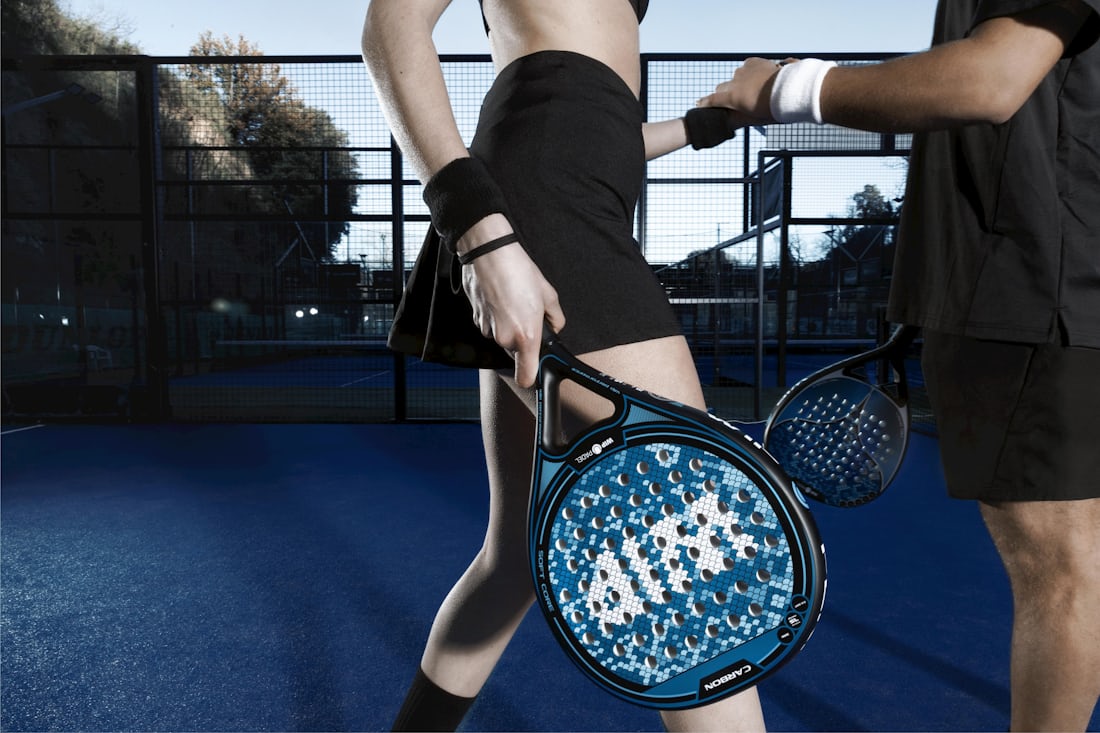
Padel rackets are not interchangeable with tennis bags. A regulation padel racket is 45.5 cm long with a fat throat — most tennis racket sleeves don't fit it, and the EVA foam cores that give padel rackets their feel will deform in a 130-degree car trunk in Phoenix or Madrid in August. A proper padel racket bag has thermal-insulated side compartments specifically for the rackets, a vented shoe space (padel shoes get filthy on outdoor sand courts), and a fence hook so the bag doesn't sit in court grit between sets.
The Bullpadel Hack BPP-25012 is Paquito Navarro's signature bag and the current pro-tour benchmark: two thermo-insulated side compartments for up to four rackets, a separate ventilated shoe compartment, foam-padded back, durable nylon-and-neoprene build, 60×30×40 cm — big enough for a couples-padel trip, not bulky day-to-day. The Adidas Tour 3.3 is the same shape and price tier with a thermal central compartment and is more widely stocked on Amazon US than the Bullpadel. If you're at the higher end (4+ rackets, traveling for tournaments), either is right. For a single racket plus shoes and balls, a cheaper sling-style bag is fine — Bullpadel and Head both make sub-$50 options.
Pros:
- Thermal compartments protect EVA cores from the warping that wrecks a $250 racket left in a hot car
- Vented shoe compartment keeps sand-court grit and sweat out of your apparel
- Fence hook = the bag never sits in the dirt between sets
- Holds 3-4 rackets, balls, shoes, towel, water, a change of shirt — everything a serious player carries
Cons:
- $90-160 — overkill if you're playing once a week with one racket
- Bullpadel branding is loud (red Hack logos top and side); the Adidas Tour 3.3 is cleaner if you want a stealth bag
- Larger than a casual gym duffel — takes up real space in a car or apartment
Check price on Amazon (Bullpadel Hack BPP-25012) · Check price on Amazon (Adidas Tour 3.3 M)
3. An insulated water bottle
Padel sessions on outdoor courts in Mediterranean summers, Florida July, or Phoenix anything-but-winter routinely hit 95-100°F. A flimsy plastic gym-bag bottle leaks in your bag, gets warm in 20 minutes, and breaks at the worst possible time (mid-tournament). One vacuum-insulated stainless bottle, paid for once, is the last water bottle you'll buy for the sport.
The Hydro Flask 24 oz Wide Mouth with a Flex Straw Cap is the right size for a 90-minute padel session — enough water that you're not constantly refilling between games, light enough that it doesn't add real weight to the bag. The straw cap means one-handed drinking during the 90-second switchover; the vacuum insulation keeps ice water cold for 24 hours, even sitting in a hot car between sessions. Indoor-only players can drop to the 18 oz; heavy outdoor sweaters should look at the 32 oz.
Pros:
- Holds ice for 24 hours, even in a hot car between courts
- One-handed straw cap means you can drink on the switchover without unscrewing anything
- Wide mouth fits ice cubes (try fitting them into a narrow-neck sport-cap bottle — you can't)
- Lifetime durability — these bottles outlive cars
Cons:
- Expensive ($35-45) for a water bottle
- Heavier than plastic — adds ~1 lb to your bag empty
- Color/style fashion-cycle: avoid getting attached to one color
4. A padel cap or visor (sun matters more on a glass court than you think)
Outdoor padel courts are typically open-top with glass back walls. That combination is sun-trap geometry — you get direct overhead sun and a second wave reflected off the glass when the ball passes through your sight line. Sun in your eyes is the most-cited cause of "I should have hit that" missed bandejas and viboras, and the cumulative UV exposure on years of midday outdoor play is a real dermatology concern.
The Babolat Pure Logo Hat is the sweet spot for padel: adjustable rear closure, moisture-wicking inner band, stiff brim that doesn't flop when you track a lob off the back glass, and Babolat is one of the few tennis-padel crossover brands with reliable Amazon US distribution. For warm-weather players who don't want a full crown, the Babolat Elastic Visor is the same brand's open-top alternative — more airflow, no top-of-head protection. The brand barely matters once you're at this tier — Bullpadel, Head, Wilson and Nike all make perfectly fine padel-friendly caps in the same $20-35 range; pick one whose visual fits how you want to look on court.
Pros:
- Stiff brim doesn't flop when you look up to track a lob
- Adjustable closure fits across head sizes — one of these per family member
- The Babolat Pure version comes in 5+ colors, including a stealth black if you prefer not to wear logos
- Visor variant is cooler in summer for players who don't mind some top-of-head sun
Cons:
- Marketing-rate $25-30 for a hat that costs $4 to make — but it's still good value vs. specialty padel-branded headwear
- The Pure logo is prominently embroidered on the front — if you want unbranded, look at generic tennis caps from Decathlon or sporting-goods house brands
- Visor leaves the crown exposed; not a substitute for sunscreen on a long outdoor session
Check price on Amazon (Babolat Pure cap) · Check price on Amazon (Babolat Elastic visor)
5. Wrist sweatbands (the simplest fix for a hot, sweaty grip)
In a long padel match on a hot day, sweat runs down your forearm onto your grip hand. Once that grip is wet, you re-tighten — and re-tightening is the single biggest contributor to padel-related forearm and elbow strain. A pair of $8 terry-cloth wristbands stops the sweat at the wrist and keeps the grip dry through a full match. It is the cheapest, most boring, and most genuinely useful accessory on this list after the overgrip.
Brand doesn't really matter — Nike, Adidas, HEAD, and generic athletic terry-cloth wristbands all do the same job. Look for a 3-inch (medium) width if you want them to actually catch sweat rather than just be wrist jewelry; the narrow 1.5-inch fashion versions don't absorb enough. A two-pack runs ~$8-12. They wash and last hundreds of sessions before they lose absorbency.
Pros:
- The cheapest meaningful "fix the grip" tool in padel after the overgrip itself
- Keeps your grip dry through a full match instead of mid-set
- Doubles as a face-wipe in a pinch
- Washes well; lasts hundreds of sessions
Cons:
- Looks dorky to some players (this is the actual reason most rec players don't wear them — and it's a bad reason)
- The 3-inch medium width is necessary for real absorbency; the narrow 1.5-inch versions are mostly decorative
- Not a substitute for a fresh overgrip when the grip itself is worn out
Check price on Amazon (Nike Dri-Fit Terry 2-pack)
6. A microfiber court towel
A small microfiber towel beats every wristband, headband, and "moisture-wicking" gimmick combined for what it actually does well: wiping the racket face between games to clear sand or ball residue, drying your hands between points, and absorbing the inevitable sweat off your forehead when you change ends. SINLAND's 3-pack of 16×32 inch microfiber gym towels is the right size — small enough to live in your bag, big enough to actually dry off. Padel-branded "court towels" exist and cost 4x as much for no functional benefit; any gym microfiber towel works identically.
Pros:
- Dries 3x faster than cotton, no lint on your racket face
- Three-pack means one in the bag, one in the laundry, one in the car
- Roughly $15 for three — the cheapest "real" accessory on this list
- Doubles as a racket-face cleaner between sets on dusty sand courts
Cons:
- Needs washing more often than you'd expect (it doesn't smell, but the bacterial load is real)
- Microfiber slowly degrades after ~100 washes
- The cheap end of the microfiber market has sharp edge stitching — splurge the extra $3 for a name-brand
Optional: padel eye protection
Padel's eye-injury rate is lower than pickleball's because the ball is heavier and travels in slower arcs at the net — but it's not zero. The American Academy of Ophthalmology has flagged racquet-sports eye trauma generally, and at the competitive level (long viboras, hard kitchen-line bandejas off the glass) a hard shot in the eye does happen. The fix is a $25-40 pair of polycarbonate sports glasses with a wraparound fit and anti-fog coating. Most rec padel players don't wear them; advanced and pro players who play above 4.0 DUPR-equivalent increasingly do.
Padel-specific brands aren't well-represented on Amazon US. The functional spec is what matters: ANSI Z87.1-rated impact lenses, polycarbonate construction, wraparound design that doesn't slip when you sweat, and an anti-fog coating that survives an hour in a humid indoor padel facility. Generic sports protective eyewear (Bolle, Pyramex, even basic safety glasses from a hardware store) meets every spec. If you already wear prescription glasses, talk to your optometrist about sports-grade prescription wraparounds; "regular glasses while playing" is worse than nothing because the lenses can shatter.
Pros:
- Polycarbonate lenses are basically un-shatterable from a padel impact
- Anti-fog coating means they work in humid indoor padel clubs
- Wraparound design stays put through aggressive net play
- One-time purchase; lasts years if you don't sit on them
Cons:
- Look slightly dorky in social rec play (this is why most rec players skip them)
- Most padel-branded sports eyewear is poorly distributed in the US — generic sports-eyewear brands cover the spec
- Need replacing if you scratch the lenses badly — they're not heirlooms
Padel-specific gotchas
Sand-court shoe brushes (small market, mostly DIY)
If your home club plays on artificial-grass-and-silica-sand courts (the dominant outdoor padel surface in Spain, Italy, Argentina, and increasingly Florida and Texas), your shoes pick up a layer of silica that you really should not track into a car interior, indoor club, or your house. Most clubs have a fixed shoe-brush station at the court exit. A few don't, and a few players want one in their bag for the in-between case (parking-lot car-back changeover).
The padel-specific shoe-brush market on Amazon US is genuinely tiny — most of what you'll find is repackaged tennis clay-court brushes, which work fine. The Har-Tru Tennis Court Shoe Brush is the most-cited cross-sport option (designed for Har-Tru clay, the texture is right for silica too). A $5-10 plastic boot-brush from the hardware store does the same job. Don't pay $40 for "the official padel shoe brush" — there's nothing in the design that justifies the markup.
Check price on Amazon (Har-Tru)
Padel ball cans and pressurizers
Padel balls lose pressure within 2-4 weeks of opening the can, and "ball pressurizers" (a sealed tube that re-pressurizes opened cans) are marketed as the fix. Reality: pressurizers do slow pressure loss, but they don't restore lost pressure — once a ball has been hit for 90 minutes, the felt and core are already breaking down regardless of internal pressure. For a serious player who's playing 2-3 times a week, the math is: a fresh can every other session ($5-8) is roughly the same cost as buying a pressurizer ($40-60) and trying to extend ball life. Skip the pressurizer.
What to skip (or: where we'd lose commission if you took our advice)
This is the editorial-integrity section. Every product below is a product we make zero dollars on by telling you to skip it. We're telling you to skip them anyway because they don't work, or they're a worse version of something you already own, or padel marketing has dressed them up with a signature-pro logo to charge you triple.
Vibration dampeners
Marketed as "reduce racket vibration, save your elbow." The lab data on padel-racket vibration dampeners is consistent with the tennis literature: the measurable vibration reduction is single-digit percentage at most, and the actual cause of padel-related elbow and forearm pain is grip pressure, technique (over-rotating on the bandeja), and overuse — not racket vibration. The dampener is mostly a placebo. If your elbow hurts, the fix is a thinner overgrip (looser grip pressure), a lighter racket (less torque per swing), more time on the bandeja drill, or rest. Save the $10.
Premium racket covers
The "essential protection for your $300 racket" pitch. Reality: your padel racket bag (see accessory #2) already has thermal-insulated compartments — that's the actual protection your racket needs. The face takes minor scuffs from ball impact that don't affect play. A neoprene racket cover protects against approximately nothing that actually happens once the racket is in a proper bag. Skip the $15-25 standalone cover.
Pickle… er, padel-branded apparel at premium prices
"Padel polos" and "Padel performance shirts" from the signature pro lines are the same polyester athletic shirts you can buy from any tennis or running brand for a third of the price, with a brand logo. There is no special padel fabric. Any moisture-wicking athletic shirt — including soccer jerseys, running shirts, or Costco Kirkland workout tops — works identically. The exception is if you genuinely like a specific brand's cut, the Spanish-style slim fit, or you want to look the part at a Premier Padel-friendly club; that's a fashion choice, not a performance one, and that's fine. Just don't believe the "engineered for padel" copy.
Racket wax / "spin enhancer" sprays
This one is genuinely snake oil. The pitch is that some viscous liquid or wax will restore the spin grip of a worn racket face. The actual mechanism that gives a textured padel racket its grip on the ball is the surface texture (rough carbon, sand-finish, or 3D pattern), which is degraded — not restored — by oils, waxes, and sprays. The right way to clean a padel racket face is a slightly damp microfiber cloth (you already have one — see accessory #6). Don't put waxes or "enhancement sprays" on a padel racket. Some of them will void the FIP approval on the racket itself.
Wrist weights
Pitched as "build paddle-arm strength during play." Loaded wrist weights during a dynamic racquet motion is a recipe for shoulder and elbow injury — it changes your swing mechanics in ways the joint isn't built for, and the cumulative load over thousands of bandejas and viboras is exactly the wrong stimulus for racquet-sport joint health. The evidence base for wrist weights as a training tool in racquet sports is essentially zero. Skip them entirely. If you want padel-specific strength work, do shoulder-rotator and wrist-flexor band work off the court.
How we picked
This isn't a "we tested 47 accessories" article — we'd be lying if we said that. What we did do: synthesized accessory recommendations across the major independent padel publications (Padel World Press, Padel Magazine, The Padel Directory, BestPadelLife, Zona de Padel), checked the dominant pro-tour gear setups on Premier Padel and the older World Padel Tour broadcasts (which overgrip a given player wraps, which bag a given player carries, which cap is sponsoring whom), cross-referenced the recurring picks against actual Amazon reviewer feedback (multi-hundred-review threshold) and r/padel community discussions, and ran every recommendation through the test of "would we tell a friend to spend money on this?"
We grounded the equipment rules in FIP (International Padel Federation) documentation: maximum racket dimensions, ball pressure specs (10.5-11.5 psi inside the can, 2.4-2.7 bar), surface and court regulations. Where padel-specific Amazon US distribution is thin (caps, eye protection, sand-court brushes), we noted it honestly and recommended cross-sport substitutes that meet the same spec rather than pretending a non-existent padel product line exists.
The "what to skip" section is harder than the "what to buy" section — it's where the affiliate-content economy quietly fails readers. Almost every gear blog includes vibration dampeners, racket covers, and signature-pro apparel as "essentials" because each one is a commission. We won't, because the entire premise of The Court Scout is that honest recommendations beat scaled-content noise. If you trust this list, we hope you come back when you need a racket or shoes — and we hope when you do, you trust the recommendation because we already told you what to skip.
Sources
- Padel World Press — News & Equipment Coverage
- International Padel Federation (FIP) — Rules of Padel & Equipment Regulations
- Premier Padel — Official Site & Player Information
- Bullpadel — Official Grips & Overgrips
- Bullpadel — Official Padel Bags
- HEAD — Padel Grips & Accessories
- Adidas Padel (All For Padel) — Bags & Accessories
- Babolat — Padel Range
- American Academy of Ophthalmology — Eye Protection in Racquet Sports
- Hydro Flask — Product Specifications
- BestPadelLife — Independent Padel Reviews
- The Padel Directory — UK Padel Coverage
- Zona de Padel — European Padel Equipment Reviews
Get the gear, then find a court
Once your bag is sorted — racket, balls, padel shoes, and a few of the accessories above you'll actually use — the only thing left is somewhere to play. The Court Scout's padel hub maintains a verified directory of padel courts across the US (and a deepening international footprint in Spain, Italy, Argentina, Mexico, and the rest of the padel-native world), with court counts, indoor/outdoor info, club rates, and Google ratings where available. Search by city to find what's near you. Padel is still primarily a club-membership-and-booking sport in the US — most US clubs run online reservations rather than open play, so plan to book a court an hour ahead rather than rolling up and waiting.