Some links in this article are affiliate links. The Court Scout may earn a commission if you buy through them. This doesn't affect our recommendations — we never accept payment to feature a product, and our rankings are based on independent research.
The cheapest, most-overlooked, highest-ROI upgrade in pickleball
A $250 carbon-fiber paddle with a slick stock grip feels worse in your hand than a $90 paddle with a fresh tacky overgrip. That sentence offends the marketing departments at every major paddle brand, but it is the simple truth that anyone who has wrapped a new overgrip onto a tired handle has felt the second they swing it.
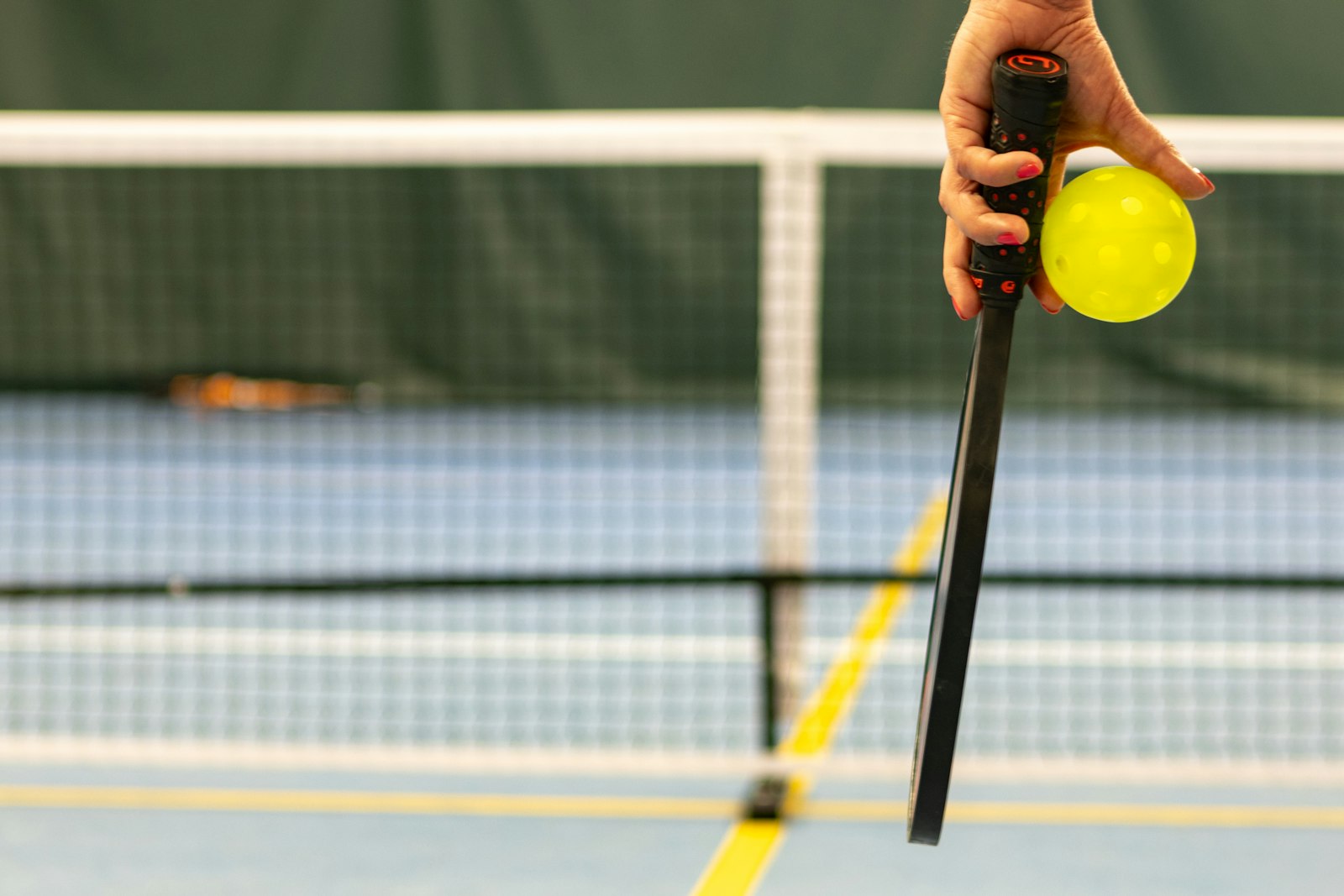
The handle is the only part of the paddle your body actually touches. Everything else — the face, the core, the edge guard — does its job through the grip. If the grip is slick, you squeeze harder to compensate, which kills touch, kills spin, fuels tennis elbow, and slows your reaction hands in kitchen battles. If the grip is right — the right size, the right texture, the right freshness — your hand relaxes, your wrist comes free, and the paddle starts to feel like an extension of your arm.
The cost to fix all this is somewhere between $5 and $15, repeated every couple of months. There is no other upgrade in pickleball — paddle, shoes, balls, bag, anything — with a better dollars-per-feel ratio. This guide covers what to buy, when to use which grip type, how often to replace, and how to wrap one without it bunching up like a bad bandage.
Replacement grip vs overgrip — the distinction most players never bother to learn
This is the single most-confused bit of pickleball gear vocabulary, so let's nail it down.
The replacement grip is the actual leather or synthetic-leather sleeve that comes wrapped around the paddle's bare wooden or foam handle. It is thicker (typically 1.5–1.8mm), cushioned, has the brand logo on it, and is what determines the handle's underlying shape and base diameter. You usually only see the top edge of it peeking out the bottom of your overgrip near the butt cap. The replacement grip is glued or stapled at the top of the handle.
The overgrip is the much thinner (0.4–0.6mm) tape you wrap on top of the replacement grip. It comes off and goes back on easily, has a small piece of finishing tape that seals the top wrap, and is the layer that actually touches your hand. Overgrips are designed to be consumables — wear them out, peel them off, wrap a new one.
The key takeaway: most players only ever change overgrips. The replacement grip underneath might get changed once or twice in the paddle's entire life. The overgrip on top gets changed every few weeks to every few months. When someone says "I need a new grip," they almost always mean a new overgrip.
The top 5 overgrips serious players actually use
1. Tourna Grip XL — the tennis legacy that crossed over
Tourna Grip is the most-used overgrip on the professional tennis tour and has been for decades — Pete Sampras, the Bryan brothers, John Isner, Genie Bouchard, dozens of current ATP and WTA pros. The reason it crossed over to pickleball isn't marketing: it's that the dry-feel formula does something almost no other overgrip does well. It absorbs sweat and gets grippier as your hand gets wetter, instead of slicker. For humid summer outdoor pickleball or indoor gyms with bad ventilation, that property is genuinely valuable. The XL length sizes correctly to pickleball handles (which are slightly shorter than tennis grips but close enough that XL covers cleanly).
Texture: Dry-feel (not tacky — opposite end of the spectrum from a sticky pro grip).
Spec: 99cm × 29mm per grip, 3-pack roll with finishing tape included.
Pros:
- The benchmark for sweat absorption — gets grippier when your hand sweats, not slicker
- Long-lasting per grip (most rec players get 6–10 sessions out of one)
- The blue color is iconic and immediately recognizable on court
- 3-pack runs around $10 — extraordinary cost per grip
Cons:
- Dry-feel is not for everyone — if you like a sticky tacky grip, you will hate this
- Players with dry hands (no sweating) report it can feel a bit chalky and lifeless
- The signature light blue color stains lighter shirts during long sessions
2. Wilson Pro Overgrip — the smooth-felt benchmark
If Tourna is the dry-feel gold standard, Wilson Pro is the smooth-felt gold standard — used famously by Roger Federer for most of his career and a huge slice of the rest of the tour. It is a very thin (around 0.5mm) felt-style overgrip with a slight tack that builds with use. Most players who try Wilson Pro after years on tackier grips describe it as "feels like nothing is there, in a good way" — it doesn't fight your hand for attention. Available in white, black, and a small color rainbow (green, orange, pink, yellow) for players who want to coordinate.
Texture: Smooth-felt with mild tack.
Spec: 3-pack roll, finishing tape included, available in standard and perforated variants.
Pros:
- Disappears under your hand — minimal sensory feedback, great for players who want the paddle to feel "neutral"
- Very thin, so it doesn't add much to the handle diameter (good if your hand fit is already correct)
- Color options without the Tourna blue-stain risk
- Cheap — typically $8–9 for a 3-pack
Cons:
- The mild tack is very mild — sweaty-hand players will find this slips
- The smooth-felt texture wears through faster than a heavier tacky grip in heavy use
- Federer's name on the box is also Wilson's marketing tax — it's a great grip but you're paying a few cents per grip in brand-halo pricing
3. Yonex Super Grap — the tacky pro choice
Yonex Super Grap is the tacky-feel counterweight to Tourna's dry feel. It is the polyurethane standard used heavily on the badminton and tennis tours — Naomi Osaka, Stan Wawrinka, dozens of badminton pros — and it has carried over to pickleball because the tack is excellent on cold or dry days where a dry-feel grip would feel lifeless. The new packaging actually rebranded it as "Wet Super Grap" to distinguish it from a newer "Dry Super Grap" line, but the original is what crossed over and what most pickleball players mean when they say "Yonex grip."
Texture: Tacky (polyurethane).
Spec: Available in 3-pack, 12-pack, and 30-pack rolls. Multiple colors (black, white, yellow, orange, purple).
Pros:
- Genuine high-tack feel — fingers grip the handle without you having to squeeze
- Excellent in cold indoor gyms or dry climates where dry-feel grips go lifeless
- The 12- and 30-packs bring per-grip cost under $2 for frequent replacers
- Color options without sacrificing performance
Cons:
- Tacky grips age out faster — the polyurethane loses tack noticeably after 4–6 hot sessions
- Builds up dirt and skin oils faster than dry-feel grips (looks visibly grimy sooner)
- For very sweaty hands, the tack can actually become too sticky and pull at your skin
4. Babolat VS Original — the premium tacky overgrip
Babolat VS Original is the thinnest overgrip on this list (around 0.43mm) and consistently rated among the highest-quality overgrips made. It has been Babolat's flagship overgrip for over a decade and is used heavily on the ATP and WTA tours — Rafael Nadal generation through current. The selling point versus Yonex Super Grap is finer manufacturing tolerances: more consistent thickness across the roll, less material variation, and a slightly more refined tack. It costs a couple of dollars more per roll for those tolerances, which serious players notice and rec players largely don't.
Texture: Tacky (ultra-thin polyurethane).
Spec: 3-pack roll, also available in 12- and 30-packs. White, black, and color-mix options.
Pros:
- Ultra-thin — barely adds to handle diameter, so your existing grip-size sizing carries over
- The premium tolerances do show up in consistency over a 3-pack — every grip feels the same
- Holds tack longer than Yonex Super Grap in moderate-sweat conditions
- Comes off cleanly without leaving residue, even after long use
Cons:
- Roughly $11–14 for a 3-pack — the most expensive grip on this list per unit
- The ultra-thin profile means it tears more easily during the wrap-on if you stretch too hard
- For players with small hands who want to bulk up their handle, this is the wrong choice — go to a thicker grip instead
5. Gamma Pro Wrap — the budget-friendly pickleball-specific pick
Gamma made its name as a tennis stringing and accessories brand, and the Pro Wrap overgrip is the value-tier entrant — designed and marketed specifically for pickleball (the packaging actually says so) with a soft, absorbent surface that splits the difference between the dry Tourna formula and the tacky Yonex/Babolat school. It is not the best overgrip by any single measurement, but it is the best overgrip-per-dollar for casual players who replace 4–6 times a year and don't want to spend $12 on a 3-pack.
Texture: Soft, mildly absorbent, mildly tacky (the "do everything OK" middle ground).
Spec: Sold individually and in multi-packs; check pack size at purchase.
Pros:
- Cheapest of the five — typically under $5 per grip
- Forgiving wrap — the slight stretch and soft surface mean even a bad wrap looks fine
- Genuinely pickleball-marketed (rare in a category dominated by tennis-tour crossovers)
- Comfortable for players coming off a slick stock grip — the upgrade-to-feel is immediate
Cons:
- Doesn't excel in any single texture category — it's a B+ across the board, not an A in anything
- Wears through faster than the premium grips in heavy use
- Less brand recognition on court — won't get the "what grip is that?" question
The top 3 replacement grips — when (and only when) to actually replace the underlying grip
The replacement grip underneath your overgrip almost never needs replacing. Edge cases where it does:
- The stock grip is genuinely terrible (some budget paddles ship with grips that flake or peel after a few months)
- The original grip got soaked in something it can't recover from (sunscreen, sweat saturation, mildew from a wet bag)
- You hate the handle's underlying shape and want to change diameter at the base, not just add layers on top
- You bought a paddle used and want a fresh foundation
Most players go through 1–2 replacement grips over a paddle's entire life. If you are replacing the underlying grip more than once a year, you are probably actually wanting a new overgrip more often.
1. Wilson Cushion-Aire Classic Perforated — the comfort standard
Wilson's Cushion-Aire has been a default replacement grip in racquet sports for decades. The perforated version is the right pickleball pick — the small holes let sweat escape into the felt layer rather than pooling at the surface, and the cushion-foam underlayer is gentle on hands that have started developing the classic pickleball-elbow flare. Comes in black; install yourself with the small included nail or replace at any racquet stringer for $5–10 of labor.
2. Wilson Cushion-Aire Pickleball Perforated — same grip, pickleball-sized
Wilson released a pickleball-specific Cushion-Aire variant that's sized to pickleball handle lengths (slightly shorter than tennis). Same material, same perforations, just less material to trim during install. Worth the small upcharge over the tennis version if you don't want to deal with cutting.
3. Tourna Pro Thin Replacement Grip — for players who want a thinner base
Most replacement grips are 1.5–1.8mm thick. The Tourna Pro Thin variant is 1.25mm, which gives you a thinner base layer if you plan to add 2 overgrips on top for size customization (see grip-size section below) — keeps the total stack from getting too fat. Less cushion than the Wilson Cushion-Aire, so not for players with sensitive hands.
How often to replace your overgrip
There is no universal schedule, but the honest answer cluster:
- Serious / competitive players (3+ sessions/week): Every 4–8 sessions, or roughly every 2–3 weeks. Tournament players often start every tournament day with a fresh grip — the difference in feel matters in close matches.
- Regular rec players (1–2 sessions/week): Roughly monthly. You'll feel the tack fade in week 3, replace in week 4.
- Casual players (a few times a month): Every 2–3 months, mostly when you notice the visual signs below.
The visual + feel signs you've waited too long
- Tape edges curling at the top finishing-tape strip or at the overlap seams
- Visible grime — dirt and skin oils have darkened the grip; the light blue Tourna has gone gray-blue, the white Wilson has gone yellow-gray
- Tackiness gone — touch the grip, peel your finger off; it should make a small "sticky release" feel for tacky grips. If it just slides off, it's done
- Hand sliding mid-session — the moment you find yourself adjusting your grip every few points to re-seat your hand, the grip is over
- Visible thinning or tearing at the edge of the finishing tape, especially near the top of the handle where your index finger sits
If you're not sure, peel a corner up at the bottom. If the underlying replacement grip looks brand-new and the overgrip looks darker and dirtier than you remember, replace it.
Grip size and how an overgrip changes it
Pickleball paddle handles ship in a small range of grip circumferences — typically 4 inches (small), 4 1/8 (small-medium), 4 1/4 (medium), and 4 3/8 (large). Most factory paddles ship at 4 1/4, which fits most adult hands.
Each overgrip adds roughly 1/16" to the handle circumference. A few practical consequences:
- Small hand wanting a larger grip? Add 2 overgrips. A stock 4 1/4 paddle becomes a comfortable 4 3/8 with two wraps. Some players go 3 overgrips for a fully custom diameter.
- Stock grip already feels right? One overgrip is the safe default — adds tack and freshness without changing your size.
- Stock grip already feels too big? Sorry — overgrips only add diameter, they can't subtract. The only fix is replacing the underlying replacement grip with a thinner one (see Tourna Pro Thin above), then adding one overgrip on top.
For the full mechanics of why grip size matters and how to test your hand fit, see our detailed how to grip a pickleball paddle guide — it covers the V-check, knuckle position, and the index-finger gap test for verifying you have the right diameter.
How to wrap an overgrip correctly — the 5-step process
Wrapping an overgrip looks easy in YouTube videos and goes weirdly wrong the first few times you try it. The fix is mechanical, not artistic. Here is the process every coach and stringer uses:
Step 1: Start at the butt cap
Peel back the protective film on the tapered end of the overgrip (the narrow, angled end). Almost every overgrip is asymmetric — one end is straight-cut, the other is angled to wrap cleanly around the bottom edge of the handle. The angled end goes at the butt cap (bottom of the handle, where the pinky sits).
Hold the paddle face-down with the butt cap pointing toward you. Stick the angled end of the overgrip flush against the bottom of the handle, with the tip pointing slightly up the side. Some grips have a small adhesive strip on the tapered end — if yours does, press it firmly to the handle to anchor.
Step 2: Establish the angle
The overgrip wraps in a spiral up the handle, not straight across. The right angle is roughly 30 degrees off horizontal — steep enough that successive wraps overlap by about 1/8 to 3/16 of an inch (about 50% of the grip's width is a common eyeballed target, but for most pickleball wraps 1/8" overlap is enough since handles are shorter).
For a right-handed player, wrap clockwise as you look down the butt cap. (Left-handers: counter-clockwise.) This direction matches the natural unwinding direction when your hand tightens, so it doesn't try to peel the grip up.
Step 3: Maintain tension, not stretch
The biggest beginner mistake: stretching the grip tight while you wrap. The grip should be snug, not stretched. If you can see the grip thinning, lightening in color, or feel it nearly tearing, you're pulling too hard. The right tension is a firm hand-to-hand pull — comfortable to maintain — that lets the overgrip lay flat without bunching but doesn't deform its width.
Each new wrap should sit cleanly on top of the previous wrap's upper edge, with that 1/8" overlap. Take your time — restarting halfway up is fine if the overlap drifts and starts looking spiral-staircased.
Step 4: Finish at the top of the handle
Stop wrapping when you reach the top of the handle, where the throat of the paddle begins — usually around 4.5–5 inches up from the butt cap, depending on the paddle. The last wrap should sit a tiny gap below the throat, not crammed against it (you want a clean edge for the finishing tape).
If you have excess grip, cut it cleanly at an angle that matches the wrap direction so the finishing-tape edge will sit flush.
Step 5: Apply the finishing tape
Every overgrip ships with a small (usually 2–3 inch) strip of black or white finishing tape. Wrap this strip around the top edge of the last overgrip wrap, fully covering the cut end. Press firmly. This tape is what keeps the grip from unwinding — without it, the first hard swing will start to lift the top wrap.
If you ever lose the finishing tape (or want extra security), a small strip of black electrical tape works identically. Don't use clear packing tape — it loses adhesion within a few sessions.
That's it. A clean wrap takes most players 4–6 attempts before it looks like a YouTube tutorial. Be patient with the first few; the wrap quality jumps fast once you get the angle muscle memory.
How we picked
We synthesized overgrip and replacement-grip recommendations across the leading independent racquet-sport publications (Tennis Warehouse and Tennis Express for the tennis-tour-dominant grips, The Pickler, Pickleball Magazine, and Better Pickleball for the pickleball-specific perspective, plus r/Pickleball and r/tennis for the long-running community threads), cross-referenced against the actual usage signals on the ATP/WTA tour (which grip the most pros use), and weighted toward grips that have been on the market for 5+ years with stable formulas — overgrip-of-the-year hype rarely outlasts the next season. The five picks above are the grips that show up across all of those sources consistently, with honest noted texture differences so you can pick the one that matches your hand and climate.
For replacement-grip picks, we leaned heavily on Wilson and Tourna because both have decades-long stability in racquet-sport replacement grips and ship product that doesn't change formula every season. Several newer pickleball-specific replacement grips exist but most are rebranded tennis grips at a 30–50% upcharge.
Sources
- USA Pickleball — Equipment Standards
- USA Pickleball — Pickleball Fundamentals For Beginners
- The Pickler — Pickleball Gear Reviews
- Pickleball Magazine — Gear Section
- Better Pickleball — Equipment Articles
- Sarah Ansboury — YouTube channel
- Briones Pickleball — YouTube channel
- r/Pickleball — Community Discussions
- Tourna Sports — Grip Specifications
- Wilson — Tennis Grips & Overgrips
- Yonex — Super Grap Product Page
- Babolat — VS Original Product Page
- Gamma Sports — Pickleball Grips
Get the grip right, then find a court
A fresh overgrip is something you should feel within the first 30 seconds of your next session. If you can't tell the difference, the old grip wasn't as worn as you thought (or your hand was already so used to it that fresh feels weird for one session — give it two). For the rest of the gear stack, our pickleball accessories you actually need guide covers everything else that earns its space in a real player's bag. And once your kit is dialed in, The Court Scout maintains a verified directory of pickleball courts across the US — search by zip code or city to find indoor and outdoor courts near you, with hours, surface type, and drop-in info.