Some links in this article are affiliate links. The Court Scout may earn a commission if you buy through them. This doesn't affect our recommendations — we never accept payment to feature a product, and our rankings are based on independent research.
Three racquet sports, three different reasons to play
Pickleball, tennis, and padel are the three racquet sports growing fastest in the United States right now. Pickleball is the cultural phenomenon (USA Pickleball reports roughly 20 million Americans played in 2024, up from 4.8 million in 2021). Tennis is the established giant with more than 100 years of US infrastructure and roughly 24 million American players according to the USTA's 2024 participation report. Padel is the newcomer everyone is suddenly talking about — the global International Padel Federation says it is now the fastest-growing racquet sport on the planet, having gone from ~20 US courts in 2020 to over 500 today, with major real-estate and fitness developers racing to open more.
If you are trying to choose among the three, the honest news is this: none of them is objectively "better." They serve different lives. The decision is mostly about lifestyle fit — what your body can handle, who you want to play with, how often you can get to a court, how much patience you have for a steep learning curve, and what you want a sport to do for you.
This guide breaks all three down honestly. We profile each sport (court, equipment, format, learning curve, athletic demand, social vibe, US court availability), give a decision matrix by goal, compare gear cost, point you at the beginner gear guide for each sport, and tell you where to find courts. We are upfront about one thing: The Court Scout currently covers pickleball and padel — tennis is not on the site yet — so the "where to play" section is honest about that gap.
Pickleball: the easy on-ramp
The basics
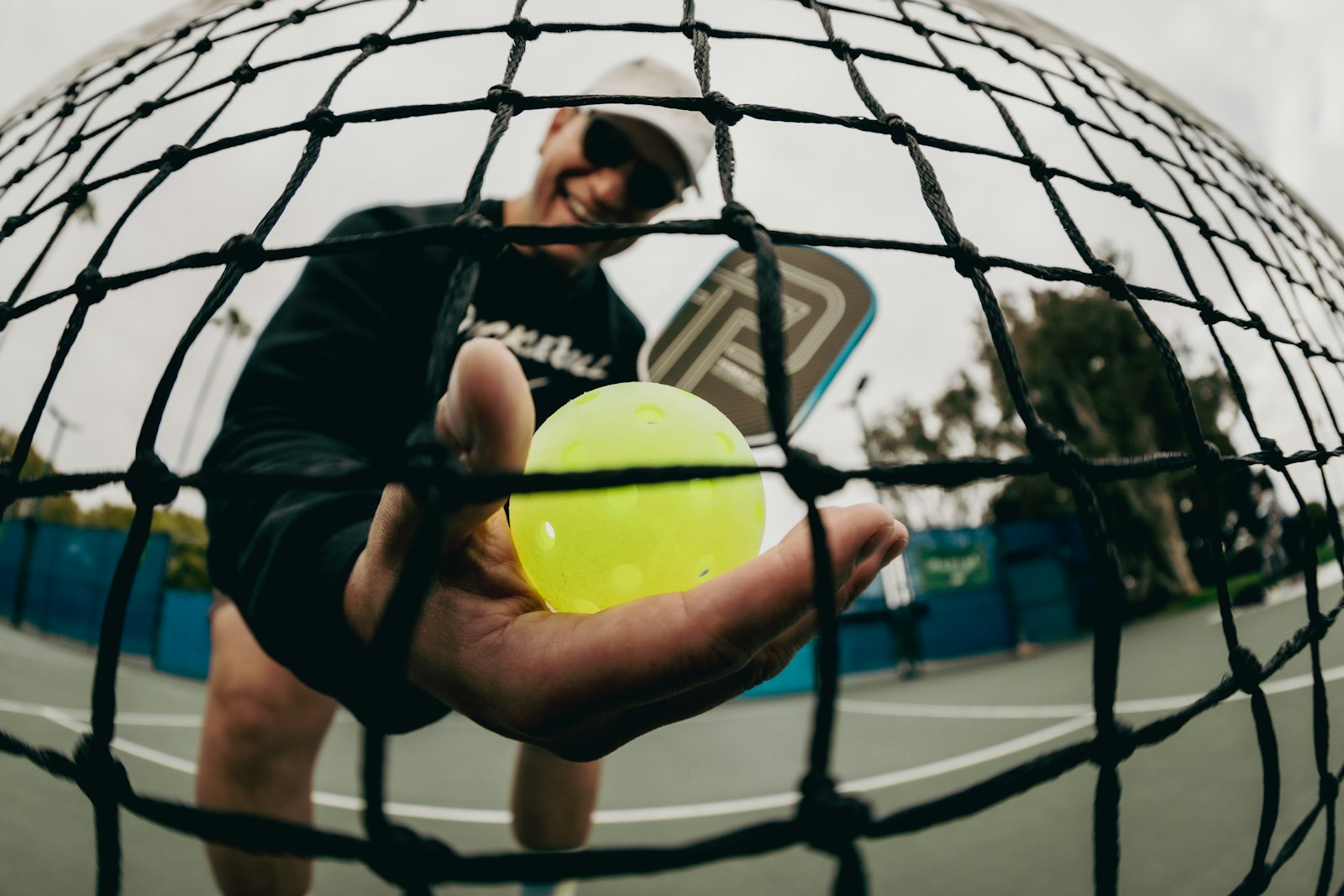
Pickleball is played on a court that is roughly one-third the size of a tennis court — 20 feet wide by 44 feet long, the same dimensions as a doubles badminton court. The ball is a hard plastic wiffle-style ball with 26 or 40 holes (indoor and outdoor varieties differ), and the paddle is a solid composite paddle with no strings — a polypropylene honeycomb core sandwiched between two fiberglass or carbon faces, roughly 16 inches long and 7–8 ounces.
The format is doubles (2v2) the vast majority of the time, though singles (1v1) is a real format played at every level up through professional tournaments. The signature rule is the non-volley zone (universally called "the kitchen") — a 7-foot strip on each side of the net where you cannot hit the ball out of the air. That rule, more than any other, defines pickleball's tempo. It keeps points longer than they would be in tennis at the same skill level and rewards touch and placement over raw power.
Learning curve and athletic demand
The learning curve is gentle in a way that is genuinely unusual for a racquet sport. Most first-time players have real rallies in their first 15 minutes on court. The serve is underhand, the court is small enough that you don't need to cover much ground, and the kitchen rule prevents the kind of overpowering volleys that crush beginners in tennis. The athletic floor is low: people in their 70s play pickleball recreationally several times a week. Hand-eye coordination matters more than top speed or vertical leap.
That said, advanced pickleball is genuinely athletic. The pros move laterally as fast as tennis pros over the smaller court, hit the ball harder than non-players expect, and rely on quick reflexes at the kitchen line. The sport's ceiling is higher than its floor would suggest — but you can have fun forever without ever approaching the ceiling.
Social vibe and court availability
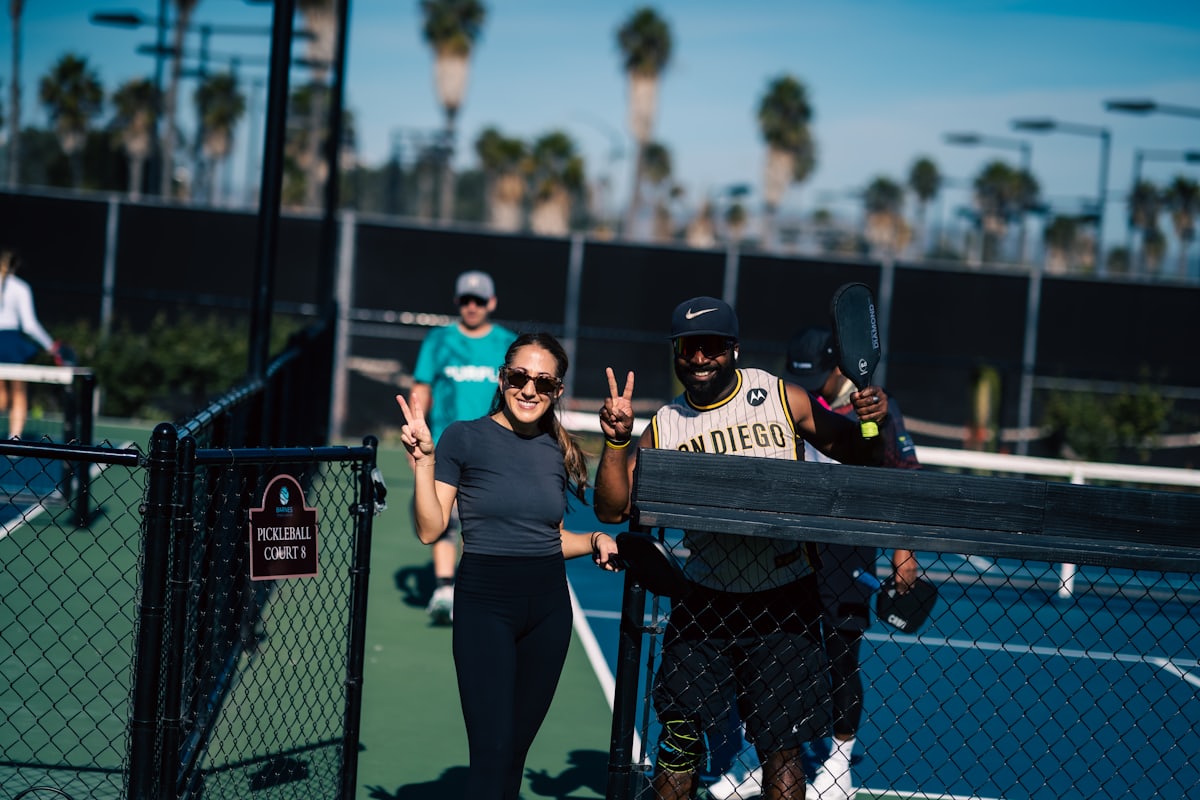
Pickleball's social vibe is, frankly, the highest of the three. Open-play rotations at public courts (the "three paddles on the fence and you've got next" system) put strangers into games together within minutes. The culture is famously welcoming to beginners, and pickleball clubs have become genuine social hubs in many US suburbs and retirement communities. People come for the game and stay for the people.
US court availability is exploding. The Sports & Fitness Industry Association estimates over 50,000 places to play pickleball in the US today, with dedicated facilities opening weekly. The Court Scout's verified US pickleball directory lists thousands of public, private, and dedicated venues. The flip side: internationally, pickleball is still mostly a US sport. If you live in Europe or Latin America, you will find vastly more padel courts than pickleball courts.
One-line summary
If you want to play the day after you read this article, with anyone, anywhere in the US, pickleball is the answer.
Tennis: the deep classic
The basics
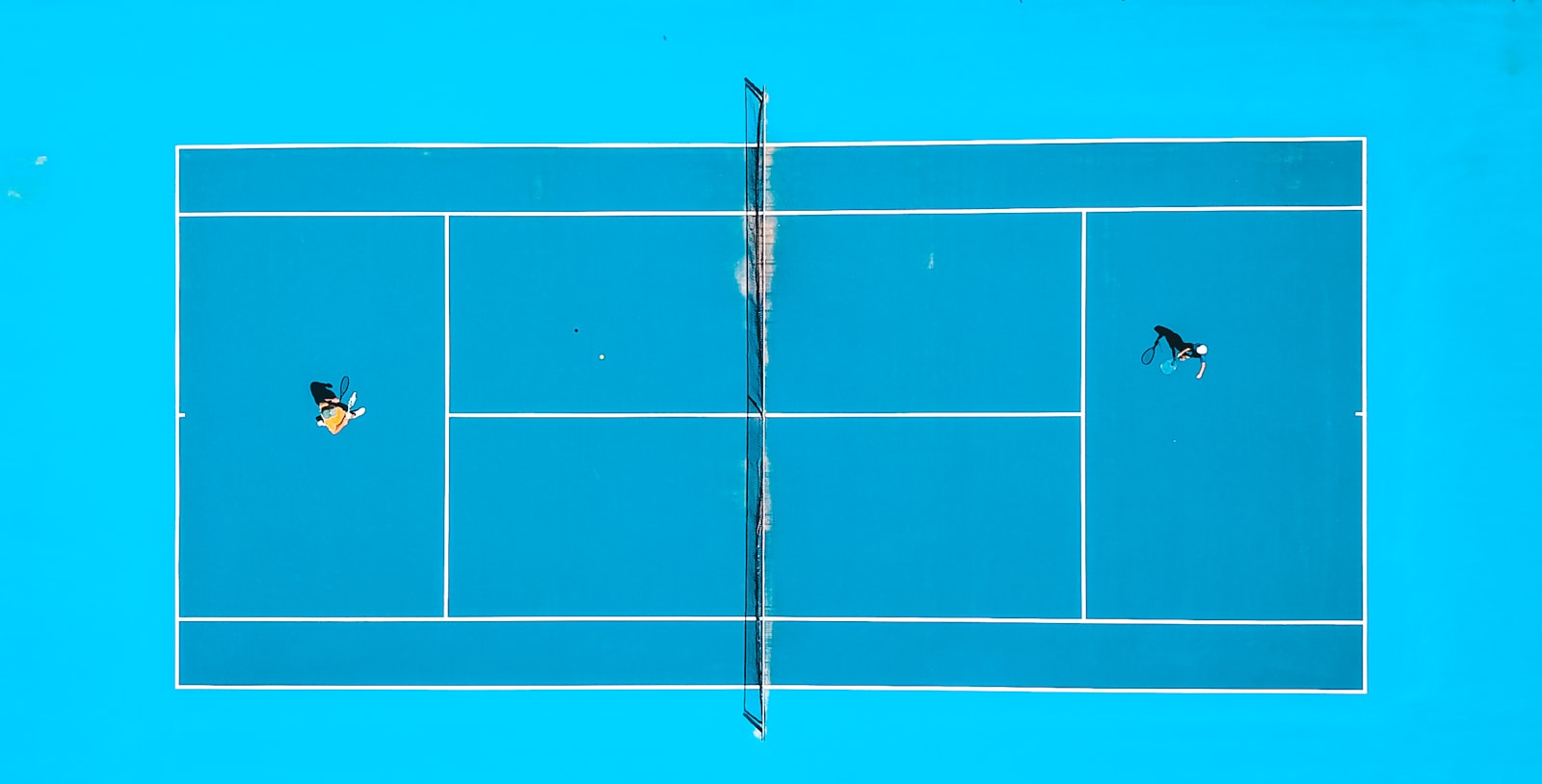
Tennis is played on the largest of the three courts — 78 feet long by 27 feet wide for singles (36 feet for doubles) — and uses a strung racket (graphite/composite frame, polyester or natural-gut strings, typically 27 inches long and 9.5–11.5 ounces) and a standard pressurized rubber felt-covered ball. The serve is overhand, hit from behind the baseline into a service box that is small enough at distance that the serve itself is one of the highest-skill shots in any sport.
The format is singles (1v1) dominant in professional and recreational play, though doubles is a major format with its own pro tour and competitive scene. Tennis is the only one of these three sports where singles is the default rather than the exception.
Learning curve and athletic demand
The learning curve is steep. A complete beginner walking onto a tennis court will spend most of their first session hitting balls into the net or over the fence. Real rallies — say, 4+ shots back and forth between two players — typically take 5–10 sessions of practice or lessons to start happening regularly. The serve alone can take months to develop into something reliable. This is not a sport where you walk on and have fun in 15 minutes; it asks for patience.
Athletic demand is the highest of the three. Tennis players cover roughly 3–5 miles in a competitive 2-hour match. The combination of explosive sprints, lateral changes of direction, repeated overhead serves, and long match durations makes tennis hard on knees, shoulders, elbows, and lower backs. It is also one of the most cardio-intensive racquet sports — a hard-fought tennis match is a real workout in a way that recreational pickleball rarely is.
Social vibe and court availability
Social vibe varies wildly by setting. Private club tennis is famously social — leagues, mixers, USTA team play, the whole culture. Public-court tennis can be quieter and more focused on hitting partners and individual practice. The drop-in, rotate-strangers-into-games culture that defines pickleball is much less common in tennis (singles makes it harder, and the longer warm-up makes casual rotation awkward).
US court availability is high but slowly declining. The USTA counts roughly 270,000 tennis courts in the United States — far more than pickleball — though many municipalities are converting underused tennis courts to pickleball courts or shared-use lined courts. Tennis infrastructure remains the deepest of any racquet sport globally; nearly every city of any size has accessible public courts.
One-line summary
If you want the deepest possible racquet sport — a lifetime skill ceiling, the strongest cardio benefit, and the most established infrastructure worldwide — tennis is the answer.
Padel: the global breakout
The basics
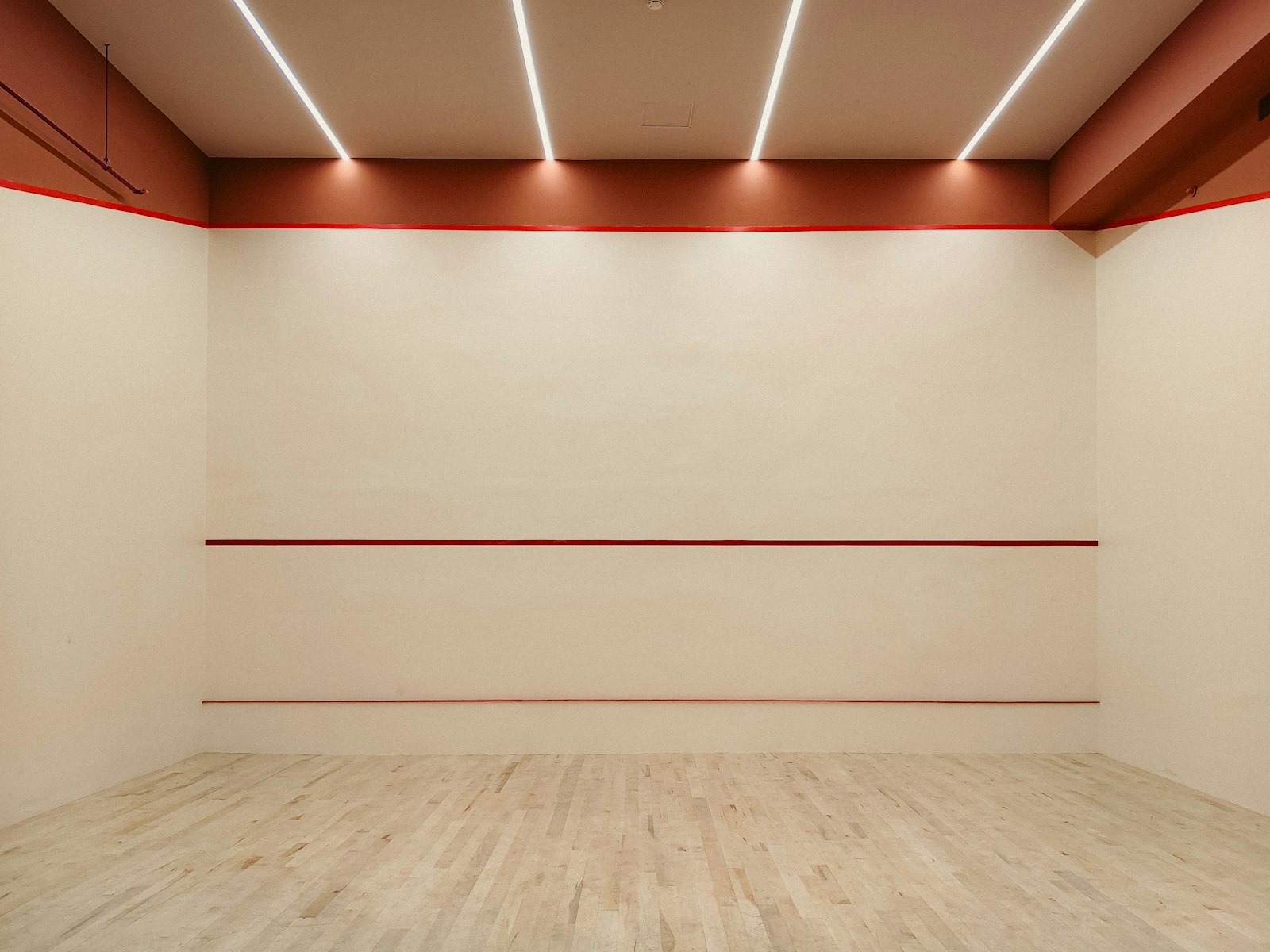
Padel is played on a court that is smaller than tennis but larger than pickleball — 20 meters long by 10 meters wide (about 66 feet by 33 feet) — and the court is fully enclosed with glass back walls (about 3 meters tall) and mesh side fencing. The walls are the entire point of the sport: the ball can bounce off them, which means rallies that would end on a tennis court turn into long looping exchanges that beginners can actually rally through.
The racket is a solid foam-core paddle (EVA foam, usually) with holes drilled through the head for air resistance — no strings, shorter handle than tennis, max length 45.5cm per International Padel Federation regulations. The ball looks nearly identical to a tennis ball but is made with slightly lower internal pressure so it sits on the paddle a bit longer and rebounds less aggressively off the walls.
The format is 2-versus-2 only at any serious level. Singles padel exists and is played on a different (narrower) court, but it is genuinely rare — if you walk into a padel club anywhere in the world, you are playing doubles. You need three other people. The serve is underhand, hit below waist height, bouncing in your own service box first.
Learning curve and athletic demand
The learning curve is gentle, similar to pickleball. Most beginners are having real rallies in their first 30 minutes. The walls help enormously: balls that would be winners in tennis stay in play in padel because the back wall keeps them alive. The underhand serve removes the single hardest stroke in tennis. Two players who have never touched a racket can have meaningful exchanges within their first hour.
Athletic demand is moderate — higher than recreational pickleball, lower than singles tennis. The court is bigger than a pickleball court so there is more ground to cover, but the walls extend rallies and reduce the explosive sprint demand of tennis. A 90-minute padel session is a real workout for an average adult, but it's not the joint-grinding cardio extremity that tennis can be. It is genuinely friendlier to older bodies than tennis while being more physically demanding than recreational pickleball.
Social vibe and court availability
Social vibe is high — second only to pickleball, and arguably equal in many clubs. Most padel clubs run weekly "americano" or mixer sessions where solo players or pairs rotate through games, which is how most people break into the local scene. The doubles-only format is itself a social design — you need three other humans, every time, by definition.
US court availability is growing fast but still patchy. There are roughly 500–600 padel courts in the US today, concentrated in Miami, NYC, Los Angeles, Austin, Houston, and a handful of other growth metros. Most US states have zero or single-digit court counts. Internationally is the opposite story: padel is enormous in Spain, Italy, Sweden, Argentina, and Mexico, with millions of registered players and tens of thousands of courts. If you live in Europe or Latin America, padel is often the easiest racquet sport to find a court for.
One-line summary
If you want long rallies, real skill development, and a clubby social vibe — and you live somewhere with padel courts — padel is the answer.
The decision matrix: pick by what you want
Skip the abstract comparison. Pick the goal that fits you, and pick the sport.
"I want to play tomorrow, with whoever's around"
→ Pickleball. Court availability in the US is dwarfingly higher than padel, easier to walk onto than tennis, and the open-play culture means you don't need to coordinate three other people in advance.
"I want maximum cardio — a sport that's also a workout"
→ Tennis. Singles tennis is genuinely the most demanding cardio of the three. Padel is a real workout but won't push your heart rate the way a competitive tennis match will. Pickleball can be a workout at the high recreational level but the ceiling is lower.
"I want long rallies and real skill development"
→ Padel. The walls keep balls in play long enough for beginners to develop strokes; the tactical depth (lobs, wall positioning, glass reads) is genuine; the skill ceiling sits between pickleball and tennis.
"I want a low-impact, joint-friendly sport"
→ Pickleball. Smaller court, less ground to cover, slower ball, generally lower-impact movement. Padel is a reasonable second choice; tennis is the hardest on knees and shoulders.
"I want to play with my non-athletic spouse / partner"
→ Pickleball or padel. Both have gentle enough learning curves that two non-athletes can have real fun together inside the first session. Tennis will frustrate at least one of you for weeks.
"I want a sport I can play for the next 40 years"
→ All three are good answers. Tennis has the deepest infrastructure and the longest-established senior leagues. Padel's walls genuinely reduce wear on aging bodies. But pickleball wins narrowly for sheer joint-friendliness — there is a reason it is the most popular new sport in US retirement communities. The 70-year-olds beating us all at pickleball are not playing singles tennis anymore.
"I want to travel with my sport"
→ Tennis or padel. Tennis courts exist in nearly every country. Padel courts are everywhere in Europe and Latin America and growing fast in the US, UAE, and Southeast Asia. Pickleball is harder to find outside the US, though Canada, the UK, and Spain are catching up.
"I want the cheapest entry point"
→ Pickleball. A complete beginner setup (paddle, balls, court shoes you may already own) starts around $80. Tennis and padel both cost roughly twice as much to start.
Gear cost comparison
Honest beginner setups, sourced from the dedicated gear guides on this site.
Pickleball — cheapest entry ($80–$150)
A serious-enough beginner paddle (JOOLA Essentials), a 3-pack of USA Pickleball–approved balls (Franklin X-40 for outdoor), and tennis shoes you may already own gets you on the court for under $100. If you need court shoes, add $60–80. See our full breakdown in the pickleball beginner gear guide.
Beginner paddle pick: JOOLA Essentials — A real brand (JOOLA sponsors world #1 Ben Johns), USA Pickleball–approved, mid-weight, fiberglass face, polypropylene core. About $50–60. The starter set version includes paddle, balls, and a bag.
Padel — mid-tier entry ($150–$300)
A beginner-friendly padel racket (round head, soft core, medium weight) runs $80–180, a can of decent padel balls is $14, and dedicated padel shoes or clay-court tennis shoes are $90–170. Total honest starter: $150–300. Most clubs rent rackets for $5–10 per session so you can try the sport before buying. See our full breakdown in the beginner padel guide.
Beginner racket pick: HEAD Speed Motion — Round/teardrop hybrid head, soft EVA core, ~355g, forgiving sweet spot, dampened to protect your elbow in early sessions. HEAD is one of the most established racket brands in the world. About $140–180.
Tennis — mid-tier entry ($150–$300, more options either direction)
A recreational tennis racket starts around $40 (Wilson Tour Slam, the genuine entry-level pick), a can of three tennis balls is $4–6, and tennis court shoes run $60–150. A complete bare-minimum starter setup: roughly $120. A more serious setup with a real frame (Wilson Clash 100 V3 or Babolat Pure Drive) runs $200–280 just for the racket. The range is wider than the other two sports because tennis racket pricing spans from supermarket frames to $300+ pro models.
Budget pick: Wilson Tour Slam — Wilson's recreational entry-level racket. Pre-strung, lightweight, oversized head (forgiving sweet spot), real Wilson build quality at a true beginner price (~$40–60). Will outgrow it once you take lessons, but it gets you started honestly.
Mid-tier pick if you know you'll stick with it: Wilson Clash 100 V3 — A genuinely beginner-and-intermediate-friendly performance racket. Wilson's Clash line is engineered for comfort and arm-friendliness (FreeFlex carbon mapping in the frame) and the 100 V3 is the sweet spot for new players who want a frame they won't outgrow in a season. About $200–250 strung.
Where to play each sport
Pickleball
The Court Scout maintains a verified directory of US pickleball courts — thousands of public, private, and dedicated venues with addresses, court counts, surface types, and indoor/outdoor info. We hand-verify every listing against the venue's own primary sources before flipping it to verified. Browse by state or search by city/zip on the homepage.
Padel
The Court Scout's global padel hub covers US clubs (currently around 90 verified venues, growing weekly as the sport expands) plus international coverage in Spain, Italy, Sweden, Argentina, Mexico, the UAE, and elsewhere. Same verification standard as pickleball — every listing is rebuilt from the venue's own primary sources.
Tennis
Honest disclosure: The Court Scout does not currently cover tennis. Tennis has roughly 270,000 courts in the US — the deepest racquet-sport infrastructure on the planet — and it would not be honest of us to claim coverage we don't have. For tennis courts, the USTA's facility finder is the authoritative national directory. Your local parks-and-recreation department's website is also a reliable source for public tennis courts in your area, and most private tennis clubs publish their court counts and pricing on their own sites.
We may add tennis coverage in a future expansion — the verification work to do it right is substantial, and we would rather have zero tennis listings than thin or unverified ones.
So which one should you actually play?
The honest answer is: the one whose courts are within 20 minutes of your home and whose social scene you can plug into. None of these sports are fun if you can't get to a court, and none of them are fun if you have no one to play with.
If all three are equally available to you (lucky — most people only have one or two), here is the simplest decision framework:
- Under 40 and athletic, want a deep skill journey: tennis.
- Over 60 or coming back from injury, want low-impact social play: pickleball.
- Want long rallies and a clubby vibe, and you live where padel exists: padel.
- Want to start playing this weekend with no setup hassle: pickleball.
- Want the workout, don't mind paying your dues for months before it's fun: tennis.
- Two non-athletes wanting to play together: pickleball or padel.
And the meta-answer most racquet-sport people land on after a few years: play more than one. Pickleball and padel cross-train each other unusually well — both reward touch, lobs, and net positioning. Tennis players who pick up either pickleball or padel typically take to it fast because their hand-eye coordination is already developed. Many serious racquet-sport players today play two or three of these regularly. There is no rule that says you have to pick.
How we picked
This comparison was built from official federation sources (USA Pickleball, USTA, International Padel Federation, US Padel Association), participation data from the Sports & Fitness Industry Association, and the published rules and equipment standards of each sport. The product picks cross-reference manufacturer spec sheets, the Pickler / Pickleball Magazine / Better Pickleball reviews for pickleball, established tennis-racket reviewers (Tennis Warehouse, Tennis.com) for tennis, and FIP-aligned padel sources for padel. We have not personally hit balls with every product mentioned; we recommend gear that consistently shows up as beginner-appropriate across multiple independent expert sources. The honest cons on each pick reflect real trade-offs.
Sources
- USA Pickleball — official site
- USA Pickleball — Rules Summary
- USA Pickleball — Equipment Standards
- USTA — official site
- USTA — Tennis Facility Finder
- International Padel Federation (FIP) — official site
- FIP — Rules of Padel PDF
- US Padel Association (USPA) — official site
- Sports & Fitness Industry Association — Participation Reports
- Pickleball Magazine
- The Pickler — pickleball blog
- Tennis Warehouse — racket reviews
- Wilson — Clash 100 V3
- Wilson — Tour Slam
- HEAD — Speed Motion padel racquet
- JOOLA Pickleball — Essentials line
- The Court Scout — US pickleball directory
- The Court Scout — global padel hub
- The Court Scout — pickleball beginner gear guide
- The Court Scout — beginner padel guide