Some links in this article are affiliate links. The Court Scout may earn a commission if you buy through them. This doesn't affect our recommendations — we never accept payment to feature a product, and our rankings are based on independent research.
What padel is, why it's everywhere, and why you can play it tomorrow
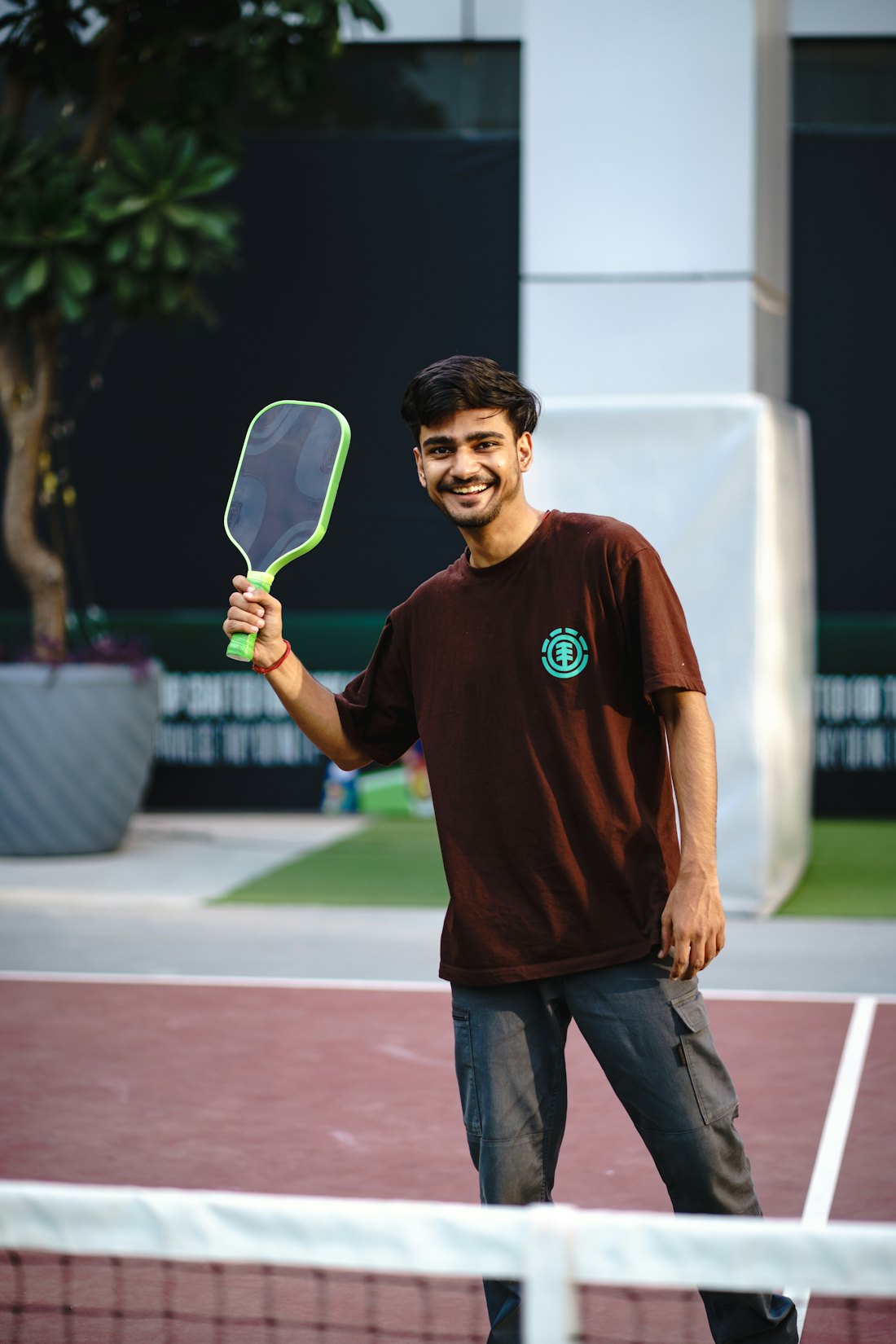
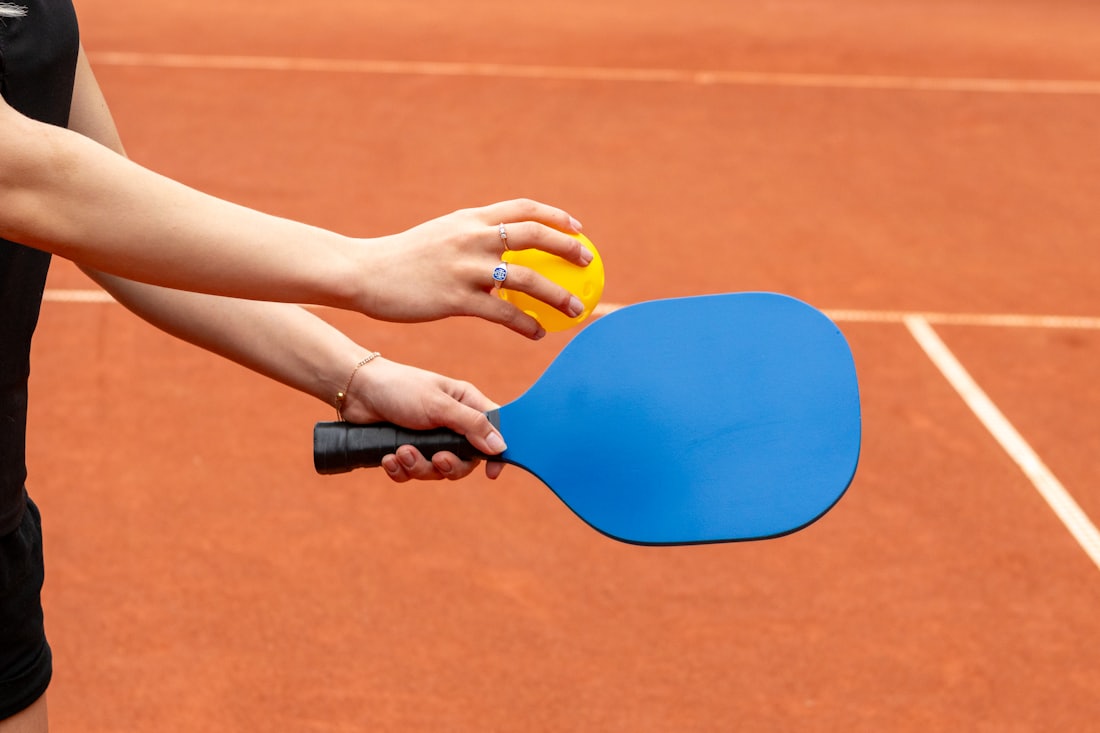
Padel is a racquet sport played 2-versus-2 on an enclosed 20-by-10-meter court with glass back walls and mesh side fencing. The walls are not a gimmick — they are the entire point. The ball can bounce off them, just like in squash, which means rallies that would end on a tennis court turn into long, looping exchanges that beginners can actually rally through. It is not pickleball (no kitchen, no wiffle-ball-style plastic ball, no shorter court — padel courts are larger and use a low-pressure tennis-style ball). It is not tennis (you serve underhand, the walls are in play, and doubles is the only real format).
Padel is the fastest-growing racquet sport in the world. The US went from roughly a dozen courts in 2020 to several hundred today, and major real-estate developers, sports clubs, and fitness brands are racing to open more. The reason it's exploding is the same reason this guide exists: it is unusually beginner-friendly. The walls keep the ball in play long after a beginner would have shanked it into the net in tennis. The underhand serve removes the single hardest stroke in tennis from your first lesson. The court is small enough that you don't need to be in great shape. Two players who have never touched a racket can have real rallies inside their first hour.
The rules (the basic version)
This is a beginner orientation, not a complete rulebook. For the full, current rules read the official FIP Rules of Padel PDF — they are the canonical source. The essentials:
- 2v2, always. Singles padel exists but is rare and is played on a different (narrower) court. If you walk into a padel club, you are playing doubles. You need three other people.
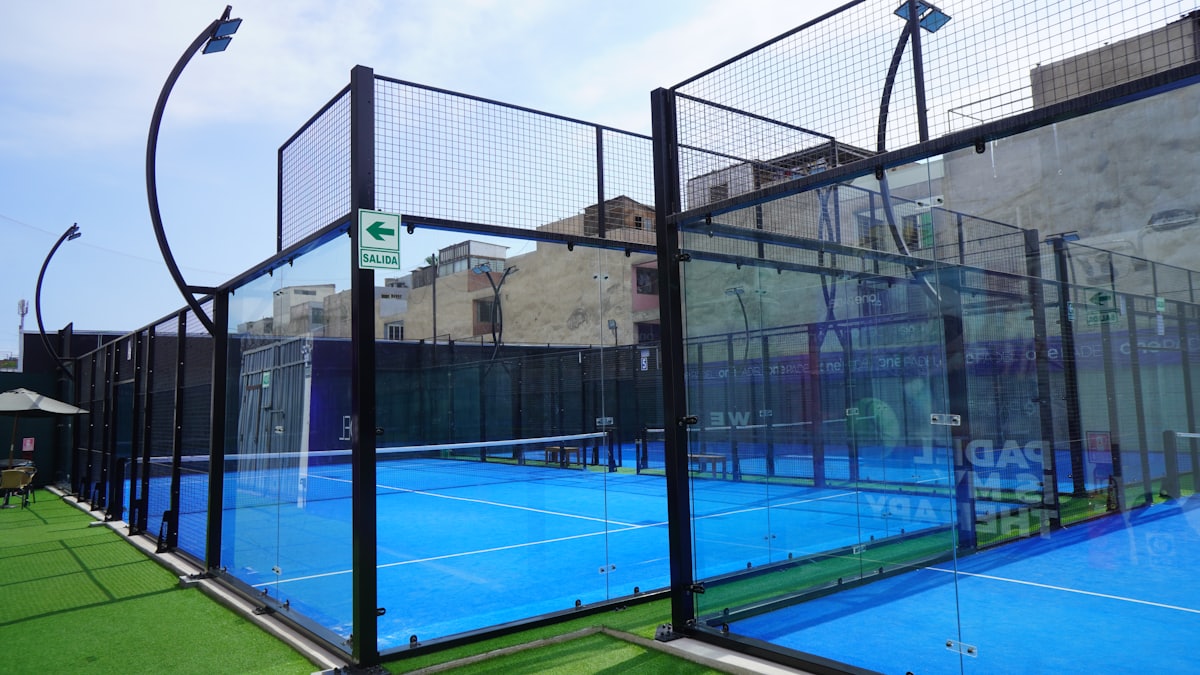
- The court is 20m long by 10m wide, divided by a net, with glass back walls (≈3m tall) and mesh side fencing. Total enclosed playing area.
- Underhand serve, below the waist, diagonally into the opponent's service box. The ball must bounce in your own service box first, then be struck. You get two attempts, exactly like tennis. The serve must clear the net and land in the diagonally opposite box without first touching the side walls/fences (a serve that hits the back wall after bouncing in the correct box is legal).
- Scoring is identical to tennis: 15, 30, 40, game. Six games to a set (must win by two), best-of-three sets. Tiebreaks at 6–6.
- The walls are in play. After the ball bounces once on your side of the court, it can rebound off your back wall (or side walls) and you can play it. You cannot volley the serve return — the return must bounce first.
- You cannot let the ball bounce twice on your side, and you cannot hit the ball over the fence on the full and have it come back (that's out). Hitting the ball into your opponent's wall on the full — without it bouncing on their side first — is also out.
The wall mechanic is the single biggest mental shift coming from tennis or pickleball. Your instinct will be to chase down a lobbed ball that's heading past you; in padel, you let it bounce, let it hit the back wall, and play it on the rebound. This takes about three sessions to feel natural and is where most of the fun lives once it clicks.
What walking into a padel club actually looks like
If you've never seen a padel court in person, expect this:
- A glass-and-steel cage roughly the footprint of a small tennis court, often set up in pairs or rows of four. Indoor clubs put them under a high warehouse-style roof; outdoor clubs have them open.
- The playing surface is artificial turf with quartz sand brushed into the fibers. It feels and plays a bit like clay — predictable bounce, a little forgiving on the joints, easy to slide on. You don't need to learn to slide as a beginner.
- A single door (sometimes two — one on each side) cut into the side fencing. You enter, the door closes, and the court is fully enclosed.
- Painted lines mirror tennis: a baseline, two service boxes per side, a center service line. There is no "kitchen" or non-volley zone like pickleball — you can volley from anywhere on your side except on the return of serve.
- A small reception desk at the club entrance for booking, racket/ball rental, and (sometimes) a cafe. Most padel clubs lean into a clubby, social vibe — this is part of why the sport is taking off.
A standard rented session is 60 or 90 minutes per court. At most US clubs that's $40–$80 per court (split four ways), plus rental gear if you don't bring your own.
Gear — what you actually need to start
The honest version: you can show up to a padel club with nothing and rent everything you need for under $20 in addition to the court fee. Most clubs rent rackets ($5–$10 per session) and provide balls for the session. If you've played twice and want to keep going, then it's worth buying.
Racket (NOT a tennis racket)
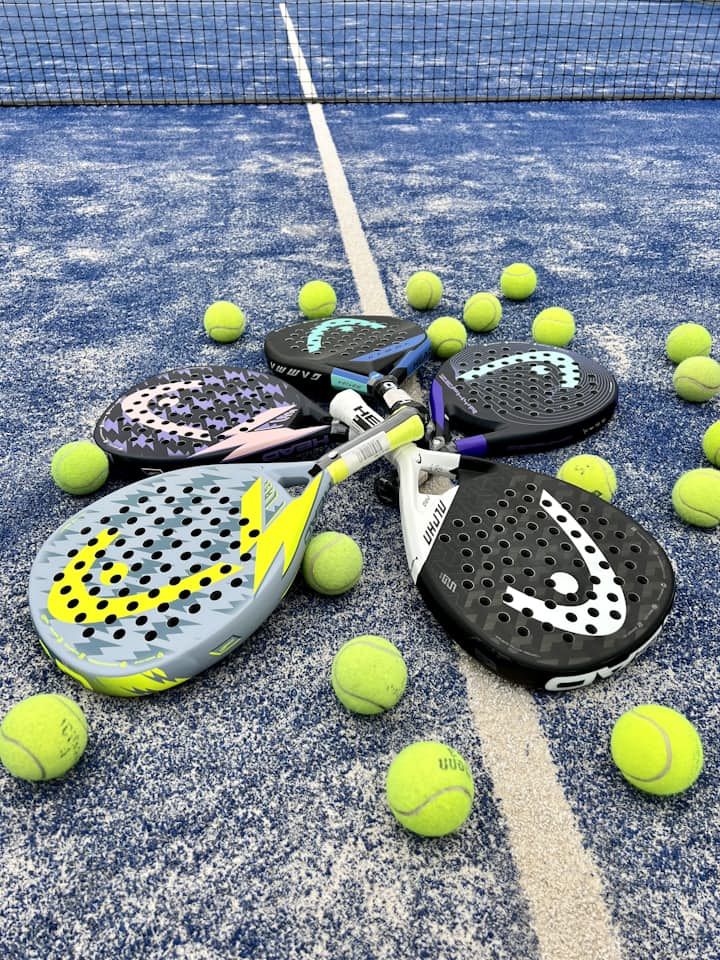
A padel racket is a different animal from a tennis racket. It has a solid foam core (EVA foam, usually), a shorter handle (no string bed, no long throat), and holes drilled through the head to reduce air resistance. They are denser, heavier than they look (340–370g), and shorter than tennis rackets (max 45.5cm length per FIP regulations). A tennis racket will not function as a padel racket — the strings are too long, the head shape is wrong, and you cannot legally play with one in any organized setting.
Crucially: you do not need an expensive racket to start. Pros use rackets that retail at $250–$400. Beginners get nothing out of those rackets except a stiffer, harder-to-control hitting experience. The beginner sweet spot is round-head, medium-weight (355–365g), soft-foam core, balanced shape — easier to control, easier to find the sweet spot, easier on the elbow.
Beginner pick: HEAD Speed Motion
A round/teardrop hybrid head with a soft EVA core and a carbon/fiberglass hitting surface. Weight ~355g with a medium balance — solid for a beginner who's developing strokes. HEAD is one of the most established racket brands across racquet sports and the Speed line is their volume seller. Available on Amazon in the ~$140–180 range; less if you find it on sale.
Pros:
- Forgiving sweet spot for a beginner-to-intermediate player
- Damp Plus vibration dampening protects your elbow in early sessions
- Balanced enough to grow into intermediate play before you need to upgrade
Cons:
- More expensive than the bare-minimum beginner option
- Slightly power-oriented; pure control players might prefer a fully round head
Budget alternative: Babolat Reveal
If you want to spend less, the Babolat Reveal is a recognized beginner racket — lightweight, flexible, easy to maneuver. Babolat is a major racquet-sports brand (you've seen their logo on tennis pros for decades). The Reveal is designed specifically for newer players and sits in the $80–110 range on Amazon.
Pros:
- True beginner price point
- Light and easy to swing — kind to a beginner's wrist and shoulder
- From a brand that backs warranty and quality control
Cons:
- You will likely outgrow it within ~50 hours of play
- Less power than denser, heavier rackets — fine for learning, frustrating later
For a deeper breakdown of beginner padel rackets specifically, see our best padel rackets for beginners guide.
Balls
Padel balls look like tennis balls and are nearly identical in size, but they are made with slightly lower internal pressure. That lower pressure means the ball compresses a bit more on impact, sits on the strings (er, foam) longer, and rebounds slightly less aggressively off the walls — exactly what padel rallies need. You can play with tennis balls in a pinch, but the bounces will feel hot and unpredictable, and any tournament or club will hand you the right ball.
Most clubs include balls in your court rental. You only really need to buy your own if you start practicing solo against a wall or want to play casual sessions outside a club.
Standard pick: HEAD Padel Pro S
The HEAD Padel Pro is the most widely used ball on the World Padel Tour (the sport's top professional circuit) and is trusted by the Spanish Padel Federation among others. The "S" variant is the slow-court version (better for the artificial turf most US clubs use). Sold in cans of 3, around $14 per can.
Pros:
- Tournament-grade quality and consistent bounce can-to-can
- Long-lasting pressure (a can stays playable across multiple sessions if resealed)
- The de facto ball of the international professional circuit
Cons:
- More expensive per ball than recreational options
- Overkill for once-a-month casual play — club balls are fine then
Alternative: Wilson X3 Padel Balls
Wilson's X3 is a solid recreational-to-club-level ball, a bit cheaper per can and easy to find. Wilson has decades of credibility in racquet sports and the X3 is their padel volume play.
Pros:
- Reliable bounce and durability for the price
- Comes from a brand you've already used in other sports
- Widely available across US retailers
Cons:
- Not the ball you'll see in pro broadcasts
- Slightly less consistent over the life of a can vs. HEAD Pro S
Shoes
Padel is played on artificial turf with sand infill. The right outsole is a clay-court tennis outsole (a herringbone pattern that grips without ripping the turf) or a dedicated padel outsole (similar geometry, slightly different reinforcement). Hard-court tennis shoes work too at the beginner level but wear down faster on the abrasive turf. Running shoes are a bad idea — they're built for forward motion and will roll your ankle the first time you change direction hard.
Pick: ASICS Gel-Resolution X Padel
ASICS released a dedicated padel variant of their Gel-Resolution X tennis shoe — same proven platform, with an outsole tuned for the turf-and-sand surface. Lateral support, GEL cushioning in the heel, and a durable upper. About $150–170 on Amazon.
Pros:
- Built on a tennis shoe with two decades of player credibility
- Padel-specific outsole pattern is gentler on club turf and gives proper grip
- Real lateral stability — your ankles will thank you
Cons:
- Premium-priced; not the cheapest entry point
- Slightly heavier than minimalist court shoes; takes a session to feel light
Tennis-shoe crossover (also fine): adidas Solematch Control 2
If you already play tennis and own a clay-court tennis shoe, you don't need padel-specific shoes for your first months. The adidas Solematch Control 2 is a solid clay-court tennis shoe — herringbone outsole, lightweight, lateral support — that crosses over to padel turf cleanly.
Pros:
- Cheaper than dedicated padel shoes
- Doubles as a clay-court tennis shoe
- Lightweight and quick to break in
Cons:
- Not designed for the specific abrasion profile of padel sand; will wear down faster than a padel-specific outsole
- No padel-specific marketing or testing — generic clay-court fit
For a deeper shoe breakdown — clay outsole vs. dedicated padel, brand-by-brand — see our best padel shoes guide.
Finding a place to play in the US
This is the part where, two years ago, "find a padel court in the US" was an internet scavenger hunt. It's getting better but is still patchy compared to pickleball. The Court Scout maintains a verified directory of US padel venues — 90 clubs at last count — with addresses, court counts, indoor/outdoor info, and (where available) booking links. We hand-verify every listing against the club's own website before we mark it verified; that's the moat. Browse the global padel hub for international coverage.
If you're in a metro that has padel, expect 1–4 clubs nearby. If you're not, the nearest court is probably a 30–60 minute drive. The major US growth metros for padel right now are Miami, NYC, Los Angeles, Austin, and Houston — that's where most new clubs are opening.
Finding partners (you need three other people)
This is the actual hard part of starting padel. You need three other humans, ideally near your skill level, ideally available at the same time. A few approaches that work:
- Show up to a club's open mixer or "americano" session. Most US padel clubs run weekly drop-in events where solo players or pairs rotate through games. This is the single best way to start — you meet a circle of regulars in one evening.
- Take a beginner lesson. Many clubs offer 60-minute group lessons for $30–$50 per person. You'll come out with a sense of the strokes, plus a peer group you can text the next week.
- Use a partner-matching app. Apps like Playtomic (the most widely used padel booking app in Europe, expanding in the US) let players find others at their level and book courts together. Worth installing if you're committed; not strictly necessary if your local club has good mixers.
- Local Facebook groups + WhatsApp groups. Most US metros with active padel have a group chat. Ask your club's front desk.
- Club leagues. Once you've played a few months, leagues give you a recurring weekly game with a fixed partner and rotating opponents.
A note on tools vs. sources: Playtomic is a great app for booking courts and matching with partners — we recommend it as a tool. The Court Scout's own venue listings are built independently from the venues' own websites and official sources, not from third-party booking platforms. The two roles don't overlap.
Etiquette and cultural notes
Padel grew up in Spain, Argentina, and Italy, and that lineage shows in the club culture. A few things US players coming from tennis or pickleball should know:
- Warm up. Take a few minutes to mini-rally before you start scoring. Padel is harder on the shoulder, elbow, and back than you'd guess from how easy the first rally feels.
- Respect the lob. The lob is a foundational padel shot, not a "weak" or "junky" tactic. Defensive lobbing into the corners is how points are constructed at every level. If you came from tennis or pickleball where lobs are seen as desperation shots, recalibrate.
- The wall is part of the game. Don't apologize for using the back wall to play a defensive shot — it's the entire point of the sport. Conversely, don't get frustrated when your opponent uses the wall to extend a point you thought was won.
- Quiet during points. Slightly more European-tennis vibe than pickleball's chatty open-play culture. Keep conversation between points.
- Greet your opponents at the start, shake hands at the end. This is universal in padel and clubs lean on it. Skipping it reads as rude.
- The padel handshake at the net after the match — including a quick word of thanks — is standard. Same as tennis.
Padel vs. Pickleball vs. Tennis — the 30-second guide
If you're deciding which racquet sport to try (or you play one and are curious about another), here's the honest comparison:
| Padel | Pickleball | Tennis | |
|---|---|---|---|
| Format | Doubles only (singles is rare) | 1v1 or 2v2 | 1v1 or 2v2 |
| Court size | 20m × 10m, enclosed | 13.4m × 6.1m, open | 23.8m × 8.2m (singles), open |
| Walls in play | Yes, glass back + side walls | No | No |
| Serve | Underhand, below waist | Underhand, below waist | Overhand (anywhere on the court) |
| Ball | Slightly low-pressure tennis ball | Hard plastic with holes | Standard pressurized tennis ball |
| Rally length (typical beginner) | Long — walls keep ball alive | Medium — kitchen rule shortens points | Short — high error rate at beginner level |
| Athletic prerequisite | Low to moderate | Low | Moderate to high |
| Equipment cost to start | $150–250 | $50–150 | $80–200 |
| Time to "fun" for a beginner | One session | One session | 5–10 sessions |
For more depth on this trade-off, we'll have a pickleball vs padel vs tennis comparison deep-dive (coming soon). The shortest honest answer: pickleball is the easiest to find courts for in the US right now, tennis has the deepest infrastructure but the highest skill ceiling, and padel is the most fun-per-unit-effort once you have access to a court.
How we picked
The product recommendations in this guide come from cross-referencing official manufacturer spec sheets, the FIP equipment regulations (which set the legal envelope for rackets and balls), and the published recommendations of established padel publications and federations. We have not personally hit balls with every product on this list. We have read what the International Padel Federation certifies and what the US Padel Association directs its members to, cross-referenced beginner-suitability across multiple independent sources, and recommended only gear that consistently shows up as a beginner-appropriate pick. The honest cons on every product reflect real trade-offs, not marketing-balanced fluff.
Sources
- Federación Internacional de Pádel (FIP) — Official Rules PDF
- Federación Internacional de Pádel (FIP) — Documents
- Federación Internacional de Pádel (FIP) — USA federation page
- US Padel Association (USPA) — official site
- HEAD — Speed Motion padel racquet
- HEAD — padel balls
- Babolat — official padel racquets
- Wilson — padel balls
- ASICS — Gel-Resolution X Padel
- adidas — Solematch Control tennis shoes
- The Court Scout — US padel hub
- The Court Scout — global padel hub
Ready to play?
Find a court near you on The Court Scout's padel directory — 90 verified US clubs and counting, plus growing international coverage. Bookings, addresses, court counts, and indoor/outdoor info on every listing. We rebuild every record from the club's own primary sources; if a listing's wrong, tell us and we'll fix it.