Some links in this article are affiliate links. The Court Scout may earn a commission if you buy through them. This does not affect our recommendations — we never accept payment to feature a product, and our rankings are based on independent research of public reviews, manufacturer specs, and player feedback.
What to look for in your first padel racket
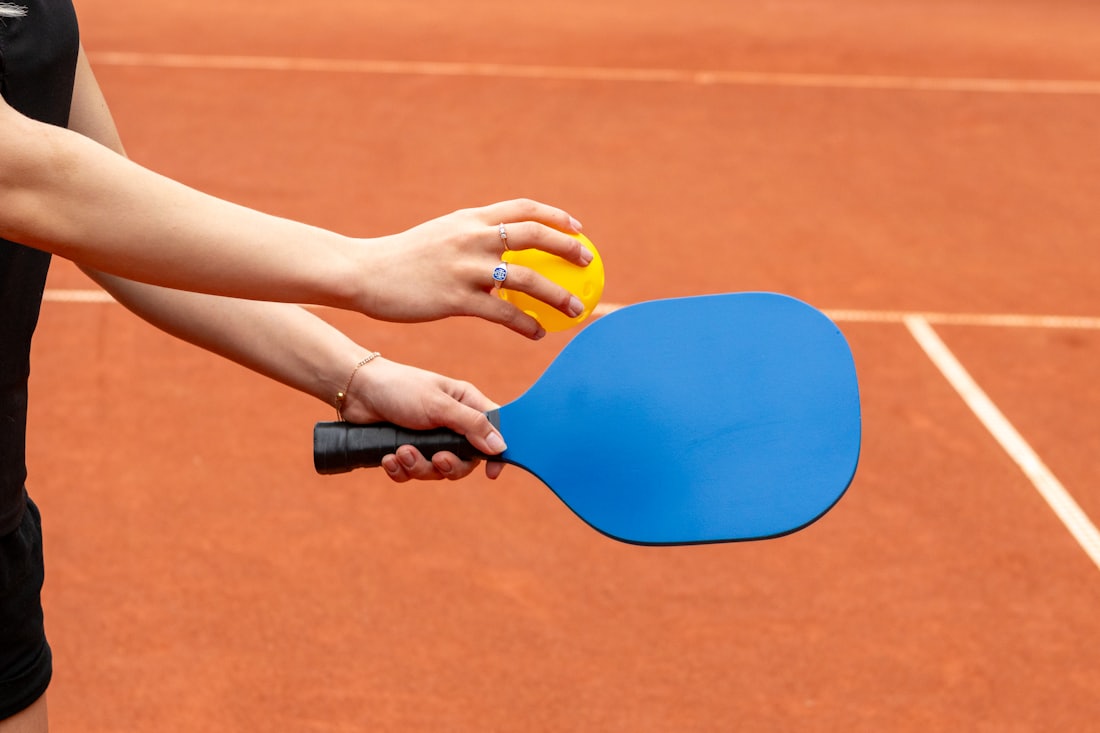
Padel is the second-fastest growing racquet sport in the world, but the first wall most newcomers hit is the gear. Padel rackets look like beefier pickleball paddles, but they play completely differently — they're solid foam-cored composites with a perforated face, they weigh almost twice what a pickleball paddle does, and the wrong one will give you tennis elbow before you understand why you have it. Before you spend $300 on the racket your favorite Spanish pro uses, take five minutes to learn what actually matters for a beginner.
The sweet zone for a first padel racket is well-understood and consistent across every reputable buying guide. Shape: round. Round rackets keep the sweet spot in the center, near where you'll actually be hitting the ball while you're still learning. Diamond shapes (sweet spot near the tip, maximum power) and teardrop shapes (a compromise) demand technique you don't have yet. Weight: 350–370 g. Lighter than that and you can't punch through a defensive shot; heavier and your wrist and elbow will hate you after an hour. Core: soft EVA foam. Soft cores absorb vibration and forgive off-center hits — exactly what a beginner needs. Stiff cores reward perfect technique and punish anything else. Balance: low (head-light) or balanced. Head-heavy rackets generate more power but rotate slower; you want maneuverability while you're learning to react. Budget: $100–180. Padel rackets are pricier than pickleball paddles ($60–120 is the beginner sweet spot for pickleball) because they're more complex to manufacture — molded composite face, perforated holes, EVA core, edge protection. Below $100 you're often in no-name territory with iffy quality control; above $180 you're paying for advanced features your swing can't yet exploit.
Here are five rackets under $180 that consistently rank well across independent padel reviewers, that we verified are currently sold on Amazon, and that we'd hand to a friend without apology.
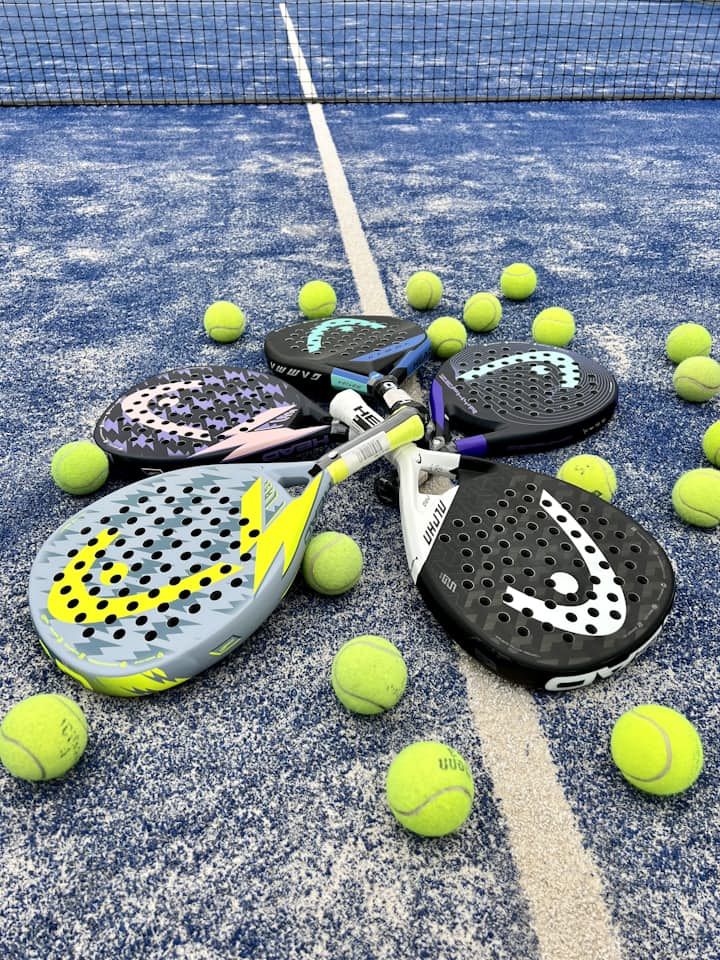
HEAD Evo Speed 2025
The HEAD Evo Speed 2025 is HEAD's explicit beginner offering in their 2025 padel lineup — and it's the racket we'd hand to most US players walking onto a padel court for the first time. It's built on a fiberglass face over a soft foam core, with HEAD's Innegra fiber for vibration dampening, an oversized 511 cm² head for a big forgiving sweet spot, and a 350 g target weight that sits right at the maneuverable end of the beginner range. HEAD's quality control is consistent — meaningful in a market where smaller padel brands ship rackets that play noticeably differently between units. If you only want one safe pick from this list, this is it.
Pros
- Explicitly designed for beginners — soft foam, oversized head, low balance, no compromises
- Innegra fiber materially reduces vibration; arm-friendly for long sessions
- 350 g is light enough for new players to swing without fatigue
Cons
- Teardrop (not pure round) shape means the sweet spot sits slightly higher than dead center — players coming from another racquet sport will need a couple sessions to find it
- The fiberglass face won't grip the ball like a high-end carbon face does; spin is limited (expected at this level)
Who it's for: Players completely new to padel who want the safest, most forgiving first racket without overthinking it.
Specs: 350 g, soft foam core, fiberglass face, oversized teardrop shape (511 cm² head), low balance.
Price (Amazon): Check current price on Amazon
Babolat Reveal
Babolat is best known as a tennis brand (they make Rafael Nadal's racquets), but they've built a serious padel line and the Reveal is their flagship beginner racket. It's about 340 g, which makes it one of the lightest rackets on this list, and uses an oversized round head shape with a very soft, low-density EVA core wrapped in a fiberglass face. The combination is unusually forgiving — off-center hits don't punish you, vibrations get absorbed before they reach your elbow, and the round head keeps the sweet spot exactly where a beginner naturally swings. It's also one of the most budget-friendly rackets from a premium brand on this list.
Pros
- True round head shape — the most forgiving geometry for new players
- Lightweight (~340 g) and head-light balance make it easy to maneuver and react
- Soft EVA core absorbs vibration; one of the most arm-friendly rackets on this list
Cons
- The same softness that makes it forgiving also caps the power ceiling — once your technique improves, you'll feel it can't punch through faster defensive shots
- Limited durability under heavy use; expect to replace within 12–18 months if you're playing 3+ times a week
Who it's for: True beginners, players with any history of tennis elbow, and anyone who wants a Babolat with the brand's tennis-pedigree quality at a forgiving entry-level spec.
Specs: ~340 g, soft low-density EVA core, fiberglass face, round shape (38 mm thickness), head-light balance.
Price (Amazon): Check current price on Amazon
Adidas Match Light 2026
The Adidas Match Light is Adidas's current-generation beginner racket, refreshed for 2026. It weighs 345–360 g, uses a Soft Performance EVA core for the same vibration-absorbing forgiveness you want as a beginner, and runs a fiberglass hitting surface for a smooth, forgiving feel. The shape is described variously as round-hybrid or teardrop — practically, it's an all-court shape that splits the difference between maximum forgiveness and a bit more reach. Adidas has put real R&D into the padel category (it's a serious market in Spain, where Adidas is headquartered for sports), and the Match Light reflects it.
Pros
- Soft EVA core + fiberglass face = genuinely arm-friendly for new players
- Head-light (low) balance keeps the racket maneuverable for fast net exchanges
- Adidas's padel quality control is among the best in the price tier
Cons
- The hybrid round/teardrop shape isn't as forgiving as a pure round — your sweet spot is slightly smaller than the Babolat Reveal's
- 38 mm thickness is standard but doesn't add anything special on the durability front
Who it's for: Beginners who plan to play regularly (2+ times a week) and want a racket that will grow with them for 6–12 months before they upgrade.
Specs: 345–360 g, soft EVA core, fiberglass face, round-hybrid shape (520 cm² head, 455 mm length, 38 mm thickness), head-light balance.
Price (Amazon): Check current price on Amazon
Bullpadel Indiga CTR 2025
Bullpadel is one of the dominant Spanish padel brands — World Padel Tour pros across the rankings use Bullpadel gear. The Indiga CTR is Bullpadel's true beginner racket (not the Hack or Vertex lines, which are aimed at intermediate and advanced players despite their "Comfort" variants). It's a round-shape, ultra-light (360–370 g) racket with a Polyglass exterior over a SoftEva core, plus Bullpadel's Grip Zone technology that helps newer players keep their arm in the correct hitting position. The "CTR" in the name stands for control, which is exactly the right priority for a first racket.
Pros
- True round shape with low balance — built for control, exactly what beginners need
- Grip Zone technology genuinely helps with hand positioning while you're learning the swing
- Bullpadel brand authority — the racket comes from a company that lives and breathes padel, not a tennis brand crossing over
Cons
- 360–370 g is at the upper end of the beginner-friendly weight range; players with very small builds or wrist issues should consider the lighter Babolat Reveal instead
- Less well-known in the US than HEAD or Wilson — fewer Amazon reviews to triangulate from, though European reviews are deep
Who it's for: Beginners who want a padel-native brand (vs. a tennis brand's padel crossover) and don't mind a slightly heavier racket for added stability.
Specs: 360–370 g, SoftEva core, Polyglass face with carbon tube reinforcement, round shape, low balance.
Price (Amazon): Check current price on Amazon
Wilson Carbon Force LT
Wilson is the other tennis-brand-doing-serious-padel on this list, alongside Babolat. The Carbon Force LT is the "Lightweight" version of Wilson's Carbon Force line, explicitly positioned for beginners and improving intermediates who want maneuverability over raw power. It's 355 g, runs a soft EVA core for comfortable impacts, and uses a carbon-fiberglass composite face that gives it slightly more pop than the pure fiberglass faces on the HEAD Evo Speed or Babolat Reveal. The shape is teardrop, which sits between the pure round of the Babolat and the more aggressive geometries of advanced rackets. If you suspect you'll progress quickly and want a racket that won't feel beneath you in six months, this is the pick.
Pros
- 355 g with a 260 mm balance — maneuverable but stable, a good "growth" racket
- Soft EVA core keeps it arm-friendly while the carbon-fiberglass face adds a little extra power
- Wilson's after-sale support and warranty handling is among the most reliable in the category
Cons
- Teardrop shape (not round) means the sweet spot moves toward the tip — less forgiving than the Babolat or Bullpadel picks
- More expensive than the Bullpadel Indiga; the price premium reflects the carbon content rather than beginner-specific features
Who it's for: Beginners who suspect they'll improve fast (athletic background, other racquet-sport experience) and want a racket that bridges from beginner into solid intermediate without an immediate upgrade.
Specs: 355 g, soft EVA core, carbon-fiberglass composite face, teardrop shape (548 cm² head, 455 mm length, 38 mm beam), medium-low balance.
Price (Amazon): Check current price on Amazon
How to pick your first padel racket
Shape. Three shapes exist in padel: round, teardrop, and diamond. Round rackets put the sweet spot in the geometric center of the face — exactly where a beginner naturally swings. Diamond rackets push the sweet spot up toward the tip for maximum power on smashes — they reward advanced technique and punish everything else. Teardrop sits between the two. Beginners almost always want round. If you're choosing between the picks above, the Babolat Reveal and the Bullpadel Indiga CTR are pure round; the HEAD Evo Speed is an oversized teardrop that plays close to round; the Adidas Match Light is a round-hybrid; the Wilson Carbon Force LT is the most teardrop-ish of the bunch.
Weight. The beginner sweet spot is 350–370 g. Below 350 g the racket gets twitchy in your hand and you'll mishit more; above 380 g your arm fatigues fast and your elbow will write checks your shoulder can't cash. If you have any history of tennis elbow or wrist strain, go to the lighter end (340–355 g — the Babolat Reveal or HEAD Evo Speed). If you're athletic with no joint issues and played tennis growing up, you can comfortably handle 360–370 g (Adidas Match Light, Wilson Carbon Force LT, Bullpadel Indiga CTR).
Balance. Padel rackets are described as head-heavy (more mass toward the tip, more power, slower swing), balanced (mass distributed evenly), or head-light (mass toward the handle, faster swing, more control). Beginners should pick head-light or balanced, never head-heavy. All five rackets on this list are head-light or low balance — that's not a coincidence; that's what beginner rackets look like.
Grip size. Padel rackets use L0–L2 grip sizes — meaningfully smaller than tennis grips. Most beginner rackets ship in L1 or L2 (4 1/4" circumference equivalent). If you have a large hand or are coming from tennis where you used L3 or L4, add a single overgrip to the existing grip — it's the cheapest, most effective adjustment you can make, and it lets you fine-tune the feel without committing to a different racket. A grip that's too small causes more wrist injuries than any other equipment problem in padel, because you over-grip to compensate.
Budget. The realistic beginner sweet spot is $100–180. Under $100 you're often in territory where the EVA core compresses early or the face delaminates within months — the Babolat Reveal and Bullpadel Indiga CTR sometimes dip below $100 on sale and are exceptions to that rule because they're real rackets from real brands. Above $180 you're paying for advanced features (full carbon faces, multi-density cores, professional-grade weight balancing) that demand a swing you don't yet have. The $300+ rackets the World Padel Tour pros use are designed to perform at the absolute edge of consistency for players who are already consistent — that's the opposite of what a beginner needs. Save the money. When your bandeja and víbora are reliable in 6–12 months, then look at a $250 racket — and you'll appreciate the difference.
How we picked
We compared the consensus picks across multiple independent padel publications — Padel Brief's 2026 beginner buyers guide, Padelful's "9 Best Padel Rackets for Beginners 2026," Justpadel's 2026 beginner buying guide, Padel Brower's 2026 beginner roundup, and Padel Market's beginner buying guide. We cross-referenced each candidate against the International Padel Federation's (FIP) approved racket list (the official equipment authority that sanctions World Padel Tour competition gear), against the manufacturer's own product specifications, and against current Amazon availability and review consensus.
We required every pick to meet four conditions: (1) under $180 at typical retail, (2) beginner-appropriate spec (round or round-hybrid shape, 340–370 g weight, soft EVA core, head-light or balanced balance), (3) available on Amazon with a verified product page (we don't link to vaporware), (4) at least two independent review sources rating it as a legitimate beginner pick from a recognized brand.
Two rackets that appear in many "best beginner" lists were deliberately substituted in our final lineup: the Bullpadel Vertex 03 Comfort and the Wilson Bela Pro V2. Both are excellent rackets, but they are diamond-shaped power rackets aimed at intermediate-to-advanced players — recommending either to a true beginner would set them up for frustration. We swapped in the Bullpadel Indiga CTR (Bullpadel's actual beginner round-shape racket) and the Wilson Carbon Force LT (Wilson's lightweight beginner option). Similarly, the original HEAD Speed Motion is a pro-player teardrop racket from HEAD's tour line; we recommend the HEAD Evo Speed 2025 — HEAD's explicit beginner offering — instead.
We did not test these rackets ourselves. We synthesized public reviews, manufacturer specifications, and player feedback. If you want side-by-side hitting comparisons with high-speed video, those exist on YouTube — but they often disagree on which beginner racket "wins," because the differences between solid beginner rackets in this price range are smaller than the differences between any two players' swings. The best racket for a beginner is the one they actually use enough to develop a swing on.
Sources
- International Padel Federation (FIP) — official rules and equipment regulations
- Padel Brief — Best Padel Rackets for Beginners in 2026
- Padelful — The 9 Best Padel Rackets for Beginners 2026
- Justpadel — What is the Best Padel Racket for Beginners in 2026?
- Padel Browser — Best Padel Rackets for Beginners in 2026
- Padel Market — Best Padel Racket for Beginners 2026: The Complete Buying Guide
- The Padel Gang — Babolat Reveal Padel Racket Review: Beginner's Dream?
- Padel.fyi — Babolat Reveal racket data
- Padelful — Babolat Reveal 2023 review
- Padelful — Adidas Match Light 2026 review
- Wilson Sporting Goods — Carbon Force LT Padel Racket (official product page)
- Tennis Warehouse — Wilson Carbon Force LT Padel Racket spec sheet
- HEAD Padel — Evo Speed 2025 (manufacturer specifications via Amazon listing)
- Bullpadel — Indiga CTR 2025 (manufacturer specifications via Amazon listing)
Find local courts to actually play on
A padel racket in the closet is just decor. The fastest way to improve is to play 2–3 times a week with players slightly better than you. The Court Scout's directory lists verified padel clubs in every market we cover, with real Google ratings, real hours, real surface info, and real cost — no scraping, no pay-to-rank. Find padel courts near you to put your new racket to use.
Have a beginner padel racket you'd recommend that didn't make this list? We refresh this article monthly. Email tips to [email protected] — we're always looking for rackets that play above their price.