The shot every coach obsesses over
Ask any pickleball coach what separates a 3.0 player from a 4.0 player and you'll get some version of the same answer: the third shot drop. It isn't the flashiest shot in the sport — no one highlights a well-placed drop the way they highlight a smash — but it's the shot that determines whether the serving team ever gets a fair chance to win the point. Miss it, or hit it wrong, and you spend the entire rally defending from the baseline while your opponents pick you apart from the net. Hit it well, and the rally resets to a level playing field.
This piece is a deep dive on that one shot: why it exists, how to actually hit it, when to skip it for a drive instead, and the mistakes that keep most players from ever developing the touch. If you want the broader strategic picture — dinking, stacking, poaching, and the rest of the fundamentals — our strategy basics guide covers those. This article assumes you already know the game is won and lost at the kitchen line, and focuses entirely on the shot that gets you there.
Why the serving team needs a rescue shot in the first place
To understand the third shot drop, you have to understand the structural disadvantage it's designed to fix.
Pickleball's two-bounce rule requires that both the serve and the return of serve bounce before either team can volley. In practice, this creates an asymmetric starting position for every point. The receiving team gets to send one player forward immediately: the returner hits the return and then sprints to the kitchen line, joining their partner, who was often already positioned there before the point even started. By the time the ball comes back across the net a second time, the receiving team typically has both players at the net, paddles up, in the strongest position on the court.
The serving team has no such luxury. Because they can't volley the return, both players are stuck at or near the baseline when the third shot — the serving team's second contact of the rally — comes up. That's the shot in question: serve (1), return (2), third shot (3). At the moment they hit it, the serving team is looking at two opponents already dug in at the net, and they themselves are 20-plus feet back, with 15 feet of open court between them and the kitchen line they still need to reach.
If the serving team just hits a normal groundstroke here — the kind of shot that would be a perfectly good rally ball anywhere else in tennis or racquetball — they're driving it directly into a paddle held at chest height, seven feet from the net, with an opponent who has nowhere else to be and nothing else to do but put it away. A hard third shot into two players standing at the kitchen is close to a free point for the return team. That's the trap the third shot drop is built to escape.
What the drop actually does
The solution isn't to hit the ball harder or smarter into the same bad geometry — it's to change the geometry entirely. A third shot drop is a soft, arcing shot, hit from around the baseline, that clears the net by a small margin and lands in the opponent's kitchen (the non-volley zone) before it can be volleyed. Because the ball lands below net height and the opposing team can't step into the kitchen to hit it out of the air, they're forced to let it bounce and then hit up from a low position — the same disadvantaged posture the serving team was just stuck in.
While that's happening, the serving team uses the several seconds of flight time the arc buys them to jog forward to the kitchen line. If the drop lands cleanly, by the time the opposing team is hitting their fourth shot, all four players are at the net and the rally has reset into a neutral dink exchange — the "kitchen standoff" that most points in competitive pickleball eventually settle into. The third shot drop doesn't need to be a winner. In fact it almost never is one. Its entire job is to neutralize the disadvantage of starting the point at the baseline, buying the serving team time and court position rather than points.
That's also why it's widely considered the hardest shot to learn in the sport. It requires deliberately taking pace off the ball — the opposite of almost every other shot in a racquet sport — while still generating enough lift and precision to clear the net and land inside a target roughly the size of a bathtub, from 20-plus feet away, often while moving forward at the same time.
The mechanics of a good drop
A reliable third shot drop comes down to four things:
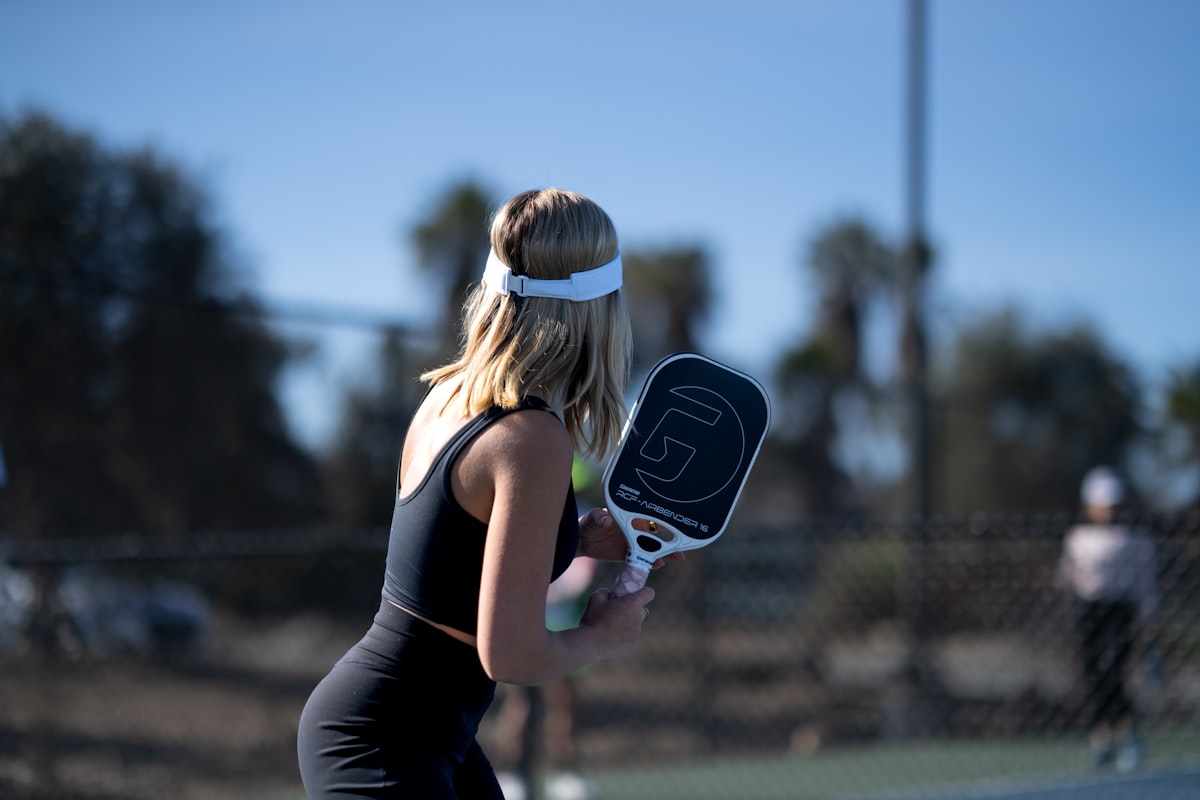
Soft hands. The single biggest mechanical shift from a normal groundstroke is grip pressure. A hard grip transfers energy efficiently — exactly what you don't want here. Loosen your grip, especially in the fingers, so the paddle face can absorb and redirect the ball's pace rather than adding to it. Many coaches describe the feeling as "catching" the ball on the paddle face rather than striking it.
An open paddle face and a lifting motion. Rather than a flat, driving swing, the paddle face stays slightly open (tilted upward) through contact, and the stroke comes from bending the knees and lifting through the legs rather than swinging hard with the arm. The arm guides the paddle; the legs generate the lift. This produces the arc the shot needs — a higher, slower trajectory that clears the net with margin and then drops rather than carries.
A target, not a swing. Beginners treat the third shot drop as a swing they're trying to execute. Better players treat it as a target they're trying to land on — somewhere in the kitchen, ideally toward the sideline or at an opponent's feet, so the resulting up-bounce is as awkward as possible to attack. Picking the landing spot before starting the motion, rather than reacting and hoping, is what separates a drop that consistently lands in the kitchen from one that's a coin flip.
Recovery, not admiration. The shot isn't finished when the paddle makes contact — it's finished when you're at the kitchen line. As soon as you make contact, start moving forward with your partner. A perfect drop that isn't followed by a sprint to the net just leaves you out of position to defend whatever comes back.
The third-shot drive: the other option
The drop isn't the only legitimate third shot — it's just the higher-percentage default. The alternative is the third-shot drive: a firm, flat, or slightly topspin groundstroke hit with real pace, aimed low and usually at a gap or at an opponent's body rather than at open space above the net.
Drives make sense in specific situations. If the return you're facing is weak — short, high, or sitting up — a drive can be a legitimate attacking shot rather than a neutralizing one; you're trying to win the point outright or force a weak fourth shot, not reset it. Drives also work against opponents slow to reach the kitchen line, or against a player still in transition (between baseline and net) when the third shot comes up — a drive at their feet, hit before they've set up, is much harder to handle than the same drive at a player already planted with a paddle up. Some players mix in drives simply to keep opponents from anticipating every third shot as a drop.
The tradeoff is risk. A drive into two paddles already up at the net is close to a guaranteed lost point, so it only works when the setup — a weak return, a slow opponent, an exploitable gap — is actually there. Most competitive players hit the drop the large majority of the time and reserve the drive for moments the return sets it up. If you're unsure which one a situation calls for, the drop is almost always the safer default.
Common mistakes
Hitting it too hard, so it pops up. The single most common failure mode. A drop hit with too much pace either sails past the kitchen into the opponent's strike zone (giving them an easy attack) or lands short in the middle of the court at a height they can step in and smash. The fix isn't "try to hit it softer" in the abstract — it's the grip and motion changes above. Softness comes from technique, not from consciously decelerating your arm mid-swing, which usually produces an inconsistent, mistimed shot.
Not getting enough arc. A drop hit flat either clips the net or clears it with too little margin and lands in the middle of the court instead of the kitchen. The arc buys both safety margin over the net and a landing spot close enough to the net that it can't be driven back at you. Players learning the shot often flatten it out under pressure — arc requires trusting a higher trajectory than instinct says is "safe."
Poor court positioning after the shot. Even a technically good drop is wasted if you don't move forward behind it. Some players hit a solid drop and then stay at the baseline, admiring it, leaving their partner to cover the net alone against two opponents. The drop and the sprint forward are a single unit, not two separate decisions.
Trying to win the point with it. New players sometimes treat the drop as an attacking shot and aim for the lines or gaps between opponents, adding risk to a shot whose entire value is its reliability. The drop's job is to neutralize, not to win the point — aim for the middle of the kitchen, not the corners, until your consistency is high enough to get more ambitious with placement.
A practice approach for beginners still developing the touch
Touch shots like the drop take longer to build than power shots because there's no visible feedback loop telling you "harder" worked — the feedback is subtle, based on arc and landing spot rather than raw force. A few approaches that build the feel faster than just playing games:
Start from the kitchen line, not the baseline. Before trying full third-shot drops from 20-plus feet away, practice the same soft, lifting motion from just behind the kitchen line, dropping the ball into the opposite kitchen. This isolates the hand and touch mechanics without also asking you to judge distance and trajectory from further back. Once the motion feels natural at short range, move back toward the baseline in stages — transition zone first, then baseline.
Drill with a feeder, not a full rally. Have a partner or coach feed you balls simulating a return of serve — moderate pace, landing near the baseline — while you focus purely on the drop, without the pressure of a live point. Ten drops in a row landing in the kitchen is a reasonable benchmark before mixing drops into real games.
Track landing spot, not "feel." It's easy to convince yourself a drop "felt good" when it actually sailed past the kitchen. Have a feeding partner call out where each ball landed, or practice near a fence where you can watch the bounce yourself. Objective feedback, repeated dozens of times, builds the muscle memory faster than feel alone.
Accept a slower path than power shots. A driving groundstroke can look decent within a few sessions, but a reliable third-shot drop typically takes months of deliberate practice to hold up under real match pressure — because the mechanics run against every other racquet-sport instinct you've built. That's normal, not a sign you're bad at the shot. It's also exactly why it separates skill levels so reliably: most players never put in the dedicated reps.
Once your drop is landing consistently, layer in dinking discipline for the next phase of the rally — the drop gets you to the kitchen line, but what happens once you're there is its own skill set with its own patterns to learn.
Find a court and put the reps in
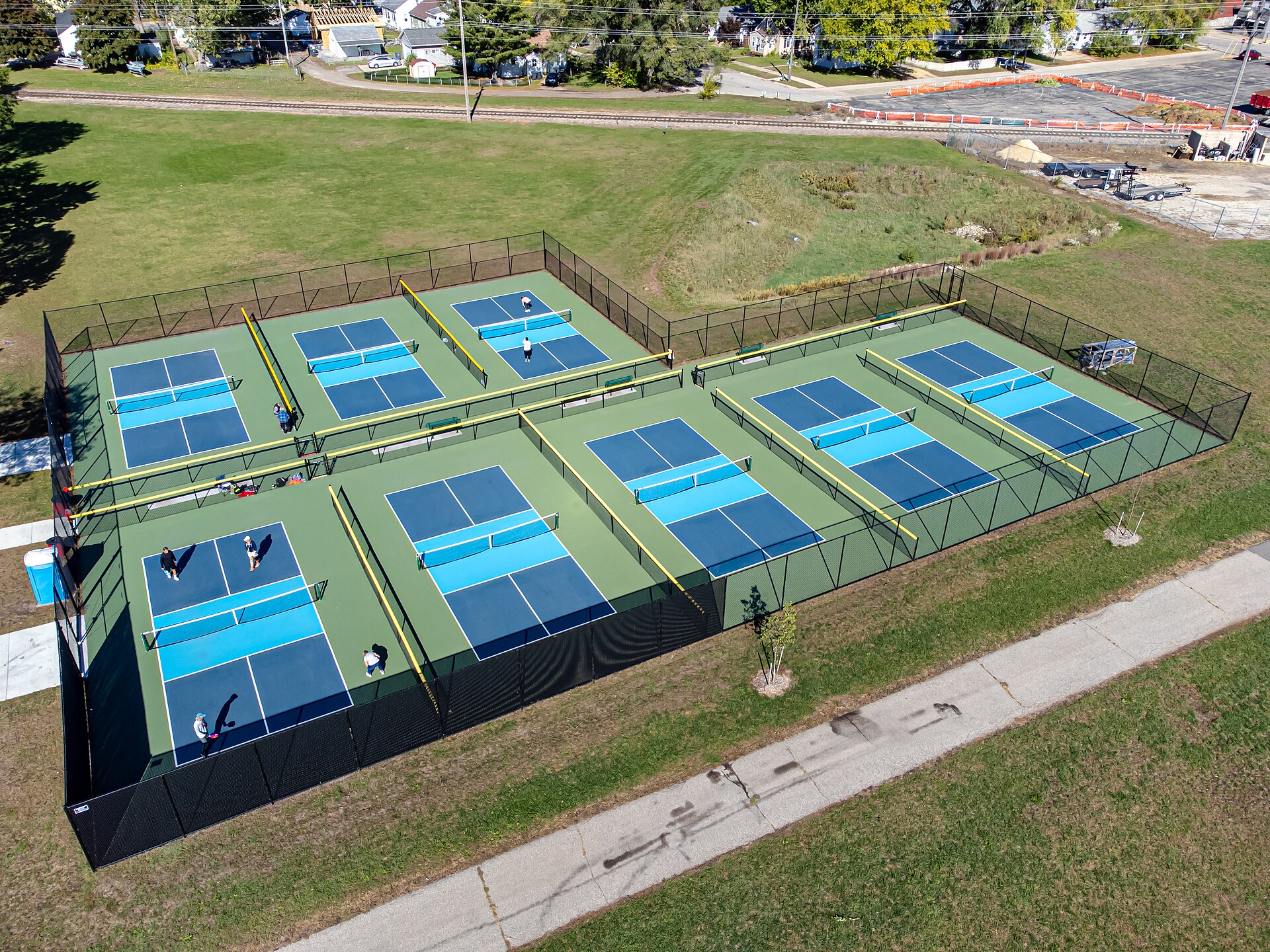
Reading about the third shot drop won't build the touch — only repetition against a live partner will. The Court Scout maintains a verified directory of pickleball courts across the US, with hours, surface type, and drop-in details, so you can find a place nearby to run the drills above against a real feeder or hitting partner.
Sources
This guide draws on USA Pickleball's official rules and instructional resources (specifically the two-bounce rule that creates the third-shot situation), the long-form instructional library of Sarah Ansboury (former touring pro and coach, widely followed for her third-shot-drop breakdowns), and Jordan Briones's technique videos at Briones Pickleball. We have not personally coached every player cited here — we have synthesized what these instructors consistently teach about the third shot drop's mechanics and purpose.