What padel actually is
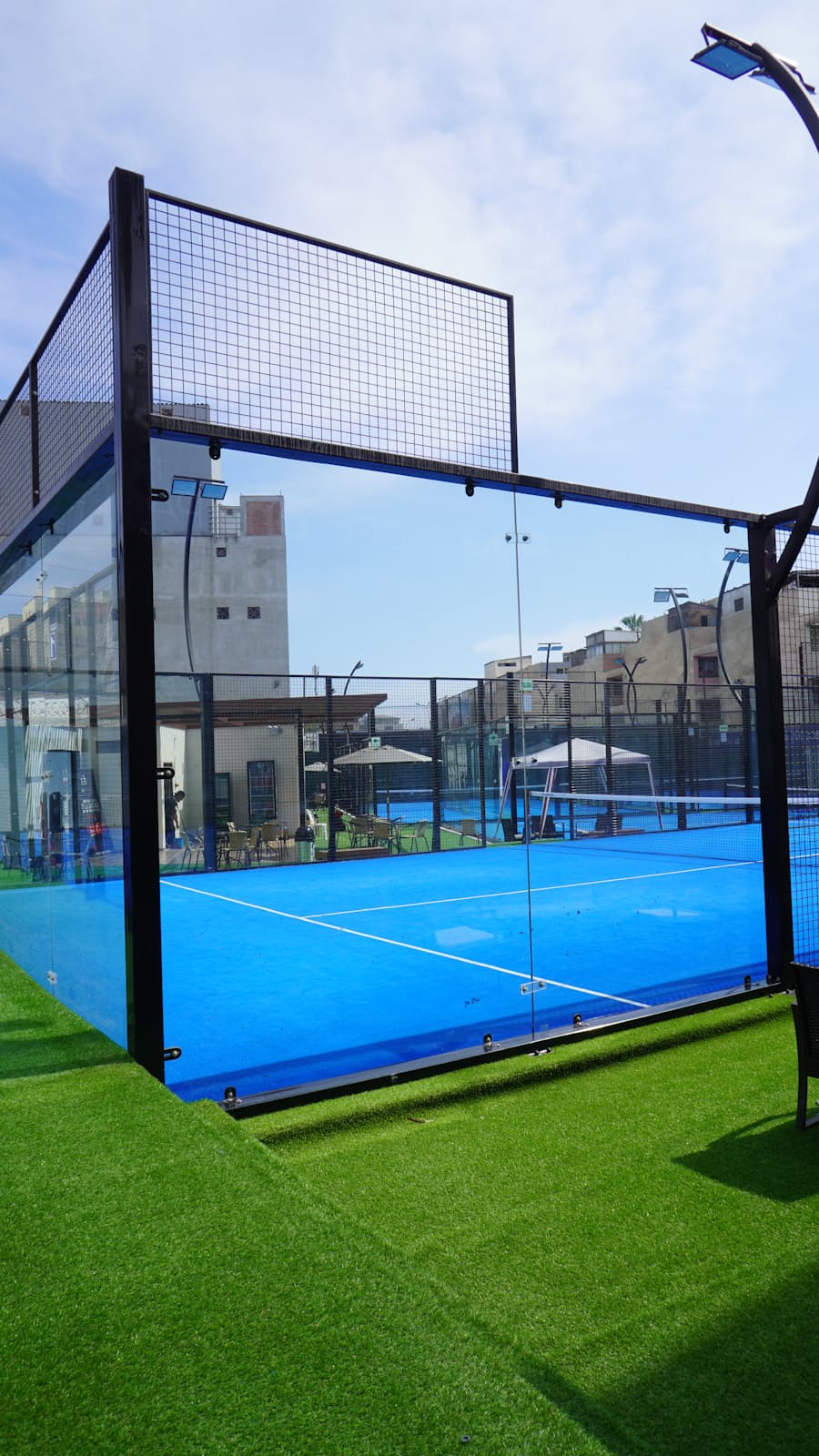
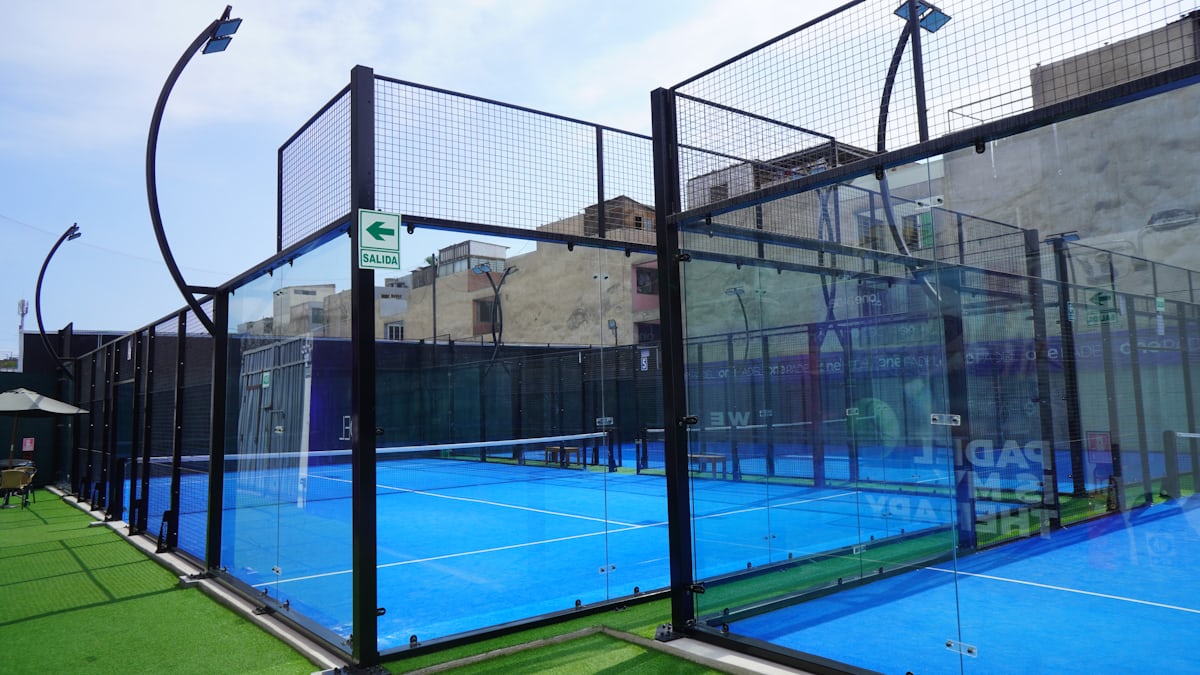
Padel is a doubles racquet sport played on a small, fully enclosed court — 20 meters long by 10 meters wide — with a net at the center, glass walls at the back and part of the sides, and metal mesh fencing filling the rest of the enclosure. The easiest way to picture it: take a tennis court, shrink it, put a squash-style wall behind each baseline, and hand players a solid, stringless racket instead of a strung one. Underhand serves, a low-compression ball that looks like a small tennis ball, and — the sport's entire identity — walls that keep the ball alive long after it would have sailed out of bounds on an open court.
None of that is a gimmick bolted onto tennis. It's a complete, codified sport with its own rulebook, the FIP Rules of Padel, maintained by the International Padel Federation (FIP) — the sport's global governing body, based in Spain, and the source we've used to fact-check everything below. This guide covers the rules a new player actually needs: how the court is built, how scoring works (including a real change that took effect in 2026), how to serve legally, and — the part everyone asks about first — exactly when the walls keep the ball in play and when they don't.
If you're brand new to the sport and want the full starter experience — gear, finding a club, finding partners — see our beginner padel guide. This piece is just the rules, in depth.
Court dimensions and construction
The court is a rectangle, 10 meters wide by 20 meters long measured on the inside, split in half by a net running the full width. On each side of the net, 6.95 meters back, a service line marks off the service boxes; a center service line divides each side's service area into a left and right box, mirroring a tennis court's layout.
What makes it padel is the enclosure. Per FIP's specification, the ends (behind each baseline) are walls up to 3 meters high — glass, brick, or another hard, uniform-bounce material — topped by another meter of metal mesh fencing, for a total enclosed height of 4 meters. The side walls follow one of two approved layouts: either a stepped combination of 3-meter and 2-meter wall sections with mesh filling the rest, or a full 3-meter-high, 4-meter-long glass section at each end with mesh completing the remaining height and length. Either way, the practical result for players is the same: solid glass close to each baseline and in the corners, metal mesh along more of the sidelines and the top.
The net itself sits lower than a tennis net — 0.88 meters at the center, rising to 0.92 meters at the posts — and the playing surface is typically artificial turf with sand infill, though cement and other synthetic surfaces are also permitted as long as the bounce stays consistent. The ball is a rubber sphere similar in size to a tennis ball but with lower internal pressure, and the racket is a short, solid, perforated paddle with no strings — capped at 45.5 cm total length by FIP's equipment rules.
Scoring: the same skeleton as tennis, with a real 2026 change
If you've played tennis, padel scoring will feel immediately familiar, because it uses the identical point-game-set structure: 15, 30, 40, game, with games grouped into sets and sets grouped into a match.
- Points within a game: 15 for the first point, 30 for the second, 40 for the third, and the fourth point wins the game — provided the pair is ahead by at least two points.
- Games within a set: the first pair to six games wins the set, again needing a two-game margin. A 5–5 tie means playing to 7–5; a 6–6 tie triggers a tiebreak, played to 7 points with a two-point margin, which sets the score at 7–6.
- Sets within a match: best of three sets. Win two sets, win the match.
The interesting part — and the reason this article carries a 2026 date — is what happens at deuce (three points each, 40–40). As of a rules revision that FIP adopted in late 2025 and put into effect on January 1, 2026, tournaments and clubs now choose from three official deuce formats, agreed before the match starts:
- Advantage (the traditional method). Win a point at deuce and you get "advantage"; win the next point too and you take the game. Lose it, and the score returns to deuce. This can repeat indefinitely until one pair strings together two points in a row.
- Star Point (new for 2026). The pair plays up to two rounds of advantage as normal. If it's still tied after that, the game is decided by a single sudden-death point called the Star Point — the receiving pair chooses which side (left or right box) will receive it, and can't swap positions at the last second. This replaces the older, more controversial "golden point at deuce" approach on the professional Premier Padel tour with a format that still allows a little back-and-forth before going to sudden death.
- Golden Point. The simplest and fastest option: at 40–40, no advantage is played at all. The receiving pair picks their receiving side, and the next point wins the game outright.
Recreational clubs in the US mostly still play traditional advantage scoring, so don't be surprised if your local court hasn't adopted Star Point yet — but if you play in a tournament or watch professional padel (Premier Padel), expect to see Star Point as the default going forward. Whichever format is in play, it only changes what happens at deuce; everything else about how a set and match are won stays the same.
Serving rules
The serve is where most rules confusion for newcomers actually lives, because it's more restrictive than a rally shot. Per FIP Rule 6:
- Underhand only, struck at or below waist height. There's no overhand serve in padel, ever — this is a hard rule, not a stylistic choice, and it's a big part of why the sport is approachable for beginners coming in cold.
- The ball must bounce first. The server drops the ball and lets it bounce on the ground before striking it — you cannot serve off a toss the way you would in tennis.
- Served diagonally, from behind the service line. The server stands with one foot behind the line (inside the box relative to the center line), and the ball must land in the diagonally opposite service box on the other side of the net. The first serve of a game goes to the receiver's left-side box; after a point is won, service alternates to the right-side box, and so on.
- Two attempts, like tennis. Miss the first serve and you get a second try; miss both and it's a fault, and the point goes to the receiving pair.
- The serve can't touch the mesh fence before its second bounce. This is a padel-specific wrinkle: even if the serve lands correctly in the box, it's still a fault if it then hits the metal mesh fencing before bouncing a second time. A serve that clips the back glass after a correct bounce, however, is legal — the restriction is specifically about the mesh, not the wall material in general.
- Service alternates between partners each game, and the receiving order — once set for a game — holds through that game.
A serve that hits the net cord or a post and still lands correctly in the box is a "net" — essentially a let — and gets replayed, exactly as in tennis.
The walls: padel's defining rule
This is the rule everyone comes to padel wondering about, and it's simpler than it looks once you separate two situations: your own return and what happens after the ball crosses the net.
The core principle (FIP Rule 12): once the ball has bounced on the ground on a side of the court, it stays "in play" no matter what it touches next on that side — glass wall, mesh fence, corner, whatever — as long as it's returned before it bounces a second time. So a deep, hard shot that you'd have to sprint down in tennis instead bounces once in front of you, rockets off the back glass, and comes back out toward the middle of the court — and you get to play it on that rebound. This is the entire reason padel rallies run so much longer than tennis rallies at a beginner level: the wall does some of the defensive work for you.
What makes a shot go out, by contrast, is any of these:
- **The ball hits a wall or the mesh before it bounces on the ground** on your side. No bounce first, no wall play — that's a lost point, exactly like hitting a fence on the fly in a game with no walls at all.
- The ball bounces twice on your side before you return it.
- Your return sails over the mesh and out of the enclosure, at a court that doesn't have an authorized "out-of-court" safety zone set up around it (more on that below) — the point is lost the moment it exits.
A genuinely advanced wrinkle worth knowing exists (but not obsessing over as a beginner): FIP's rules also allow a shot that bounces off your own back wall first — without touching the ground again — and then clears the net into the opponent's court; that's a legal return too, not just a defensive save. You'll see advanced players hit this on purpose. As a beginner, you won't need it — just know it's not a foul if you see it.
On "the ball going over the fence into a neighboring area": many padel facilities are built with a certified safety zone around each court specifically so a ball that legitimately bounces in play and then flies out through a side gate or over the fencing can still be chased down and returned — the point stays alive until it would have bounced a second time or hits something unrelated to the court. This "authorized out-of-court play" is a real, codified rule (FIP Rule 16), but whether it applies depends on whether your specific court has the certified clearance around it to allow it safely — plenty of clubs, especially smaller or older indoor setups with courts packed close together, don't have that clearance, in which case a ball that leaves the enclosure is simply out. If you're unsure whether your club allows out-of-court play, ask the front desk or your instructor before you assume you can chase a ball outside the cage — don't guess mid-match.
Doubles: the only format that matters in practice
FIP's entire rulebook — court dimensions, scoring, serve order, everything — is written in terms of pairs. There is no meaningful competitive singles padel; the professional tour (Premier Padel) is exclusively doubles, and essentially every club, league, and casual game you'll find is 2-versus-2. If you show up to a padel court, you need three other people. Some clubs will let two players knock the ball around informally on a doubles court for practice, but that's not "singles padel" in any rules sense — it's just two people using a doubles court without a format.
This matters for logistics more than for rules: unlike tennis or pickleball, you can't reliably show up alone or as a pair expecting to fill in against strangers the way you might at an open-play pickleball session. Most beginners find partners through a club's group lesson, a weekly drop-in "americano" mixer, or a league — not by walking in solo.
Common faults beginners actually make
A few mistakes show up constantly in a new player's first few sessions:
- Volleying the return of serve. You cannot volley a serve — the return has to bounce first, exactly like the serve itself. New players used to attacking short balls out of the air get called for this constantly early on.
- Playing the wall before the bounce. The single hardest habit to unlearn from tennis or pickleball instincts is trying to intercept a ball on the fly as it heads toward the back wall. In padel, the correct move is almost always to let it bounce, let it come off the wall, and play it on the second contact — attacking it in the air often sends it long or into the net because you haven't accounted for the wall rebound in your read.
- Foot faults on serve. Stepping on or over the service line, or letting a foot cross the center-line extension before contact, is a fault just like the ball landing wrong. It's an easy habit to develop if you're used to tennis's more forgiving baseline serve stance.
- Serving overhand out of muscle memory. Tennis players especially do this in their first session or two — the underhand requirement is unusual enough that old habits sneak back in under pressure.
- Assuming the mesh works exactly like the glass on serve. As covered above, a serve that lands correctly and then clips the mesh before its second bounce is a fault — even though the same shot during a normal rally point would be perfectly legal. This asymmetry catches players out constantly.
- Not knowing whether their court allows out-of-court play. Chasing a ball through a gate on a court that doesn't have the safety clearance for it isn't just a rules violation — it can be a real safety issue. Ask before you assume.
Where to go from here
Rules explain the game; equipment and access are what actually get you on court. If you're outfitting yourself for the first time, our best padel rackets guide walks through picks by playing style and budget, and the beginner padel guide covers everything else — gear, court etiquette, and how to find partners — for a first-time player. The Court Scout also maintains a verified directory of padel venues, rebuilt from each club's own primary sources rather than scraped listings, if you're looking for somewhere to put these rules into practice.
Quick answers
What's the padel wall rule in one sentence? Once the ball has bounced on your side, it stays in play through any wall or mesh contact until you return it — but it must bounce on the ground before touching a wall, or it's a fault.
How is padel scoring different from tennis? Structurally, it isn't — same 15/30/40/game, six-game sets, best-of-three-sets skeleton. The only difference is what happens at deuce: as of 2026, matches can use traditional advantage, the new Star Point sudden-death format, or Golden Point, agreed before play starts.
How many serve attempts do you get in padel? Two, same as tennis. Miss both and the point goes to the receiving pair.
Can you volley a padel serve? No — the return of serve must bounce first, exactly like the serve itself. Volleying it is a fault.
Is padel ever played as singles? Not competitively. FIP's entire rulebook is written for doubles, and the professional Premier Padel tour is doubles-only.
Why does a serve that clips the mesh count as a fault but a rally shot doesn't? It's a padel-specific serve restriction (FIP Rule 6): a serve that lands correctly in the box is still a fault if it touches the mesh fence before its second bounce, even though touching the mesh is completely normal and legal during a rally.