Pickleball has fewer rules than tennis, but the ones it has trip up almost every beginner
Pickleball's whole pitch is that it's easy to pick up — smaller court, slower ball, underhand serve. That's true for your first rally. It stops being true around your third game, when someone calls a score you don't understand, tells you that you can't stand where you're standing, or explains that the point you thought you won was actually a fault. The sport genuinely is simple once you know the handful of rules that make it different from tennis. This guide covers all of them, in plain language, sourced against the current official rulebook published by USA Pickleball — the sport's national governing body and the organization that writes and updates the rules every year.
One note up front: USA Pickleball updates its rulebook annually, and a few rules covered here (the serve mechanics, the scoring format used in some tournaments) changed as recently as the 2026 edition. Where a rule has a "current version," this guide describes that current version and flags what changed.
The court: dimensions and layout
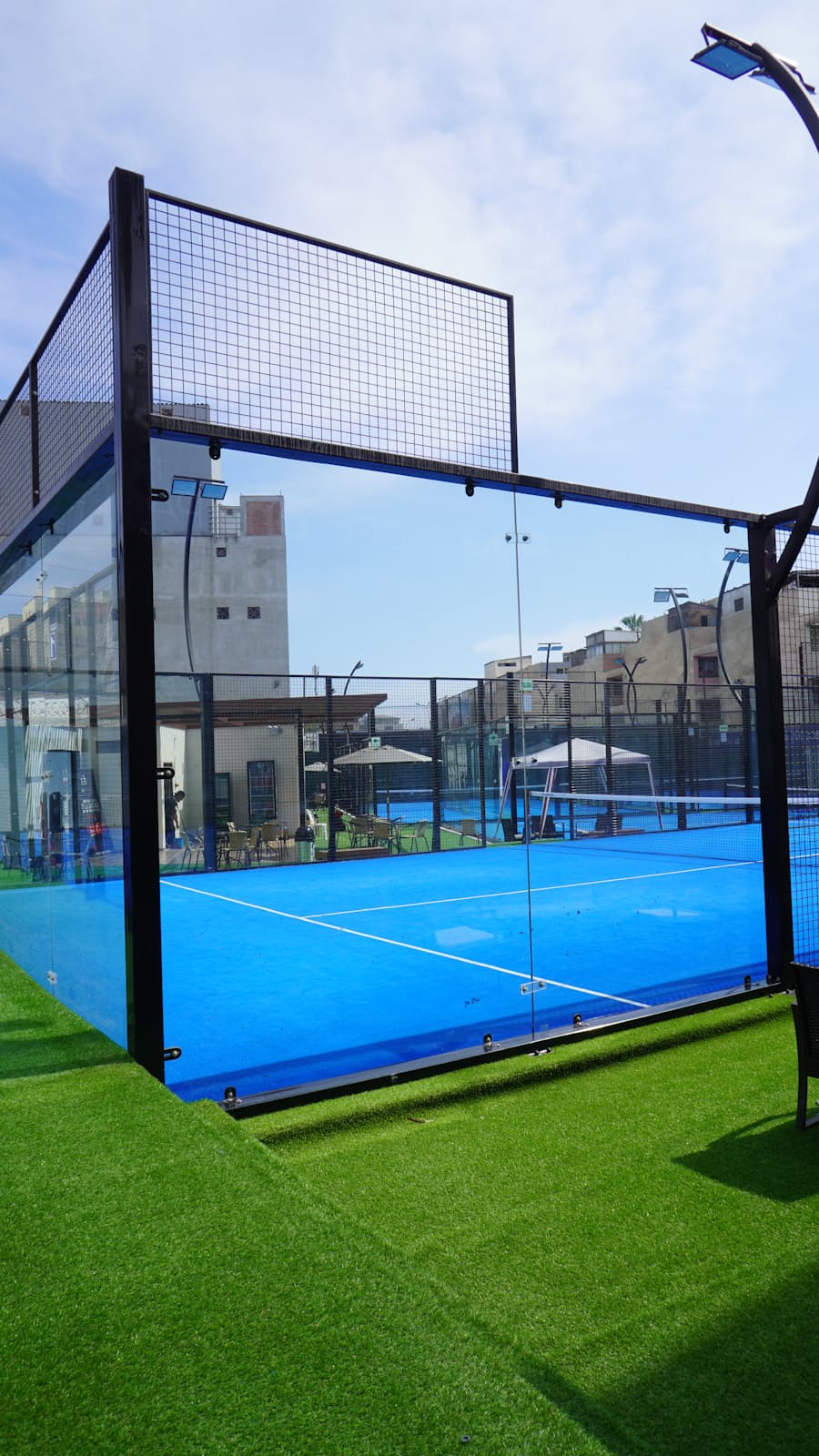
A regulation pickleball court is 20 feet wide by 44 feet long — the same footprint for both singles and doubles, which is unusual among racquet sports (tennis, by contrast, uses a narrower court for singles). That 20×44 playing area is divided into the following zones:
- The non-volley zone ("the kitchen"): a 7-foot zone extending from the net on both sides, spanning the full width of the court. Total kitchen depth across the net is 14 feet (7 feet per side).
- The service courts: on each side of the net, the area behind the kitchen line is split into two 10-foot × 15-foot rectangles by a center line, one for serving to the right/even court and one for the left/odd court.
- The baseline: the back boundary line, 22 feet from the net on each side.
- Lines are part of the court. A ball that lands touching any boundary line is in, exactly like tennis. This applies to every line except the kitchen line during a serve, which has its own rule (below).
For full facility construction, USA Pickleball recommends a minimum total space of 30×60 feet and ideally 34×64 feet, to leave safe run-off room behind the baselines and beside the sidelines. That's a facility-planning spec, not something you need to worry about as a player — but it explains why some courts feel cramped at the edges and others don't.
The net
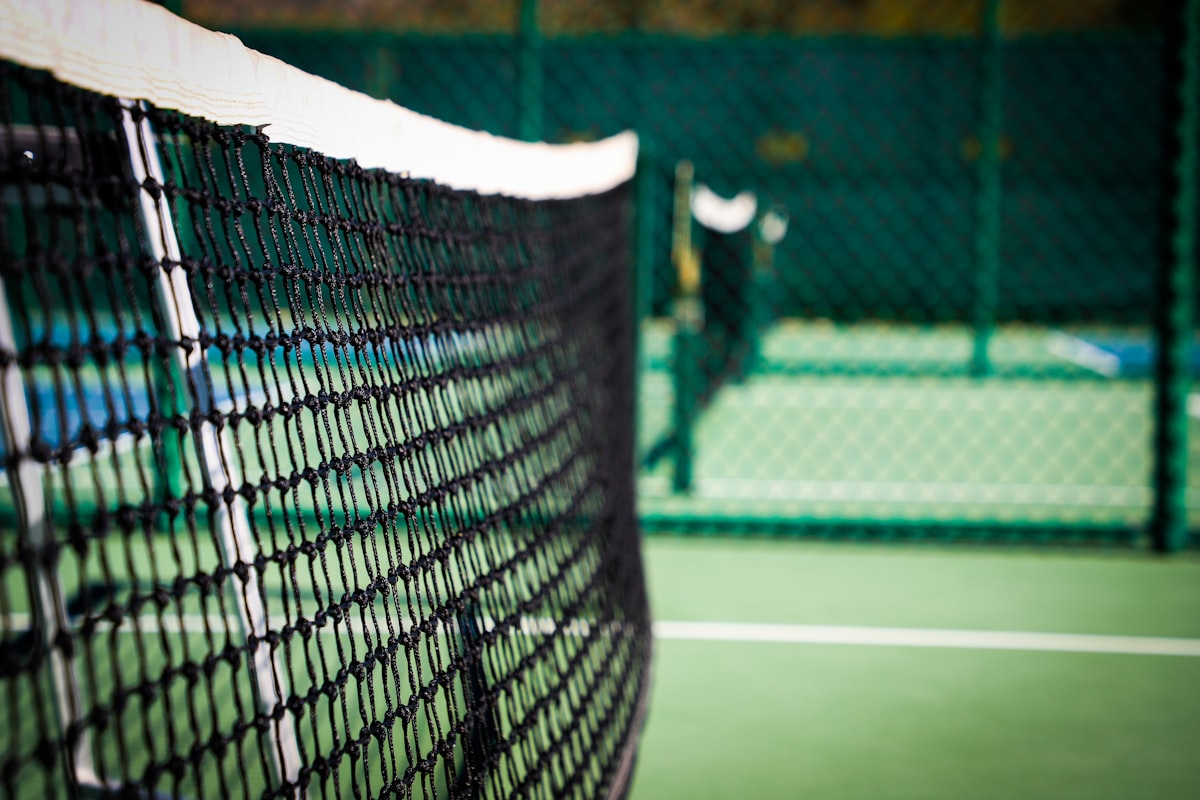
The net is 36 inches high at the sidelines/posts, and 34 inches high at the center. That 2-inch sag in the middle is intentional — it's the same sag principle tennis nets use, and it matters because it makes the shortest, easiest path over the net (straight down the middle) marginally higher-risk than a lot of new players assume. Aim for the two inches of extra room near the sidelines if you're grooving a drive, not the dead center.
Serving: the rules that confuse everyone at first
The serve is where beginners get the most wrong calls, mostly because the mechanics have specific, currently-enforced requirements:
- Underhand only. The serving motion must be underhand — an upward arc, paddle moving low to high through contact.
- Contact below the waist. USA Pickleball defines "the waist" as the navel line (the area around your belly button). The ball must be struck below that line.
- Paddle head below the wrist at contact. This is a separate, specific requirement from the waist rule — even if contact happens below your waist, the serve is illegal if the paddle head is above your wrist at the moment of contact.
- As of the 2026 rulebook, all three of these requirements must be met "clearly." USA Pickleball added the word "clearly" to each serve requirement specifically to give referees more latitude to call borderline serves as faults rather than giving the server the benefit of the doubt. Practically: don't serve with a flat, side-armed motion, and don't serve from up near your ribs. Keep the motion low, underhand, and unambiguous.
- Serve diagonally, into the correct box. Like tennis, the serve must travel diagonally crosscourt into the opponent's correct service box (right box when your score is even, left box when it's odd — more on that under scoring). It must clear the non-volley zone entirely; a serve that lands in the kitchen, even barely, is a fault.
- One serve attempt. Unlike tennis, there is no second serve. A fault on the serve — into the net, out of bounds, into the kitchen, or an illegal motion — ends the service turn immediately (a "side out" or loss of serve, depending on the scoring format; see below).
- No more "let" replays. This is a real rule change worth knowing if you learned pickleball years ago or picked up outdated advice: USA Pickleball eliminated the let-serve rule in 2021. Previously, a serve that clipped the top of the net and still landed in the correct service box was replayed as a "let," the same as in tennis. That's gone. Under the current rule, a serve that clips the net and lands in the correct box is simply a legal, live serve — play continues, no do-over. A served ball that clips the net and lands in the kitchen, or out of bounds, is still a fault, same as any other serve.
The two-bounce rule
This is the single most important rule that separates pickleball from tennis, badminton, and racquetball, and it's the one beginners forget most often in their first few sessions.
After the serve, the ball must bounce once on the receiving side before the receiving team returns it, and then it must bounce once more on the serving side before that team can return it. In other words: serve, bounce, return, bounce, return — only after those two mandatory bounces (one per side) can either team start volleying the ball out of the air.
This is called the "two-bounce rule" and it exists specifically to prevent the serving team from serving-and-crashing the net for an immediate put-away, the way you can in some other paddle sports. It forces every point to include at least four shots before anyone can volley, which is a big part of why pickleball rallies tend to develop at the net rather than getting decided at the baseline.
Once both of those mandatory bounces have happened, the ball can be volleyed (hit out of the air) by either side for the rest of the point — subject to the kitchen rule below.
The non-volley zone rule (the kitchen)
Once volleys are legal in a point, one restriction remains for the rest of the rally: you cannot volley the ball while any part of your body or paddle is touching the non-volley zone, including the kitchen line itself.
The specifics that trip people up:
- The kitchen line counts as "in the kitchen." Standing with even one toe on the line while you volley is a fault, exactly the same as standing well inside the zone.
- You can enter the kitchen — just not to volley. There's no rule against standing in the kitchen. You can walk in, dink from a stationary position after the ball has bounced, or retrieve a ball that's rolled in there. The restriction is specifically about volleying (hitting the ball before it bounces) while any part of you is touching the zone.
- Momentum counts. If you volley the ball while standing outside the kitchen, but your swing's momentum carries you (or your paddle) into the kitchen after contact, that's still a fault. The rule covers your position at the moment of contact and immediately after, not just where your feet started.
- A volley followed by a fall or touch into the kitchen is a fault even if the shot was a winner. This is the rule beginners argue about most: you can hit a clean, out-of-reach volley winner and still lose the point if your paddle or body touches the kitchen as a direct result of that volley motion.
This rule is why so much of high-level pickleball strategy revolves around the "dink" — a soft, arcing shot hit from just outside the kitchen line, specifically designed to force the point to stay in bounce-first territory near the net rather than letting anyone crash forward and volley.
Scoring: which format is actually standard
This is the part of the rules that's genuinely in flux right now, so it's worth being precise about what's standard versus what's newer.
Traditional side-out scoring (games to 11, win by 2) is still the default and most common format, used in most recreational play, most leagues, and the PPA Tour. The mechanics:
- Only the serving team can score a point. If the receiving team wins the rally, no point is scored — the serve simply passes to the other team (a "side out"), or in doubles, to the second server on the same team if that player hasn't served yet this game.
- Games are played to 11 points, win by 2. If the score reaches 10–10, play continues past 11 until one team leads by two.
- Doubles has a "first server exception": at the very start of each game, the serving team only gets one server before a side-out (rather than the usual two), because there's no partner who's already lost a serve yet. That's why you'll hear the score called as three numbers, with the third number being "2" only after the first side-out of the game.
- The score is called as three numbers before every serve: your team's score, the opponents' score, and the server number (1 or 2). Example: "4-2-1" means your side has 4, the other side has 2, and you're the first server on your team this rotation.
Rally scoring is a newer, provisional format used in some tournament and league play, most prominently Major League Pickleball (MLP), which uses rally scoring to 21. Under rally scoring, a point is awarded on every rally regardless of which team served, which makes games faster and more predictable in length. As of the 2026 USA Pickleball rulebook, rally scoring remains an optional, tournament-director's-choice format rather than the universal standard — it's explicitly excluded from double-elimination doubles events and the USA Pickleball National Championships for 2026, for example. Both formats still require a two-point winning margin.
Bottom line for a beginner: if you're playing at a local rec center, park, or club open-play session, assume traditional side-out scoring to 11 unless someone tells you otherwise — that's what you'll encounter the vast majority of the time. If you sign up for a tournament or league, check the format ahead of time; some now use rally scoring, and the games will feel noticeably different (faster, and every rally matters immediately) if you're expecting the traditional version.
Faults: the ways a point actually ends
A "fault" is any action that stops play and ends the rally — the team responsible for the fault loses the point, either by losing the serve (side out, under traditional scoring) or by conceding a point directly to the other team (under rally scoring, or if the fault happens on the receiving side).
The faults that come up constantly, especially for beginners:
- Hitting the ball out of bounds — long, wide, or into the net on either team's side.
- Serving into the net, out of bounds, or into the kitchen. Remember, there's no second serve.
- Volleying while touching the non-volley zone (see the kitchen rule above) — including foot faults where a player's shoe touches the kitchen line or the zone during a volley.
- Volleying before the two-bounce rule has been satisfied — hitting the return of serve or the return of the return out of the air before each side has let the ball bounce once.
- The ball bouncing twice on your side before you return it. Just like the serve-side rule, once a ball has legally bounced on your side of the net, you have to return it before it bounces a second time.
- Touching the net or net post with your body, paddle, or clothing during a live point — even a light brush of the net with your paddle while following through counts.
- Carrying or "double-hitting" the ball with excessive contact time (a "carry"), or hitting the ball with a part of the paddle or body other than the paddle face.
- Hitting the ball before it crosses the net on your opponent's side (reaching over the net), except in the rare legal case where the ball's spin carries it back over the net after landing on your side — that specific carve-out is narrow and not something to plan around as a beginner.
The most-missed rules for beginners
If you only remember five things from this guide, make it these — they're the ones that generate the most confused arguments on a beginner court:
- There's no second serve. New players from tennis backgrounds instinctively expect a do-over on a missed first serve. There isn't one in pickleball — one attempt, and a miss is a side out.
- A let-serve is just a live ball now. If your serve clips the net and lands in, play it — don't stop and ask for a redo. The other team is allowed to play it live, too.
- You can stand in the kitchen; you just can't volley from it. New players often avoid the kitchen entirely out of caution. It's fine to walk in and hit a ball that's already bounced — the restriction is specifically about volleys.
- Momentum into the kitchen after a volley is still a fault, even if the shot itself was a clean winner hit from outside the zone.
- Check the scoring format before you assume. Most rec play is traditional side-out scoring to 11. If you show up to a tournament or league using rally scoring to 21, the pace and strategy will feel different immediately — ask ahead of time rather than getting surprised mid-match.
Where to go next
Knowing the rules gets you through your first few games without a foot fault or an argument over a score call. It doesn't cover the unwritten social norms every court runs on — how to call the score, how paddle-stack rotation works, when to apologize for a lucky shot. For that, see our pickleball etiquette guide.
Once the rules and etiquette are second nature, the actual gameplay decisions — when to drive versus dink, how to work the third shot, where to stand at the kitchen line — are covered in our pickleball strategy basics guide.
Quick answers
How many serve attempts do you get in pickleball? One. There's no second serve like in tennis — a fault on the only attempt is an immediate side out (or a lost point under rally scoring).
What happens if a serve clips the net? Since USA Pickleball eliminated the let-serve rule in 2021, a serve that clips the net and still lands in the correct service box is simply a live, legal serve — no replay. One that clips the net and lands in the kitchen or out of bounds is still a fault.
Can you stand in the non-volley zone (the kitchen)? Yes. There's no rule against being in the kitchen — you can walk in, dink a ball that's already bounced, or retrieve a stray shot. The rule only bans volleying (hitting the ball before it bounces) while any part of your body or paddle touches the zone, including the kitchen line itself.
What is the two-bounce rule? After the serve, the ball must bounce once on the receiving side before it's returned, then once more on the serving side before that team returns it. Only after both mandatory bounces can either side start volleying.
Which scoring format is standard — to 11 or to 21? Traditional side-out scoring to 11, win by 2, is the default for recreational play, most leagues, and the PPA Tour — only the serving team can score. Rally scoring to 21 (where every rally scores, regardless of who served) is a newer, optional format used in some tournaments and leagues, most prominently Major League Pickleball.
Is a court the same size for singles and doubles? Yes — 20 feet by 44 feet either way, which is unusual among racquet sports (tennis narrows its court for singles).
Sources
This guide is written and fact-checked against the current official rules published by USA Pickleball, the sport's national governing body:
- USA Pickleball — Official Rulebook (current edition, PDF)
- USA Pickleball — Rules Summary
- USA Pickleball — How to Play / Rules Overview
- USA Pickleball — Scoring & Positioning (Side-Out Scoring)
- USA Pickleball — Equipment Standards Overview (court and net dimensions)
- USA Pickleball — Rulebook Change Document
Ready to put the rules to use? The Court Scout maintains a verified directory of pickleball courts across the US — every venue confirmed against a primary source, with real Google ratings, real hours, and honest cost info. Find courts near you and get on court.