Most "indoor vs. outdoor pickleball" explainers stop at "26 holes vs. 40 holes." That's true, but it's the surface-level answer. The reason a ball with fewer, bigger holes behaves so differently from one with more, smaller holes is a real physics story — drag, restitution, and material hardness working together — and understanding it changes how you shop for balls, not just which count you memorize.
This piece is a ball-only deep-dive. If you're wondering whether your paddle needs to change between indoor and outdoor play (short answer: no, mostly), read our indoor vs. outdoor paddle guide first — it covers the ball difference briefly before explaining why paddles barely change. This article picks up where that one leaves off and goes deep on the ball itself: exact hole geometry, why the plastic hardness differs and what that costs you in durability, the aerodynamics of flight in wind vs. still air, what USA Pickleball's approval process actually tests (and doesn't), and a straight answer on which ball to buy for your situation.
Hole count and pattern: the numbers, and why the range exists
USA Pickleball's Equipment Standards Manual doesn't mandate an exact hole count. It sets a range: a minimum of 26 and a maximum of 40 circular holes, with hole spacing and overall design required to support consistent flight characteristics. Manufacturers then engineer toward one end of that range or the other depending on which environment they're building for, and the market has settled cleanly into two dominant patterns:
- Indoor balls: 26 holes, roughly 0.43 inches in diameter each. Fewer holes, but each one is nearly 50% larger than an outdoor hole.
- Outdoor balls: 40 holes, roughly 0.28 inches in diameter each. More holes, each noticeably smaller.
The two patterns cover roughly similar total open surface area on the ball's shell, but distribute it completely differently — a handful of large openings versus a dense field of small ones. That distribution, not just the hole count itself, is what drives the difference in behavior described below. A few outlier balls exist in the 30–36 hole range, marketed as "all-court" hybrids, but they're a small niche compared to the 26/40 standard.
Diameter and weight stay fixed regardless of hole pattern. Every USA Pickleball-approved ball, indoor or outdoor, must measure 2.874 to 2.972 inches in diameter and weigh between 0.78 and 0.935 ounces, with out-of-round variance capped at ±0.020 inch. The hole pattern is the variable; the overall ball geometry is not.
Material and hardness: why outdoor balls are built tougher
The hole pattern gets most of the attention, but the plastic itself is doing just as much work, and the reasons are almost entirely environmental.
Outdoor balls use a harder, denser polyethylene shell, typically produced by seamless one-piece rotational molding (heat the plastic in a rotating mold until it fuses into a single shell, then drill the holes after) or, less commonly, a two-piece weld. Outdoor courts are unforgiving: concrete and asphalt are abrasive, temperatures swing from summer highs of 100°F+ to winter mornings near freezing, and UV exposure degrades plastic over months of direct sun. A softer ball simply wouldn't survive that environment — it would crack, flatten, or go out-of-round within a handful of sessions. USA Pickleball's Equipment Standards Manual sets ball hardness on a Durometer D scale of 40 to 50, measured at 70°F ± 5°F, and outdoor balls are engineered toward the firmer end of that range specifically to resist surface abrasion and impact stress on hard courts.
Indoor balls use a softer, more flexible plastic, usually two-piece welded construction (two molded hemispheres fused at a seam, which is why seam-splitting is the classic indoor-ball failure mode rather than cracking). Indoor conditions are far gentler and more controlled — a climate-controlled gym floor doesn't demand the same UV or temperature resilience concrete does — so manufacturers can trade some durability for a softer feel that's easier on the arm, quieter on contact, and more forgiving of mishits on a slick, low-friction surface. That softness sits toward the lower end of the same 40–50 Durometer D range.
Why this matters practically: bring a soft indoor ball outside and it degrades within a few sessions — UV and abrasion chew through a shell built for gym conditions. Bring a hard outdoor ball indoors and it feels dead and bounces unpredictably low off a smooth floor, since it wasn't tuned for that surface's grip and give. Matching material to environment isn't a marketing nicety; it's the difference between a ball lasting weeks and a ball lasting one bad Tuesday.
Flight characteristics: what the physics actually does
This is where hole pattern and hardness combine into the behavior players actually feel on the court.
Wind resistance. A ball with many small holes (outdoor, 40-hole) presents less total edge-turbulence per hole and holds a denser, more aerodynamically stable shell profile in crosswind. A ball with fewer, larger holes (indoor, 26-hole) has more surface disruption per opening, which increases drag and makes the ball more susceptible to being pushed off its flight path by moving air. That's precisely backwards from what you'd want outdoors — which is exactly why the 40-hole design exists for outdoor play: it minimizes wind deflection so a drive or serve holds its line in real-world gusty conditions.
Speed and bounce. The harder outdoor shell has a higher coefficient of restitution against concrete — it returns more of the energy from impact, so it comes off the paddle faster and bounces higher and truer. The softer indoor shell absorbs more of that impact energy, so it decelerates faster in the air and produces a lower, more controlled bounce off a smooth gym floor. This isn't accidental: a fast, high-bouncing ball would be nearly unplayable at the kitchen line on a slick indoor surface with no give, while a slow, low-bouncing ball outdoors would feel lifeless and get pushed around by any breeze.
Spin response. Because the indoor ball's softer shell compresses more against the paddle face on contact, spin tends to "grab" more readily with identical paddle technique. The firmer outdoor shell resists that compression, so generating visible spin — especially on serves — takes a more deliberate paddle angle and swing path outdoors. Players who move between environments and notice their serves suddenly "spin more" or "spin less" are usually feeling the ball, not a change in their own mechanics.
Net effect: the outdoor ball is built to fly true through moving air and survive a punishing surface; the indoor ball is built to fly true through still air and stay controllable on a low-friction floor. Neither ball is "better" — they're solving different physics problems.
What USA Pickleball's approved-ball list actually certifies
USA Pickleball's Equipment Evaluation Committee has tested more than 400 ball submissions since it began evaluating equipment in 2016, and every ball that clears testing goes on the official approved ball list, maintained at equipment.usapickleball.org. It's worth being precise about what that approval means, because it gets misunderstood constantly.
"Approved" certifies physical performance specs, not an indoor-or-outdoor category. A ball earns approval by passing tests against a single unified standard:
- Diameter: 2.874"–2.972", with out-of-round variance capped at ±0.020 inch
- Weight: 0.78–0.935 oz
- Hole count: 26–40 circular holes, with hole spacing that supports consistent flight
- Hardness: 40–50 on the Durometer D scale at 70°F ± 5°F
- Bounce: must rebound 30–34 inches when dropped from 78 inches onto a granite test surface
Any ball meeting all five criteria is approved, whether it lands at the soft/26-hole end of the range or the hard/40-hole end. There is no official "indoor-approved" or "outdoor-approved" designation on the list itself — manufacturers build and market a given ball toward one environment based on where it sits in that spec range, and USA Pickleball certifies that it performs consistently at whatever spec it was submitted at. That's the same structure as the paddle list our indoor vs. outdoor paddle guide covers: one approved list, environment-specific engineering choices within it.
What approval doesn't guarantee is that a given approved ball is the right ball for your court. A tournament-legal outdoor ball is still a bad choice for a gym floor, and vice versa — approval means "this ball meets the sport's official manufacturing and performance tolerances," not "this ball is suited to your specific environment." For sanctioned tournament play, the tournament director selects which specific approved ball is used and every player must use it; for casual and league play, matching the ball to the surface is entirely on you.
Which ball should you actually buy?
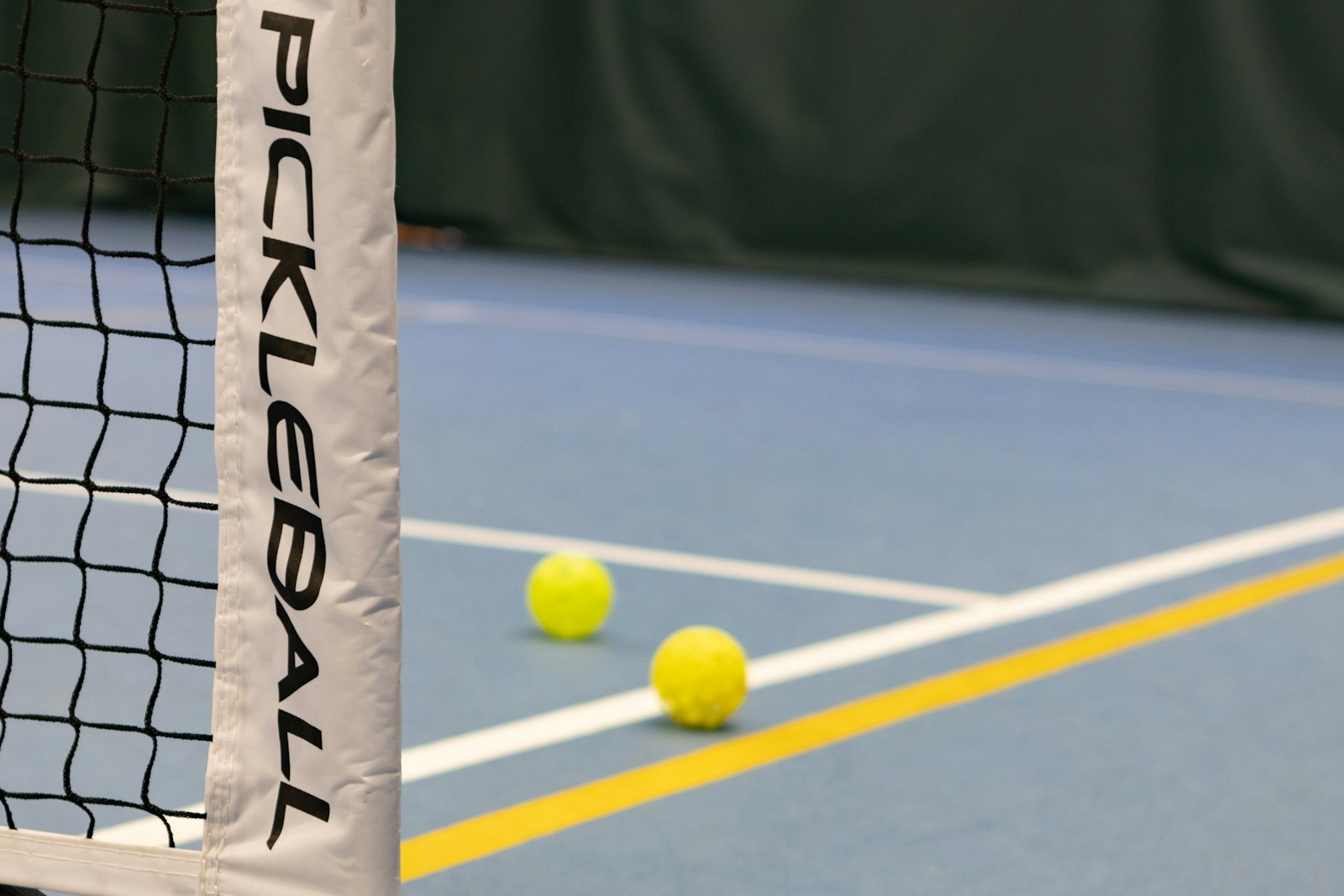
Playing exclusively outdoors (public courts, backyard setups, most rec leagues): buy a 40-hole outdoor ball in a harder, seamless-molded construction. It'll hold its flight in wind, survive concrete and asphalt for a reasonable number of sessions, and match what your opponents and local leagues almost certainly already use. See our best pickleball balls guide for current outdoor picks.
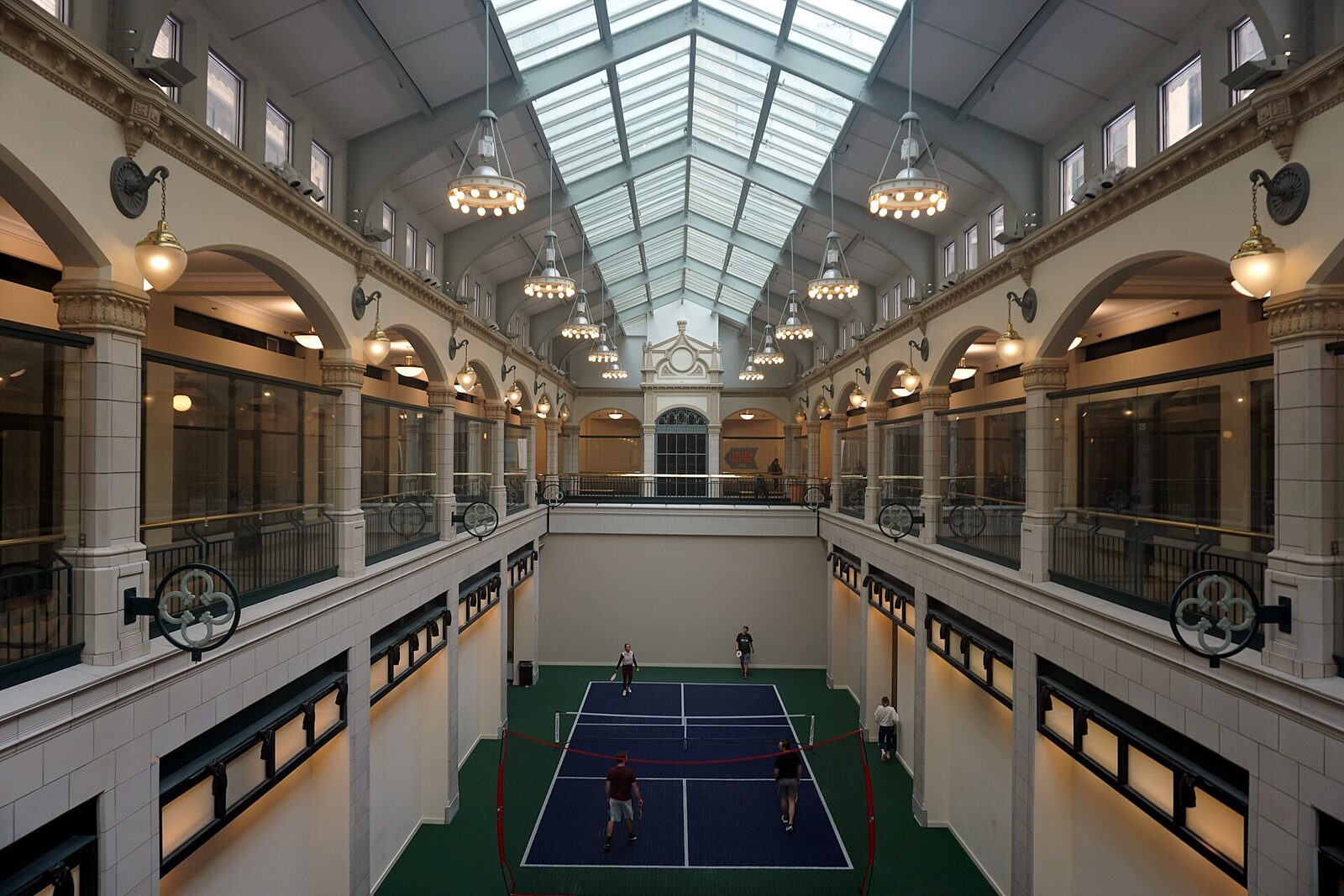
Playing exclusively indoors (gym, dedicated indoor club, sport-court tile): buy a 26-hole indoor ball in a softer, welded construction. It'll behave predictably on a low-friction floor, stay quieter on contact, and last considerably longer than an outdoor ball would in the same setting — indoor balls typically survive 20–40 sessions versus an outdoor ball's 5–10.
Playing both (the majority of regular players): keep a sleeve of each in your bag and use the one that matches wherever you're standing. Don't split the difference with a "hybrid" ball hoping it performs well in both places — the physics that make a ball good outdoors (hard shell, small holes, wind resistance) are close to the opposite of what makes a ball good indoors (soft shell, large holes, controlled low-friction bounce), so a compromise ball tends to underperform in both settings rather than serve either one well.
Cold-weather outdoor players: budget for faster ball turnover in winter. Outdoor balls crack roughly 2–3x faster below about 50°F because cold plastic loses flexibility and becomes brittle on impact — a known trade-off of building toward the firmer end of the Durometer D range for outdoor durability. Keep extra balls on hand from November through March rather than being surprised by a mid-match crack.
If you're buying for a first-time player or gift: default to whichever environment they'll play in most. A beginner given the wrong ball type for their usual court will blame their own technique for behavior that's actually the ball fighting the surface.
Sources
- USA Pickleball — Equipment Standards Manual (Jan 2025)
- USA Pickleball — Approved Ball List
- JustPaddles — Indoor vs. Outdoor Pickleballs Explained By Experts
- Selkirk Sport — The Difference Between Indoor and Outdoor Pickleballs
- Paddletek — Indoor vs Outdoor Pickleballs: What's the Difference?
Ready to use the right ball on the right court? The Court Scout maintains a verified directory of pickleball courts — indoor and outdoor venues clearly flagged, every listing confirmed against a primary source. Find courts near you and see our best pickleball balls guide for specific product picks by surface.