This article is general information for healthy adults considering recreational pickleball, not medical advice. It is not a substitute for a conversation with your own physician, physical therapist, or another qualified clinician — especially if you have a heart condition, joint replacement, osteoporosis, balance issues, or any condition your doctor already monitors. "Older adult" and "senior" are used loosely here for adults roughly 50 and up who are new to racquet sports; nothing below assumes a specific age or health status is safe for you personally. Where we cite a specific claim, the source is linked inline and listed again under "Sources" at the bottom.
Why pickleball is a genuinely good fit for older adults — not just a trend
Pickleball didn't become the sport older adults gravitate toward by accident. A few structural facts about the game make it a better match for an aging body than the two sports it most resembles.
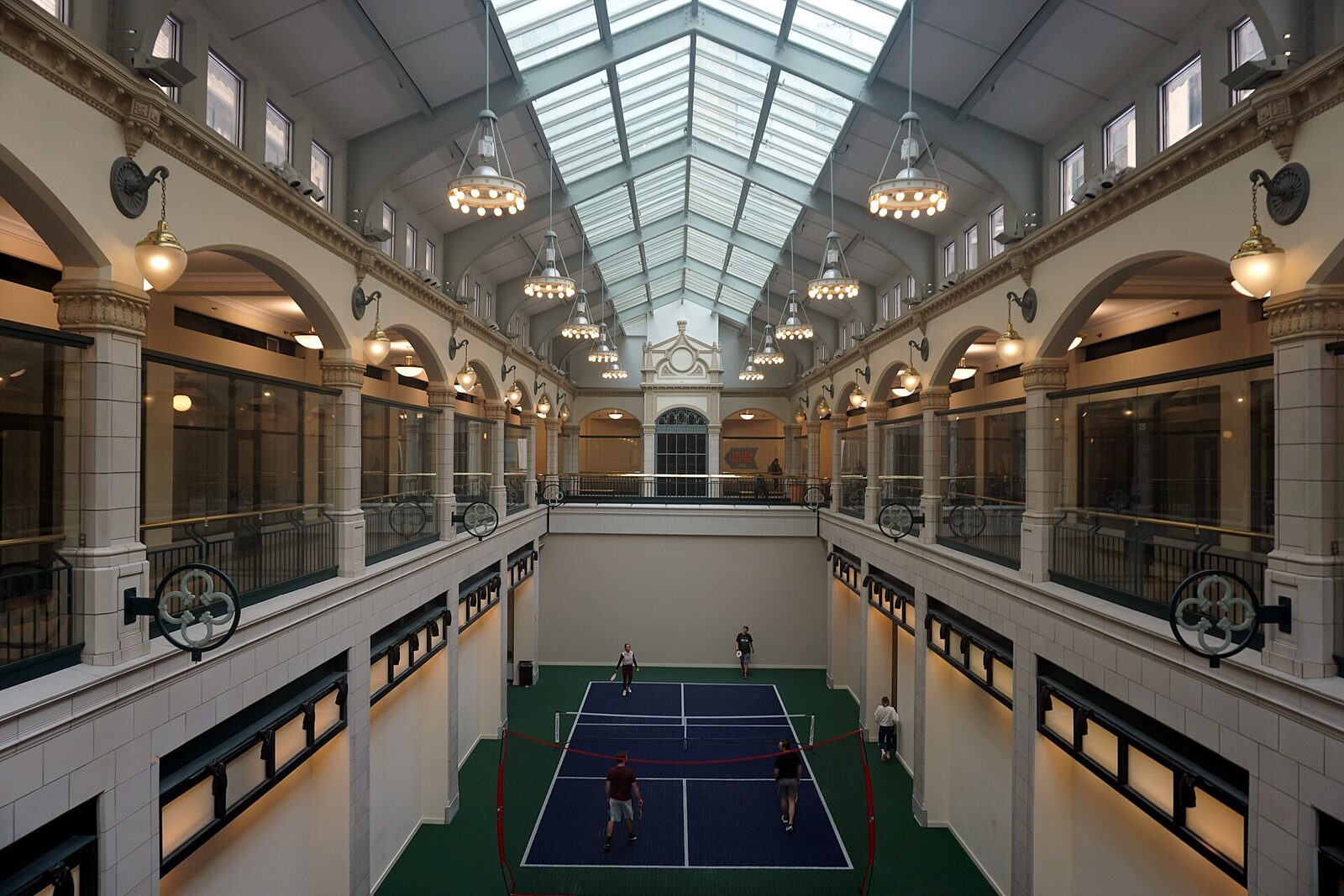
The court is small, and that changes the movement demand. A pickleball court is 20 feet by 44 feet — the same footprint as a doubles badminton court, and roughly a third of the space a tennis doubles court covers. That means shorter sprints, less ground to cover corner to corner, and doubles play (how most recreational and nearly all senior programming is structured) that further splits the court between two players per side. The National Council on Aging makes the tennis comparison explicit: the smaller court and slower ball flight mean less full-sprint running than tennis, with rallies built more around placement and patience than chasing balls sideline to sideline (NCOA).
The ball and paddle are lower-impact by design. A pickleball is a lightweight perforated plastic ball, closer to a wiffle ball than a tennis ball, and it doesn't carry the pace a strung tennis racquet generates. That means less force traveling back up the arm on contact and a slower game overall, giving you more time to get into position than tennis affords — which matters when reaction speed and joint mobility both change with age.
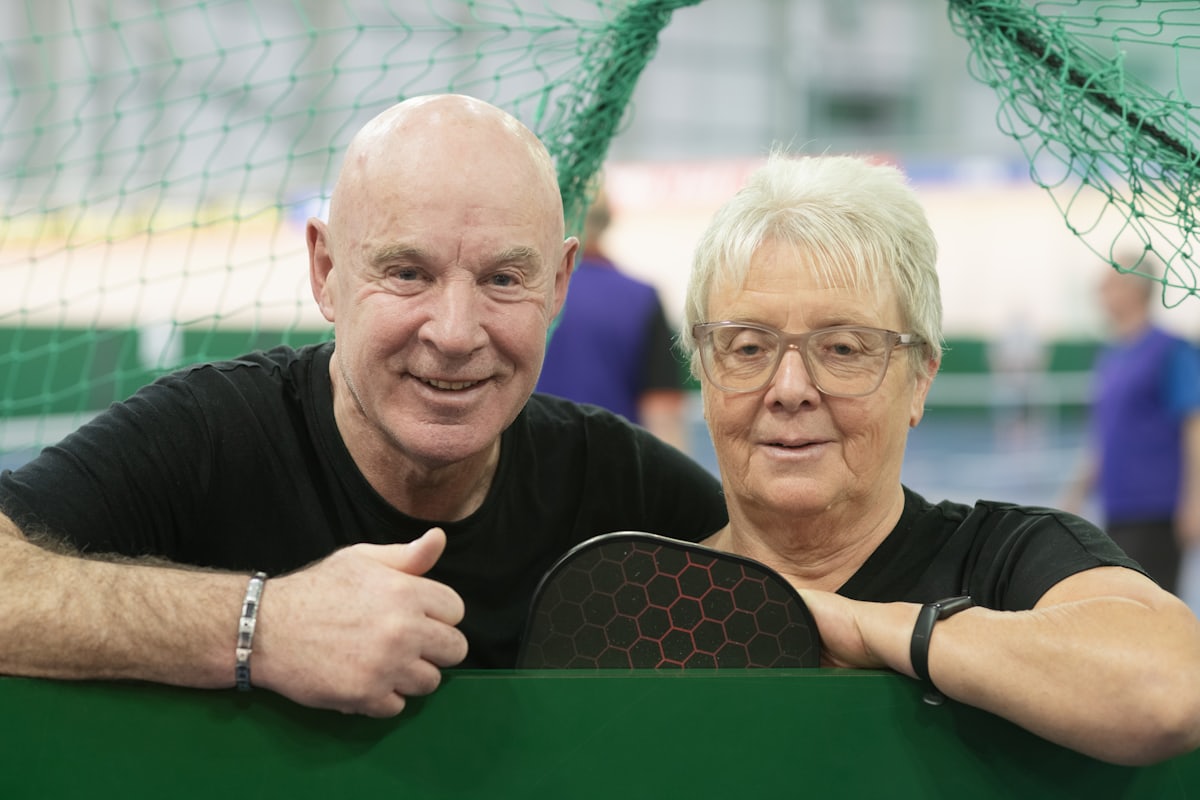
The social format is arguably the biggest health lever of all. A study of 153 older adults competing in pickleball tournaments found the oldest group (70+) reported significantly higher life satisfaction than the 50-to-59 group, and that retired participants scored notably higher on life satisfaction than employed participants — the authors describe pickleball as a genuine leisure pursuit that supports well-being in the retirement years specifically, not just a workout (PMC — Understanding Pickleball as a New Leisure Pursuit in Older Adults). AARP's own reporting leans on the same point: social engagement through pickleball is linked to easing anxiety, stress, and depression, on top of the cardiovascular case (AARP — Health Benefits of Pickleball).
It's still a real workout. A 2022 study AARP cites found singles players average roughly 3,322 steps per hour with heart rates in the moderate-to-vigorous zone more than 70% of playing time — meaning about four and a half hours of pickleball a week would meet the standard 150-minutes-of-moderate-activity guideline most health organizations recommend for adults. Doubles play, the norm for most beginners and senior-hour programming, is lower-intensity than that, but the same underlying mechanics — short bursts of movement, paddle-arm engagement, core rotation on every shot — still apply.
None of this makes pickleball risk-free. Falls, "pickleball elbow," rotator cuff strain, and — specifically in players over 50 — a documented rise in Achilles tendon injuries are all real and well-studied; we cover that ground in our full pickleball injury prevention guide. This piece isn't a repeat of that one — it's specifically about how someone new to the sport later in life can get the genuine benefits above while managing that real risk sensibly, rather than either avoiding the sport out of caution or diving in the way a 25-year-old would.
How to start: lessons first, open play second
The single most consistent piece of advice across every source we reviewed for this piece — AARP, recreation-department program pages, orthopedic coverage alike — is the same: learn the sport in a structured setting before you show up to open play.
Open play is exactly what it sounds like: a court time block where anyone shows up, self-organizes into games, and plays. It's how most experienced players spend most of their court time, and it's a great way to meet people once you know the game — but it's a rough place to learn it. Open play moves fast, partners and opponents are often intermediate or advanced players who aren't budgeting time to explain the rules, and — most relevant to safety — nobody is watching your footwork, grip, or swing mechanics to catch a bad habit before it becomes a strain injury.
A beginner clinic or group lesson solves that. AARP runs free pickleball clinics nationwide built specifically for this: each session includes orientation, structured skill work, and supervised gameplay, with participants grouped by skill level so a first-timer isn't rallying against someone who's been playing for years (AARP Pickleball Clinic Tour). Most city and county parks-and-recreation departments run the same basic model at a smaller scale — a 4-to-6-week class covering the rules, serve, two-bounce rule, basic dinking, and scorekeeping. Look for programs labeled "beginner clinic," "intro to pickleball," or "fundamentals" rather than "open play" or "drop-in" when you're just starting.
A genuine warm-up matters more here than almost anywhere else. Five to ten minutes of light cardio — a brisk walk, easy marching in place — followed by dynamic movement (arm circles, shoulder rolls, gentle leg swings, a few bodyweight squats) prepares the shoulder, forearm, and Achilles tendon for the sport's specific demands, and it's the single most consistently repeated piece of advice across orthopedic sources on pickleball injury prevention (Hospital for Special Surgery). Skipping the warm-up to "just hit a few" before points start is a habit worth breaking on day one, not after an injury forces the issue.
Talk to your doctor first if you have a relevant condition. AARP's own safety guidance for new players is direct on this: check in with your physician before your first session, particularly if you have a heart condition, a joint replacement, osteoporosis, or anything else your doctor already tracks (AARP — Health Benefits of Pickleball). That's the same "know before you go" logic as starting any new moderate-intensity activity after a period of lower activity, worth doing even if you feel generally healthy.
Gear: what changes when you're starting later in life
Nothing about pickleball gear is exclusive to older players, but a few tradeoffs matter more for a beginner also managing joint sensitivity, grip strength, or lower baseline fitness.
Paddle weight is the biggest lever. A heavier paddle generates more power but transmits more shock back through the wrist, forearm, and elbow on every mishit — and mishits are frequent while you're still learning the sweet spot. A lighter paddle, roughly 7.3–7.8 oz, reduces that jolt and is easier to maneuver quickly at the net, which matters more than raw power at the beginner stage regardless of age. Our beginner paddle guide and full paddle-buying guide cover weight, core-thickness, and grip-size tradeoffs in detail — grip size is worth getting right immediately, since an undersized grip forces extra squeezing tension that's a documented contributor to "pickleball elbow." If you have arthritis or a known grip or wrist issue, a slightly larger, cushioned grip and a lighter overall paddle are worth prioritizing over the power-oriented paddles marketed toward competitive players.
Court shoes are not optional; running shoes are the wrong tool. Running shoes are built for forward motion and offer minimal side-to-side support — the wrong tradeoff for a sport built on quick lateral steps and hard stops. A proper court shoe with a stiffer lateral chassis meaningfully reduces ankle-roll and fall risk, which matters more with age since falls account for the majority of pickleball-related ED visits, climbing higher still in older brackets. Our pickleball shoes guide covers indoor vs. outdoor tread differences and how to pick a shoe for your court surface.
Eye protection is a small, easy add. AARP's beginner guidance specifically flags eye protection alongside warming up as a basic safety step — a ball at close range off a mishit, or a partner's paddle at the net, is a real if uncommon risk that sport glasses largely eliminate.
Don't over-invest before you know you'll stick with it. A basic starter setup — paddle, balls, often a portable net — is available from general retailers at a range of prices, and trying a paddle in person before buying (weight and grip feel very different in hand than on a spec sheet) is worth following. Many beginner clinics and rec-center programs loan paddles for the first session or two, a low-cost way to find what feels right before buying anything.
Pacing: the case for starting slower than you think you need to
"Too much, too soon" comes up constantly in sports-medicine coverage of new pickleball players of any age, and it applies with extra weight to someone returning to regular physical activity after a long gap. Going from no racquet-sport activity to several two-hour sessions a week in your first month is a well-documented path to overuse injuries — elbow and shoulder strain especially — regardless of how good the workout feels in the moment.
A more sustainable ramp: one structured lesson or clinic a week for the first several weeks, building toward one or two casual open-play sessions once the rules and footwork feel comfortable, with rest days between sessions rather than back-to-back play early on. Low-impact cross-training on off days — walking, swimming, cycling, or light resistance work for the shoulder and forearm — supports both the cardiovascular case for pickleball and the injury-prevention case, since better baseline leg strength and balance directly reduce fall risk on court.
Pacing within a session matters too. It's common, especially in the first few months, to feel fine mid-game and sore the next day — a normal adaptation response, not necessarily a red flag. But persistent joint pain that doesn't ease within a day or two, sharp pain (as opposed to general soreness), or any fall that results in real pain or inability to bear weight are reasons to stop and get checked rather than push through — worth taking seriously given that fall-related fractures are the largest single injury category in the emergency-department data on this sport. Our injury prevention guide breaks down what's reasonable to self-manage versus what warrants a same-week visit to a doctor or physical therapist.
Where to find senior-friendly programming
You don't need an age-restricted program to play pickleball safely, but a lot of beginners find it easier to start somewhere built around a similar pace and skill level rather than a mixed-level open-play block on day one. A few patterns show up consistently across city and county recreation departments, YMCAs, and senior centers nationwide:
- Dedicated senior-hour or 55+ sessions, often run during weekday daytime hours, which tend to draw a calmer pace and more patient partners than an evening open-play block.
- Beginner or fundamentals clinics, usually a multi-week series (commonly 4–6 weeks) teaching rules, scoring, and basic shots before newcomers move into open play — the same structure AARP's own free clinic tour uses nationally.
- Skill-level-rated drop-in play, where a recreation center splits open-play blocks by self-rated skill (a 1.0–3.0 block versus a 3.5-and-up block, for example), so a true beginner isn't sharing a court with advanced players by default.
- Senior centers and 55+ community associations, which frequently run their own in-house programming separate from the city parks department, sometimes on courts converted from existing gym or tennis space.
The specifics — days, times, skill-rating systems, drop-in versus registration — vary enough by city and facility that they're worth confirming directly with your local parks-and-recreation department, senior center, or YMCA branch. The Court Scout maintains a verified directory of pickleball courts and clubs across the US, with facility details confirmed against each venue's own primary source — a reasonable starting point, though senior-specific program schedules are best confirmed directly with the venue.
The honest summary
Pickleball's popularity with older adults isn't hype outrunning reality — the smaller court, lighter ball, and doubles-heavy social format genuinely add up to a lower physical barrier than tennis, and the social and life-satisfaction research specific to older players is real and documented. But "lower barrier" doesn't mean "no risk," and the injuries that do happen — falls especially — carry higher stakes later in life. The path that captures the upside while managing that risk isn't complicated: start with structured instruction rather than open play, warm up for real every time, get a paddle and shoes suited to a beginner, build up playing volume gradually, and check in with your doctor first if you have a condition that warrants it. None of that requires giving up the parts of the sport people love — it just front-loads a little caution before the fun part starts.
Again: this is general information, not medical advice. If you have a specific health condition or you're unsure whether pickleball is appropriate for you, talk to your doctor before you start.
Sources
- Health Benefits of Pickleball — AARP
- AARP's Guide to Pickleball
- Sign Up for AARP Pickleball Clinics Nationwide
- How to Get Started Playing Pickleball — AARP
- How Can I Prevent Injuries While Playing Pickleball? — National Council on Aging
- Understanding Pickleball as a New Leisure Pursuit in Older Adults — PMC
- Stretches and Exercises to Prevent Pickleball Injuries — Hospital for Special Surgery
Related reading: Pickleball Injury Prevention: Common Injuries and How to Avoid Them for a deeper look at the specific injuries the sport's own emergency-department data documents, our beginner paddle guide and full paddle-buying framework for gear specifics, and our pickleball shoes guide for court-appropriate footwear. And when you're ready to find somewhere to play, The Court Scout maintains a verified directory of pickleball courts and clubs across the US.