Outdoor pickleball in July isn't the same sport as outdoor pickleball in April
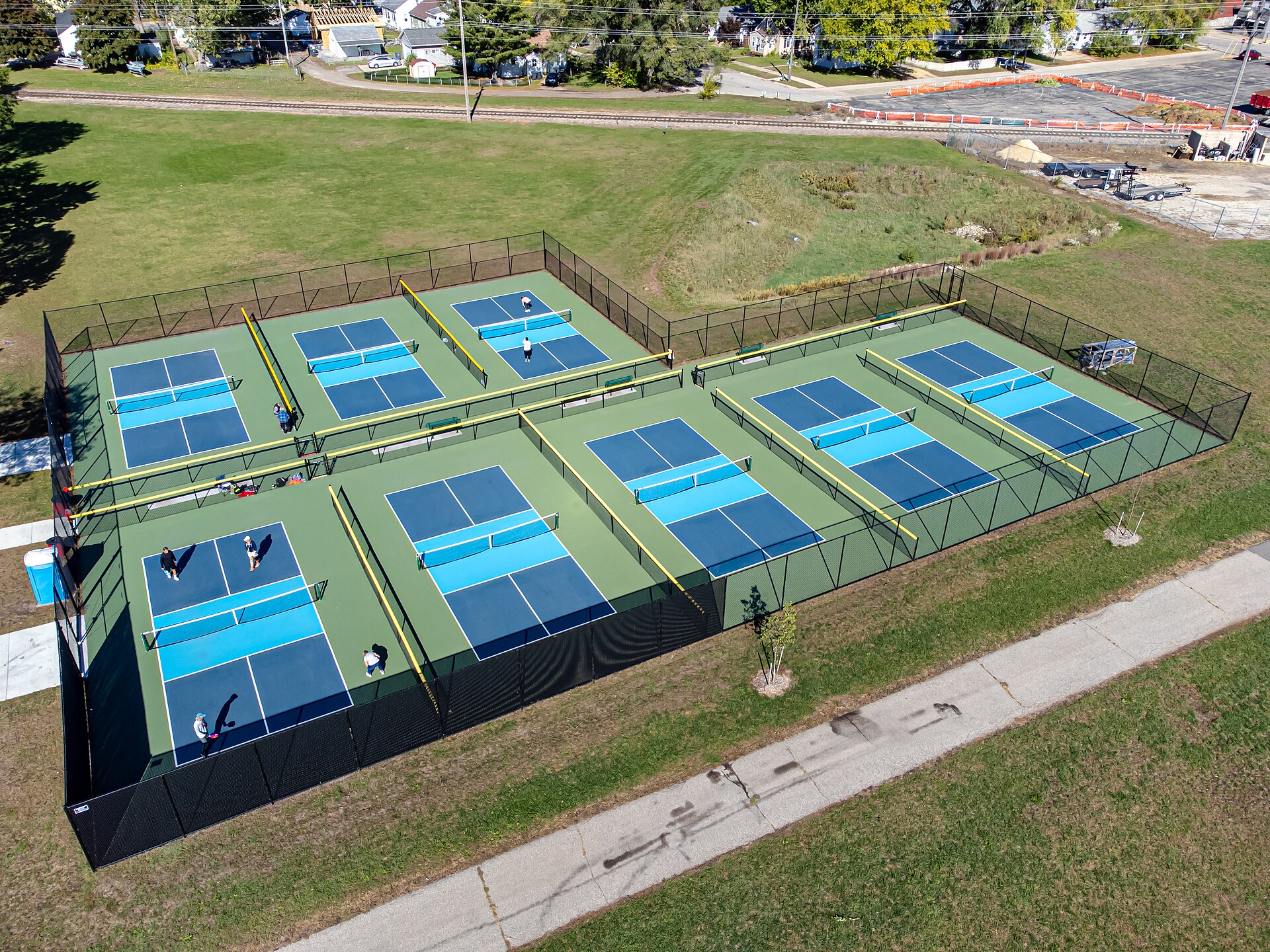
Pickleball's growth has been an outdoor, public-park story — free courts, morning meetups, drop-in open play. That's exactly why summer heat catches so many players off guard. The same asphalt or post-tension concrete surface that felt fine in spring becomes something closer to a stovetop by mid-July, and the risk isn't really about the air temperature on the forecast. It's about what's happening at ankle height, on a hard surface, for the two hours you're standing on it.
This isn't a scare piece. Millions of people play outdoor pickleball all summer without incident, and the fix is mostly about timing and basic prep, not avoiding the sport. But "it's 95°F, I'll just bring water" undersells the actual hazard on a hot court. Here's what's really going on, when to play instead, how to recognize the warning signs if something goes wrong, and how hot-climate pickleball communities have adapted around all of it.
Why outdoor courts get dangerously hot
Air temperature and court-surface temperature are two different numbers, and the gap between them is bigger than most players assume.
Asphalt and dark-toned concrete absorb a large share of incoming solar radiation instead of reflecting it — dark pavement can absorb somewhere around 80–95% of the sunlight hitting it, according to heat-mapping research from NASA's Jet Propulsion Laboratory. That absorbed energy doesn't just sit there; it re-radiates as heat, and because pavement has a lot of thermal mass, it keeps radiating that heat for hours after the surface has finished heating up — including into the early evening, well past the point where the air itself has started to cool.
The practical number that matters: on a hot, sunny day, pavement and other dark hard-court surfaces commonly run 40 to 60°F hotter than the surrounding air, per NASA JPL researcher heat-mapping data reported by Scientific American. So an 88°F afternoon on the thermometer can mean a court surface north of 130–140°F. That's not just uncomfortable underfoot — a surface in that range is capable of causing skin burns on contact within seconds, which is part of why NASA's urban heat researchers have been mapping city streets and courts in the first place, and it's a much bigger factor in your actual heat load during a match than the air temperature alone. You're not just standing in 88-degree air; you're playing 60–90 minutes of a lateral, start-stop sport radiated from below by a surface that's 40–60 degrees hotter than that, with the sun overhead adding a third heat source at the same time.
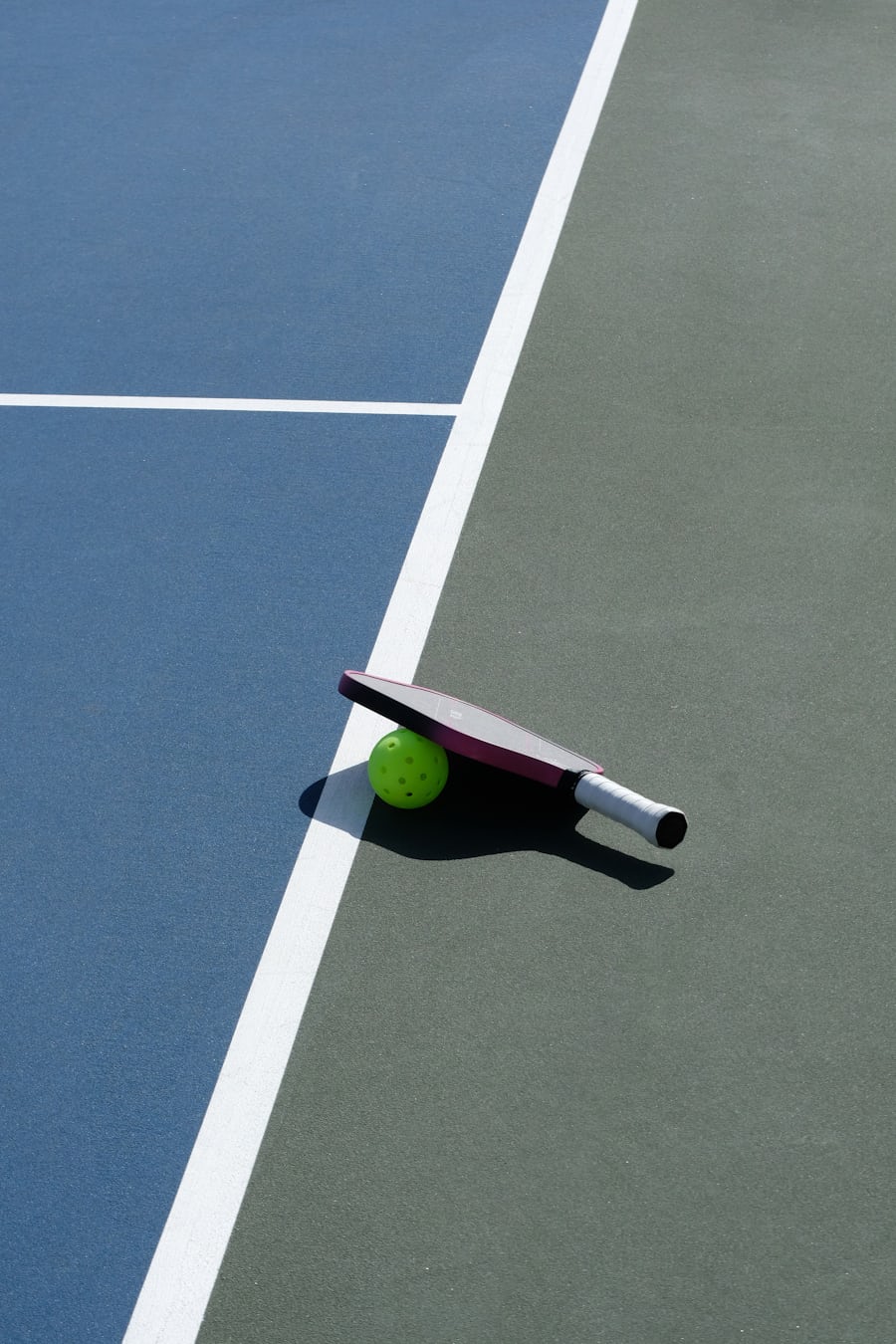
Color and material matter here too. Newer cushioned acrylic court surfaces (the kind used on many dedicated pickleball complexes) run somewhat cooler than plain black asphalt because they're lighter-colored and reflect more solar radiation, but "cooler than asphalt" is not the same as "cool." Every hard outdoor court surface in direct summer sun runs meaningfully hotter than the air above it — the only real variables are by how much.
The best times of day to play
Given that heat load, the daily window that's genuinely safe to play outdoors in a hot climate is narrower than it feels like it should be.
- Early morning (roughly sunrise to 9–10 AM) is the best window. Overnight, pavement radiates away the heat it absorbed the day before, so at sunrise the court surface is close to air temperature — the smallest gap of the day. Air temperature is also at or near its daily low. This is why serious hot-climate pickleball communities schedule open play, leagues, and lessons early: not out of habit, but because it's the only stretch of the day where both numbers are working in your favor at once.
- Evening, after the sun is low or down, is the second-best window — but with a catch. Air temperature drops in the evening, but pavement is slow to release the heat it's been absorbing all afternoon; a court can still be noticeably hot to the touch well after sunset, especially on the first evening of a heat wave. Evening play is genuinely better than midday, just not quite the clean reset that early morning is.
- Midday is the highest-risk window in a hot climate, and it isn't close. Peak sun angle plus peak air temperature plus a court surface that's had all morning to heat up stack together at the same time you'd be at the court. In cities that regularly see summer highs above 100°F, this isn't a "some people prefer mornings" preference — treat roughly late morning through late afternoon as a genuine no-play window for outdoor courts during the hottest months, the same way you'd treat it for a midday desert hike. If lights are available, shifting a group session two or three hours later is a simple, low-cost way to cut the real heat exposure substantially.
If you only take one thing from this section: in hot climates during peak summer, "what time works for my schedule" and "what time is safe to be on an outdoor court" are not the same question, and the second one should win.
Heat-illness warning signs to know
You don't need a medical background to play safely outdoors in summer — you need to recognize when a normal "I'm tired and sweaty" state has crossed into something that needs attention. According to the CDC, the two conditions to know are heat exhaustion and the more serious heat stroke, and the distinction matters because the response is different.
Heat exhaustion is the body's response to losing a lot of water and salt through heavy sweating. Watch for heavy sweating, headache, nausea, dizziness, weakness, irritability, and unusual thirst in yourself or a playing partner. The standard response is to stop playing, move to shade or air conditioning, sip cool water, and rest — most people improve within a short time once they're out of the heat.
Heat stroke is a medical emergency. It happens when the body's temperature-regulating system fails outright — sweating can stop, and body temperature rises rapidly. The CDC lists warning signs including confusion or altered mental status, slurred speech, loss of consciousness, and hot skin that may be dry or still damp from earlier sweating. If you or anyone on court shows these signs, that is not a "sit them in the shade and check back" situation — call for emergency help right away and cool the person down (wet cloths, shade, fanning) while you wait. Don't try to power through mixed-up thinking or confusion on a hot court, in yourself or a partner; treat it as an emergency, not a symptom to play through.
We're deliberately not printing specific diagnostic thresholds (like an exact core-body-temperature cutoff) in this guide — that's outside what a sports directory should be advising on, and the right numbers depend on the individual. For the full, current clinical guidance, the CDC's heat-related illness pages are the right source, not a paddle-sport blog. See the Sources section below for the direct links.
Practical prep for playing in the heat
None of this means skipping summer pickleball — it means playing smarter for the conditions.
- Hydrate before you're thirsty. The CDC's general guidance is to drink fluids regularly during hot weather, even before you feel thirsty, and to keep drinking through the session rather than rehydrating only afterward. Thirst is a lagging indicator; by the time you feel it, you're already behind.
- Protect your skin and eyes. A wide-brim hat or visor, sunglasses rated for UV protection, and sunscreen reapplied through a long session all matter more outdoors on a reflective hard court than they do on grass — you're getting direct sun from above and reflected glare off a pale or light-colored surface below.
- Wear light-colored, breathable clothing. Lighter colors reflect more heat than dark ones, and moisture-wicking athletic fabric handles sweat better than cotton, which gets heavy and stays wet against your skin.
- Use the shade that's there, and treat changeovers as recovery, not just rotation. If a court complex has a shaded bench, gazebo, or shade sail near the gate, use it between games rather than standing in direct sun waiting for your paddle to come up in the stack. A two-minute break out of direct sun during a hot session does more than it seems like it should.
- Watch your partners, not just yourself. Heat illness can creep up gradually, and the person experiencing it is sometimes the last to notice something's wrong (confusion is, after all, one of the symptoms). If someone in your group goes quiet, looks flushed and stops sweating, or seems "off," it's worth checking in even if they wave you away the first time.
- Know before you go. A quick look at the forecast's heat index (not just the plain air temperature) tells you more about how the session will actually feel, since heat index accounts for humidity's effect on your body's ability to cool itself through sweat.
How hot-climate pickleball communities handle it
Cities and clubs in genuinely hot climates have mostly converged on the same two-part answer, and it maps directly onto everything above.
The first part is scheduling around the sun, not the clock. In markets like Phoenix, Las Vegas, and Palm Springs, organized open play, club leagues, and lessons cluster heavily in the early-morning window — often starting at or near sunrise and wrapping up well before the midday peak — precisely because that's the stretch where both air and surface temperatures are at their lowest for the day. Some clubs run a second, smaller evening session once the sun is low, but the early-morning slot tends to be the one that fills first in peak summer.
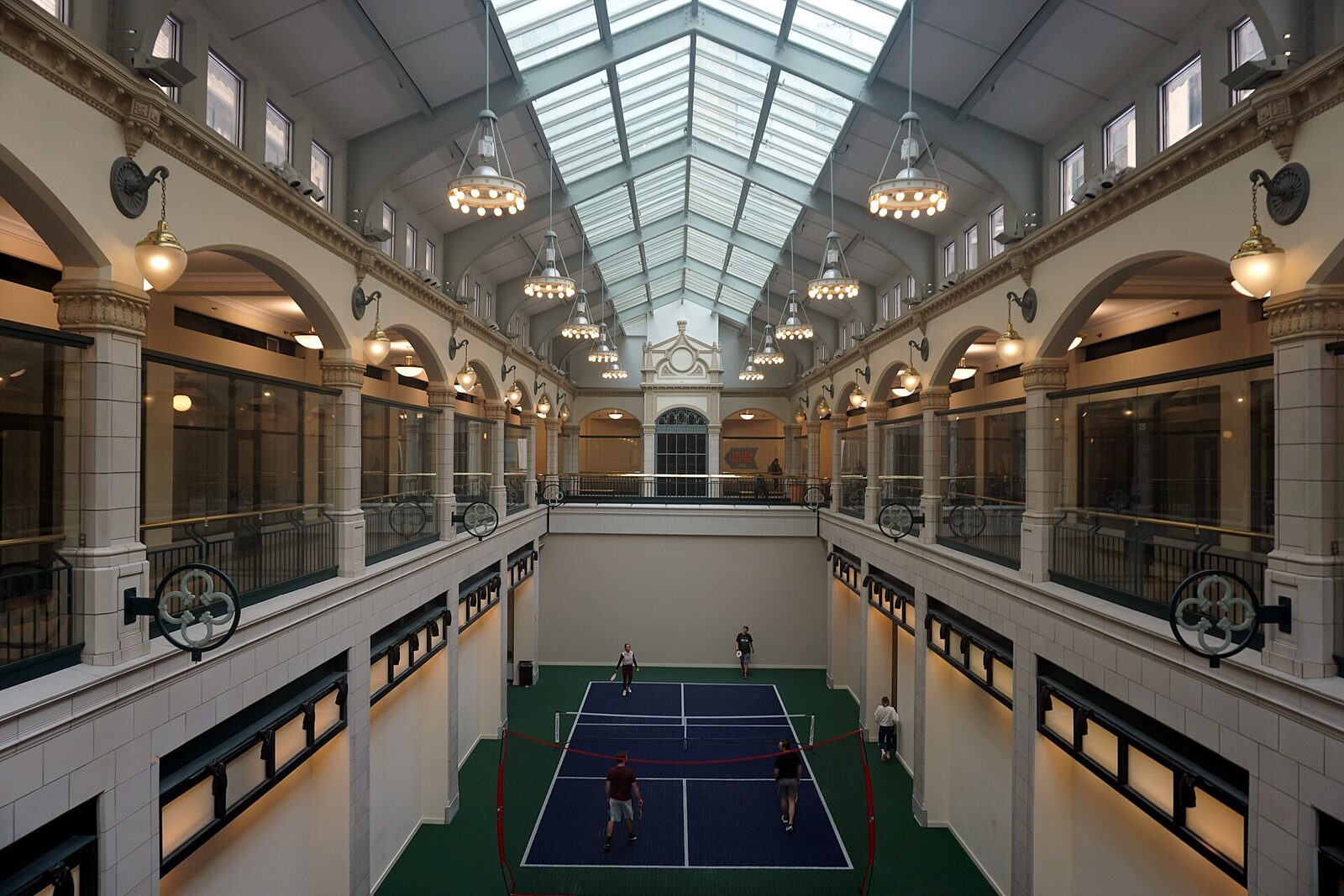
The second part is treating indoor courts as the summer-afternoon answer rather than a fallback. Cities with serious summer heat have generally built out more indoor and covered-court capacity than milder-climate markets — dedicated indoor pickleball venues, gyms with dual-use gymnasium floors, and covered/canopied outdoor courts that block direct sun even if they don't fully control the air temperature. In practice, this means a hot-climate player's summer routine often splits cleanly: outdoor courts at dawn, indoor or covered courts for anything scheduled midday or midafternoon. If you're traveling to or living in a hot-summer market, checking whether a venue has indoor or covered courts before you book a midday session is worth the extra minute — our court directory lists surface type and indoor/outdoor status for every verified venue so you can filter for exactly that.
The bottom line
Summer heat doesn't mean giving up outdoor pickleball — it means respecting that a hot court surface is doing more to your body than the air temperature alone suggests, and scheduling around that rather than around convenience. Play early or play in the evening, know the difference between "I need water and shade" and "this is an emergency," and lean on indoor or covered courts when the sun is directly overhead. The sport is built to be played outdoors for most of the year in most of the country — summer in a hot climate is just the season where the smart move is to get up earlier than you'd like.
Related reading
If you're planning a trip to a hot-summer market, our Las Vegas pickleball guide breaks down which local venues are indoor, which are covered, and which only make sense at dawn. And if you're newer to the sport generally, our pickleball etiquette guide and beginner gear guide cover the basics beyond heat safety.
Sources
This guide draws on CDC public-health guidance on heat-related illness and extreme-heat prevention, and on NASA Jet Propulsion Laboratory urban heat-mapping research (via Scientific American's reporting) for the pavement-versus-air temperature differential. We have not invented specific medical thresholds or clinical cutoffs — for exact diagnostic criteria, consult the CDC pages directly or a medical professional.