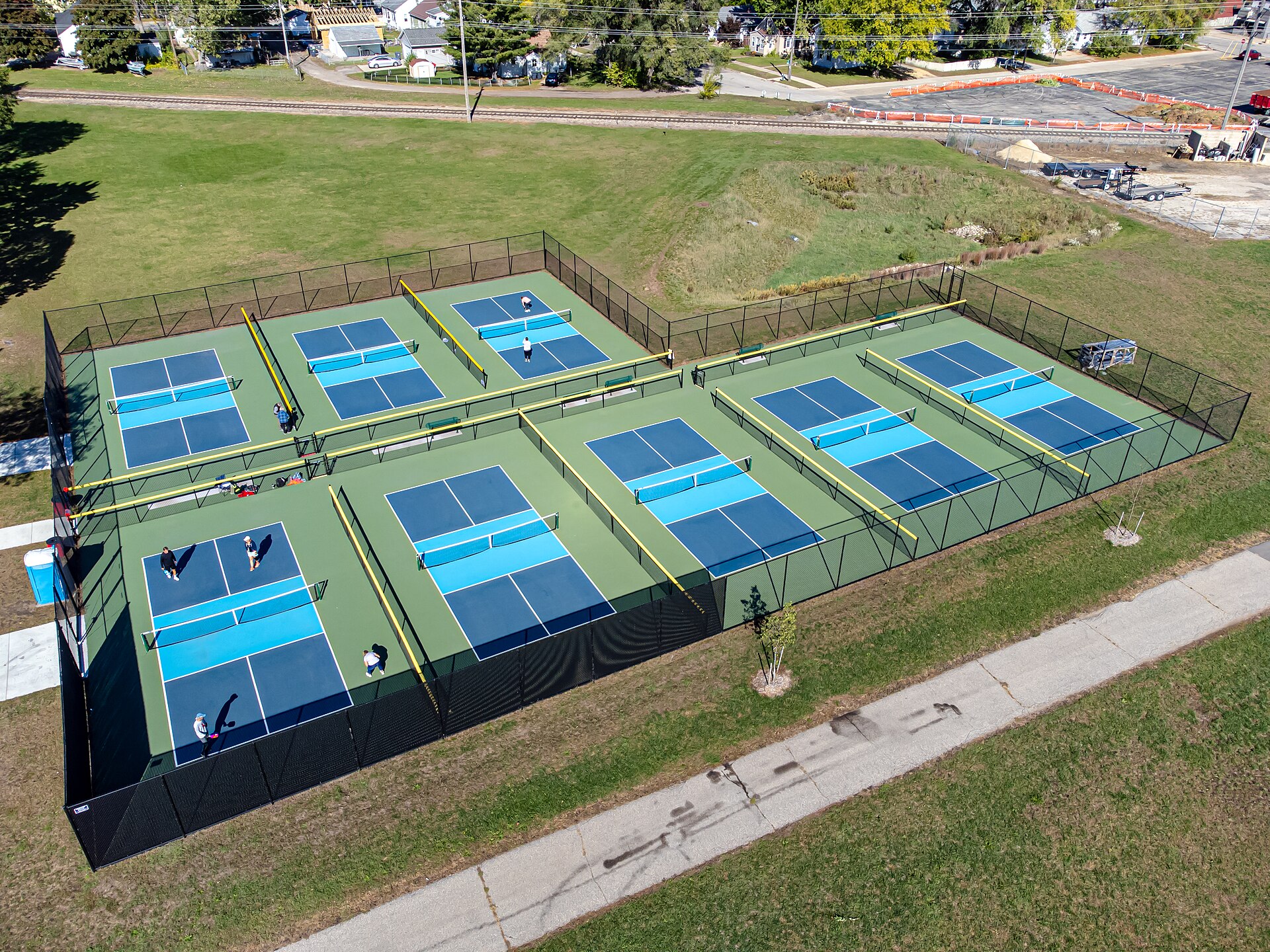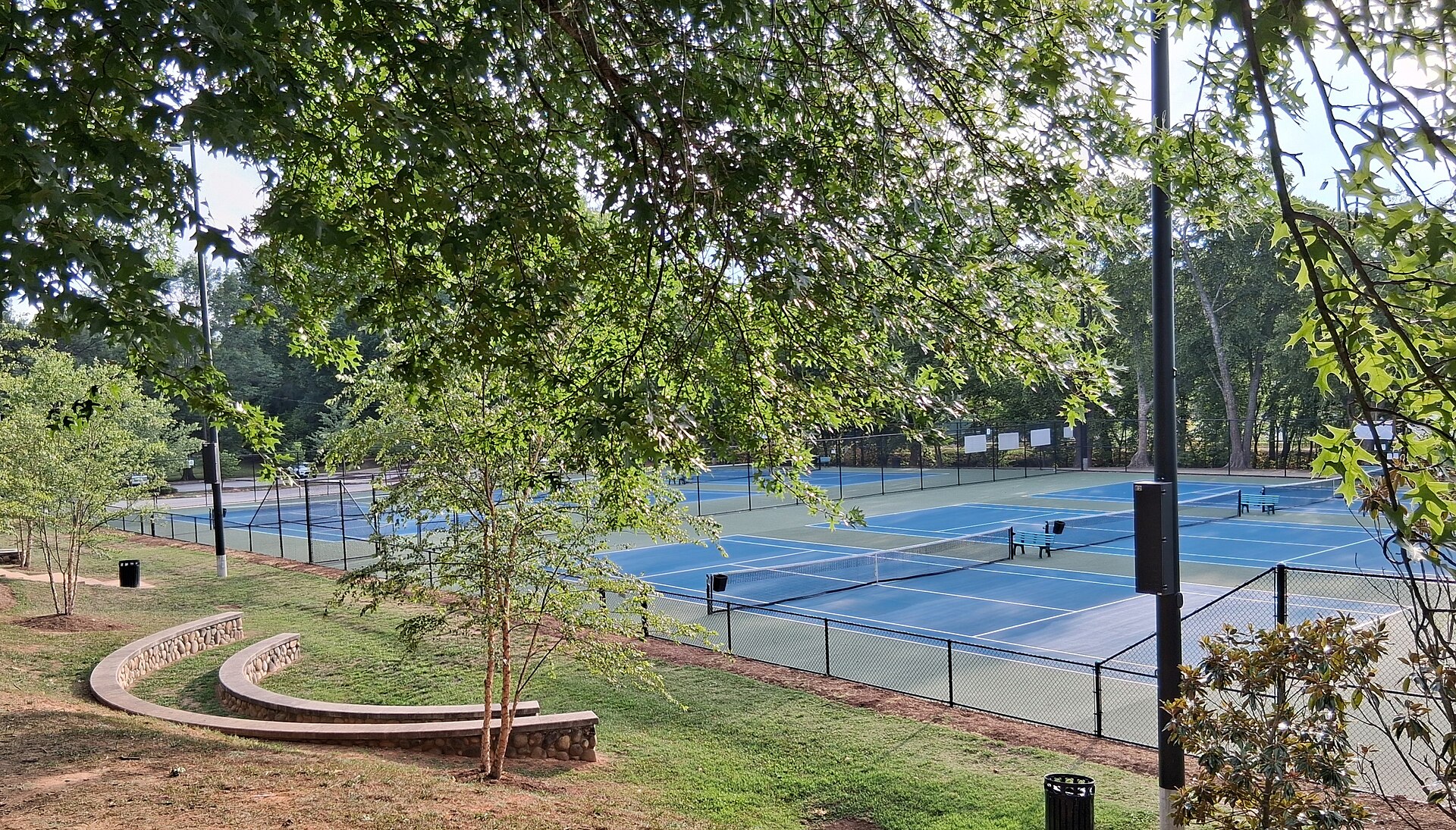
"Tennis courts near me" returns a map full of pins, and the pins hide the thing you most want to know: can you just show up and play, do you have to reserve, or is it members only? Those are three different kinds of venue with three different price structures, and a pin for each looks identical.
This guide sorts them out using the tennis records in The Court Scout's directory that we have verified, meaning a key fact such as the courts' existence and access rules was confirmed against an official source (a parks department page, the venue's own site). At the time of writing that is 191 venues, all in the United States, across 44 states. Figures come from data/courts.json as of 2026-10-17. We list many more tennis courts than that (several thousand), but most are still awaiting verification, so every number here describes the verified set only. Treat it as a well-checked sample of the market rather than a census, and note that our verified tennis coverage is thickest in California (45), Florida (30) and Texas (19).
The three kinds of tennis venue
| Venue type | Verified US venues | How you get on court |
|---|---|---|
| Tennis centers (usually city or county run) | 94 | Mostly pay per hour or per person; a few free |
| Clubs | 83 | Mostly membership; some sell drop-in or guest play |
| Public parks | 12 | Mostly free, first come, first served |
| Rec centers | 2 | Pay to play |
By access: 100 of the 191 are pay-to-play, 79 are membership, and 12 are free. The median tennis center in our verified set has 14 courts (n=93), the median club has 10 (n=83), and the median public park has 6 (n=12). A park with six courts is a different proposition from a 14-court center with a pro shop, so check the count on a venue's page before you plan a group.
Surface and setting, where the record states them: of the 53 venues with a stated surface, 35 are hard court and 15 are clay. And 88 of the 191 are indoor or have both indoor and outdoor courts, which matters in winter, and in Phoenix in July.
Free courts: where they are and what "free" means
Only 12 of our verified tennis venues are free, and 10 of those are in Florida. That is partly a Florida coverage effect (Florida is our second-best-covered tennis state) and partly real: warm-weather cities with year-round parks programs tend to leave courts open. Examples from the verified set:
- Tampa: Cal Dickson Park Tennis (8 courts) and Julian B. Lane Riverfront Park Tennis (6 courts), both listed free.
- Palm Beach County: John Prince Memorial Park in Lake Worth, six free public courts run by the county parks department.
- Charlotte, NC: Freedom Park, 10 courts with free open play.
The fine print matters, and it is where scraped "free tennis courts" lists go wrong:
- Free to walk on is not always free to reserve. Freedom Park's courts 1–6 can also be reserved online for a small fee through the county's booking system. Mooney Tennis Courts in Fort Walton Beach is free for open play but charges $10 an hour per court, with a two-hour minimum, if you want to reserve.
- Free courts may carry a league fee. The David E. Disney Tennis Center in DeLand is free for general play, but league play may require an annual user fee.
- Shared courts. Some free parks are tennis courts that double as pickleball courts, as at Belle Terre Park in Palm Coast. Expect to share and to check the posted rules. If that is a problem, our guide to converting a tennis court to pickleball explains why it happens.
If you are visiting from outside Florida, do not assume a park court is free; plenty of city-run centers charge even for outdoor hard courts.
City tennis centers: what they actually charge
The 94 tennis centers are the backbone of the paid category, and their pricing is more varied than people expect. Not every center quotes the same unit, so read whether the rate is per court per hour or per person. From the verified records:
| Venue | Rate (as published by the venue) |
|---|---|
| Portland Tennis Center (OR) | $5 per 75-minute court; month pass from $53 |
| Costa Mesa Tennis Center (CA) | $8/hr before 4pm, $12/hr after 4pm and weekends |
| Fremont Tennis Center (CA) | $9/hr resident non-primetime, $11/hr primetime; $11–14/hr non-resident |
| Cary Tennis Park (NC) | Outdoor $8/hr (free walk-up); covered $30–38/hr |
| Centennial Sportsplex (Nashville) | $10/hr outdoor, $25/hr indoor |
| Hanscom Indoor Tennis Center (Omaha) | $27/hr non-prime, $33/hr prime per court |
| Robinswood Tennis Center (Bellevue, WA) | Indoor $36–40/hr singles; outdoor $18–22/hr singles |
| Bitsy Grant Tennis Center (Atlanta) | Hard $3–5 per person per hour; clay $5–6 |
| Salvadore Park (Coral Gables, FL) | Residents $6 day / $10 prime; non-residents $10.50 / $13.50, per person per hour |
Four patterns show up repeatedly in these pricing pages:
- Resident discounts. Fremont, Coral Gables, Miami Beach, Boynton Beach and Winter Park all charge non-residents more. In Miami Beach, for instance, residents pay $11 per person per hour and non-residents $19, plus an $8 per person per hour lighting fee.
- Prime versus off-peak. Evenings and weekends cost more at nearly every center that publishes a split. If your schedule allows a weekday morning, you typically pay about 20–35% less in the examples above (Costa Mesa $8 vs $12, Fremont $9 vs $11, Omaha $27 vs $33).
- Indoor and covered courts cost two to four times outdoor. Cary's $8 outdoor versus $30–38 covered, and Nashville's $10 versus $25, are typical of the gap.
- Lighting is a separate line item at some places. Miami Beach and Boynton Beach add a per-hour light fee for night play.
Some centers also have punch passes or annual passes that beat the hourly rate if you play weekly. Santa Barbara's municipal center sells a $6 day pass and annual passes from $131; Birmingham's George Ward Tennis Center offers $6/hr, $40/month or $250/year.
Clubs: membership first, drop-in sometimes
Of the 83 verified clubs, 74 are membership-based. Published prices run from a $75 annual membership at Radnor Racquet Club to $349 a month at a Life Time location, which is a reminder that "club" spans a community nonprofit and a luxury chain. A few sell non-member access: Radnor lists court rental at $52–70 an hour, and the Phoenician in Scottsdale charges non-guests $65 per person. If you are new in town and not ready to join, call and ask about guest passes or a trial period; many clubs do not advertise them.
A checklist before you drive over
- Confirm the access type on the venue page: free first-come, pay-per-hour, or members only.
- Check the court count and whether reservations are required. A six-court park with no booking fills up after work on a Tuesday.
- Look at the surface and setting. Clay and hard play very differently, and a hard court can be unplayable at midday in summer.
- Look at lights and hours. A court without lights ends at dusk in November.
- Bring your own balls and a rain plan. Many city centers sell balls at the desk; free park courts do not.
- Mind court etiquette at busy parks. Our tennis etiquette guide covers wait rules, changeovers and sharing.
Browse verified courts by state or city
Every venue above has its own page with address, courts, surface, hours and cost where known. Start from your state or city:
- Statewide: California, Florida, Texas
- City pages: Houston, Austin, Tampa, Orlando, Atlanta, Charlotte, Long Beach, Fremont, Omaha, Baton Rouge
New to the game? The tennis rules page covers the basics before your first hit.
Sources and limits
Venue facts are verified against each venue's own website, its parks and recreation department's published rate pages, or its official listing, as recorded on each venue page. Prices change every season, and several of the figures above are drawn from published schedules that cover a specific year, so check the venue's current page before you go. This directory is not paid for placement, and no venue here is ranked by sponsorship. If a rate on a venue page is out of date, tell us and we will recheck it.