Tennis has more rules than it looks like from the stands
Watching tennis, the rules look simple: hit it in, keep it in play, don't let it bounce twice. Playing it for the first time, you find out fast that "in" has a precise boundary you're expected to call correctly, the serve has three separate legality requirements most beginners break at least one of, and doubles adds a rotation rule nobody explains until you've already served out of turn. None of it is complicated once you've seen it laid out — it's just rarely laid out. This guide covers the court, the serve, the faults that actually end a point, and what changes in doubles, sourced against the ITF Rules of Tennis — the International Tennis Federation's official rulebook — and USTA's own officiating guidance.
Scoring — love, 15-30-40, deuce, tiebreaks — is its own tangle and gets the full treatment in our tennis scoring guide. This piece covers everything else: the court, the serve, and the faults and positioning rules that decide whether a point is even still alive.
The court: dimensions and layout
A regulation tennis court is 78 feet (23.77 m) long, the same for singles and doubles. Width is where the two formats diverge, and it's the most common thing new players get wrong about court layout:
- Singles width: 27 feet (8.23 m).
- Doubles width: 36 feet (10.97 m) — 4.5 feet (1.37 m) wider on each side. Those two extra strips are called the alleys (or "tramlines"), and they're only in play during doubles. In singles, a ball landing in the alley is out.
- Net height: 3 feet (0.914 m) at the center, 3.5 feet (1.07 m) at the posts. Like pickleball's net, it sags slightly in the middle — by design, not wear.
- Service boxes: on each side of the net, a service line runs 21 feet (6.4 m) back from the net, and a center service line splits the area between the net and that line into two boxes, each 13.5 feet (4.115 m) wide — a deuce (right) box and an ad (left) box.
- Baseline: the back boundary, 39 feet from the net on each side (half of the court's 78-foot length).
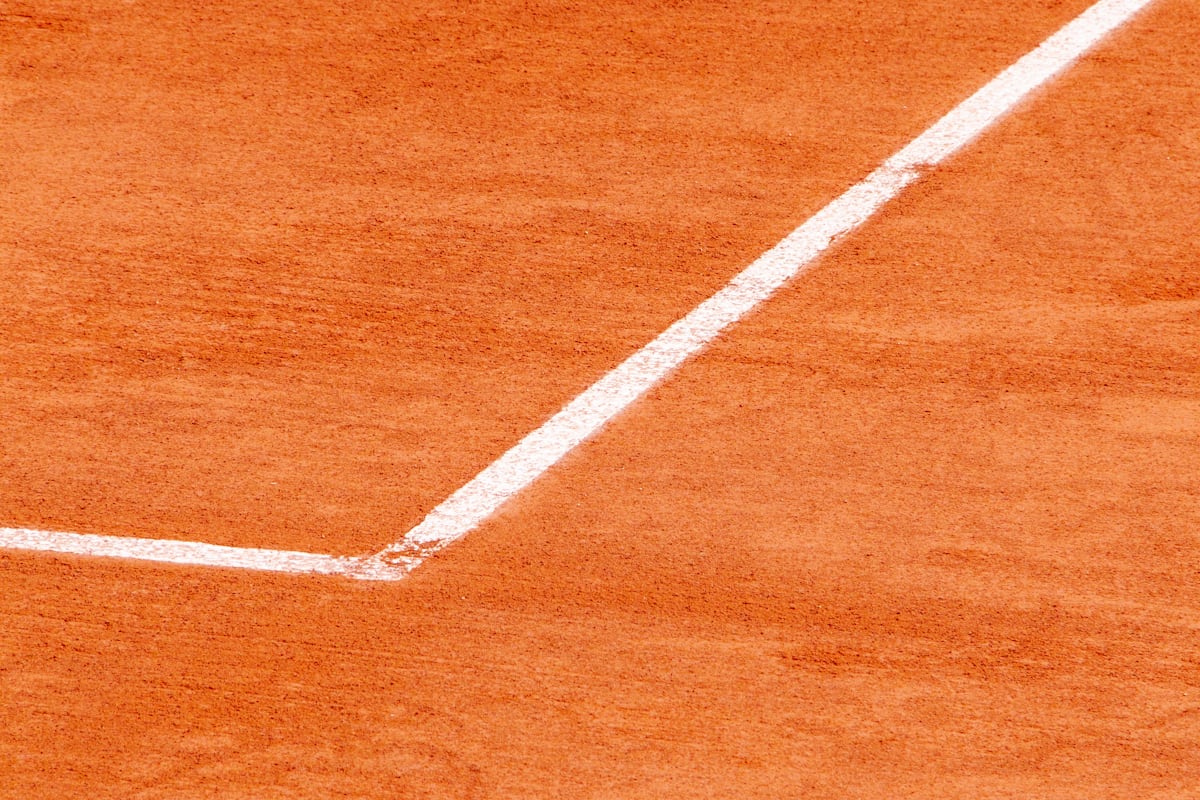
- Lines are part of the court. A ball touching any boundary line, including the singles sideline, the doubles sideline, or the baseline, is in — the same principle pickleball and padel both use. There's no partial credit for "mostly out": any part of the ball touching any part of the line counts as landing on it.
The serve: three separate ways to fault, and one that isn't a fault anymore
The serve draws more incorrect calls than any other part of the game, mostly because "illegal serve" covers three genuinely different things, per ITF Rule 18:
- Foot position (the "foot fault"). Before starting the service motion, the server must stand behind the baseline, between the center mark and the sideline on the correct side. During the motion, the server may not touch the baseline or the court itself, may not touch the ground outside the imaginary extension of the sideline, and may not walk or run to change position — small foot adjustments are allowed, a step onto or over the line isn't.
- Target box. The serve must land in the diagonally opposite service box — deuce court to deuce court, ad court to ad court — clearing the net without touching it (see the let rule below) and landing beyond the service line but short of the net.
- Alternating sides, each point. The server serves the first point of a game from the deuce (right) side, the next from the ad (left) side, alternating for the rest of the game. Which side you're serving from tells you the score without anyone announcing it: even total points (0, 2, 4...) means deuce side, odd means ad side.
Two serve attempts, same as pickleball gives you one and tennis gives you two. A missed first serve is just a first fault — the server gets a second attempt with no penalty. Missing the second serve too is a double fault, and the point goes to the receiver outright.
The let: still a real, standard rule. If a serve touches the net cord and still lands in the correct service box, it's a let — the point is stopped and the server replays that same serve, with no penalty and no change to the fault count. This is the current rule at every level, from recreational play through the Grand Slams — a "no-let" experiment (playing a net-cord serve live instead of replaying it) ran at the 2018 ATP Next Gen Finals but was dropped after one year and never became the standard rule anywhere else. If you've heard tennis "got rid of lets" like pickleball did, that's a mix-up with pickleball's actual 2021 rule change — tennis never made that change.
Faults during the rally: how a point actually ends
Once the ball is in play past the serve, a fault (or a clean winner) ends the point in one of these ways:
- The ball lands outside any boundary line, on either side.
- The ball bounces twice on your side before you return it. One bounce is required after the serve and after every subsequent shot; volleying it out of the air is legal (unlike pickleball, there's no two-bounce rule requiring a ground bounce first) but a second bounce before you hit it loses the point outright.
- You touch the net, net post, or the opponent's side of the court with your body, racquet, or clothing while the ball is in play.
- You hit the ball before it crosses the net to your side, or reach over the net to hit it on the opponent's side — with a narrow exception if your own shot's spin carries it back across after landing in.
- You carry or double-hit the ball — one continuous racquet motion per shot is the rule; a distinct second contact on the same swing is a fault.
- The ball touches you (or your clothing) before it bounces on your side, even if you never swing at it.
Singles vs. doubles: what actually changes
Court width (the alleys come into play) and net-post placement are the visible differences, but the rule that actually trips people up is the serving and receiving rotation:
- Serving rotates every game. One player serves an entire game, then the opposing team's player serves the next game — service alternates by game, not by point, same as singles.
- Receiving order is fixed for the set, not the game. At the start of a set, the receiving team picks which partner returns serve first; that player returns every serve delivered to their side (deuce or ad court) for the entire set. Partners don't swap return sides mid-set. ITF Rule 15 covers this in full.
- After the return, both players can hit the ball. The fixed rotation only governs who returns serve — once the ball's back in play, either partner can take any shot.
- The alleys are in play. A ball landing in either alley is good in doubles, out in singles — worth knowing before you assume a shot you just hit (or received) was out.
The most-missed rules for beginners
If you only remember five things from this guide, make it these:
- You get two serves, not one. A missed first serve is a normal fault with no penalty — only a missed second serve (a double fault) costs you the point.
- A serve that clips the net and lands in is replayed, not played live. The "no-let" rule you may have heard about was a short-lived ATP experiment, never the standard, and tennis is not the sport that eliminated the let (that's pickleball, since 2021).
- The alleys only count in doubles. A ball in that outer strip is in for doubles, out for singles — the most common source of a wrongly-called point between formats.
- Doubles receiving order is locked for the whole set, not renegotiated every game. Whichever partner returns first keeps returning from that same side all set.
- Touching the net during a live point is a fault, even by accident, and even if the point looked won a moment before.
Where to go next
Rules get you through your first match without a disputed line call or a foot-fault argument — and our tennis etiquette guide covers the unwritten conventions (and a few actually-written ones, like the in-match coaching rule) that keep a self-officiated match fair once you're out there. The full scoring breakdown covers love, deuce, tiebreaks, and no-ad formats in depth — worth reading before your first real match, since scoring is what actually gets called out loud on court. Once the serve's three legality requirements above feel automatic, our tennis serve technique guide covers what actually makes it good — grip, toss, the trophy position, and the flat/slice/kick spins, and our forehand and backhand groundstroke guide covers the two shots you'll actually hit most once the ball's in play. If you're shopping for your first racquet, our buying guide covers head size, weight, and grip without the sales pitch, and if you're weighing tennis against pickleball, padel, or badminton in the first place, our racquet-sport decision guide breaks the choice down by court availability, physical demand, and cost.
Quick answers
How many serve attempts do you get in tennis? Two. A missed first serve is a fault with no penalty; missing the second serve too is a double fault, and the point goes to the receiver.
What happens if a serve clips the net cord? If it still lands in the correct service box, it's a let — the point stops and the server replays that same serve. This remains the standard rule at every level; a "no-let" experiment at the 2018 ATP Next Gen Finals was dropped after one year.
Are the doubles alleys in play? Only in doubles. A ball landing in the alley (the strip between the singles and doubles sidelines) is in for doubles matches and out for singles matches — the court itself doesn't change, just which lines count.
Does the receiving order change every game in doubles? No. Whichever partner returns serve first in a set keeps returning from that same side (deuce or ad court) for the entire set — the rotation is locked per set, not renegotiated each game.
What's a foot fault? Touching the baseline or the court with either foot before contact, touching outside the imaginary extension of the sideline, or walking/running to change position during the service motion — small foot adjustments are fine, stepping onto or over the line during the motion isn't.
Is a ball touching the line in or out? In. Any part of the ball touching any part of a boundary line — baseline, singles sideline, or doubles sideline — counts as landing inside the court, exactly like pickleball and padel.
Sources
This guide is fact-checked against the current official rules published by the sport's governing bodies:
- ITF — Rules and Regulations
- USTA — Officiating Rules and Regulations
- USTA — Tennis Scoring: Points, Sets & Match
Ready to put the rules to use? The Court Scout maintains a verified directory of tennis courts, built from primary sources rather than scraped listings. Find tennis courts near you and get on court.