Legal and effective are two different problems
Most players get a legal tennis serve down within a few lessons: stand behind the baseline, toss it up, hit it into the diagonal box, and you get two tries. What takes years, not lessons, is turning that legal motion into a serve that actually wins points — one with real pace, a toss you can repeat under pressure, and enough spin variety that a decent returner can't just sit on the same ball every time. That gap between "legal" and "good" is bigger in tennis than in almost any other racquet sport, because the tennis serve is the one shot in the game a player builds entirely alone, on their own timing, with no opponent shaping the setup — which makes it both the easiest stroke to isolate and drill and the one most recreational players never actually rebuild once a flaw sets in.
For the legal requirements — foot position, the target box, the let rule, and the two-attempt structure — see our tennis rules guide, sourced against the ITF Rules of Tennis. This piece assumes the serve is already legal and covers what makes it good: grip, stance, the toss, the trophy position and kinetic chain that actually generate racquet-head speed, the three serve spins and how each one changes the toss, and the mistakes that quietly cap most players' serves for years.
Grip: continental, not the forehand grip that feels natural
Every serve in this guide — flat, slice, or kick — starts from the same continental grip, the same grip used for volleys and slice shots. It's the one grip that lets the forearm and wrist pronate freely through contact, which is where most of a fast serve's racquet-head speed actually comes from; a forehand grip locks that rotation out and is the single most common reason a beginner's serve stays slow no matter how hard they swing. Finding continental on the racquet's bevels, and understanding why it trades away forehand topspin to make everything else possible, is covered in full in our tennis grip types guide — worth reading first if continental doesn't already feel automatic, since nothing else in this guide works with the wrong grip underneath it.
Stance: platform or pinpoint, but sideways either way
Stand with your body turned sideways to the net — front foot (opposite your racquet hand) angled toward the target, back foot roughly parallel to the baseline. From there, two stances are both legitimate:
- Platform stance. Both feet stay planted through the toss and swing, with the back foot sliding only slightly. It's simpler to repeat under pressure and is what most modern pros actually use.
- Pinpoint stance. The back foot slides up next to the front foot just before the leg drive, narrowing the base to generate more explosive upward force at the cost of a little balance and timing consistency.
Neither is objectively better — platform is the easier starting point for most players because it removes one more moving part from an already complex motion, and pinpoint is worth layering in later once the rest of the serve is reliable, not before.
The toss: the one variable that decides everything downstream
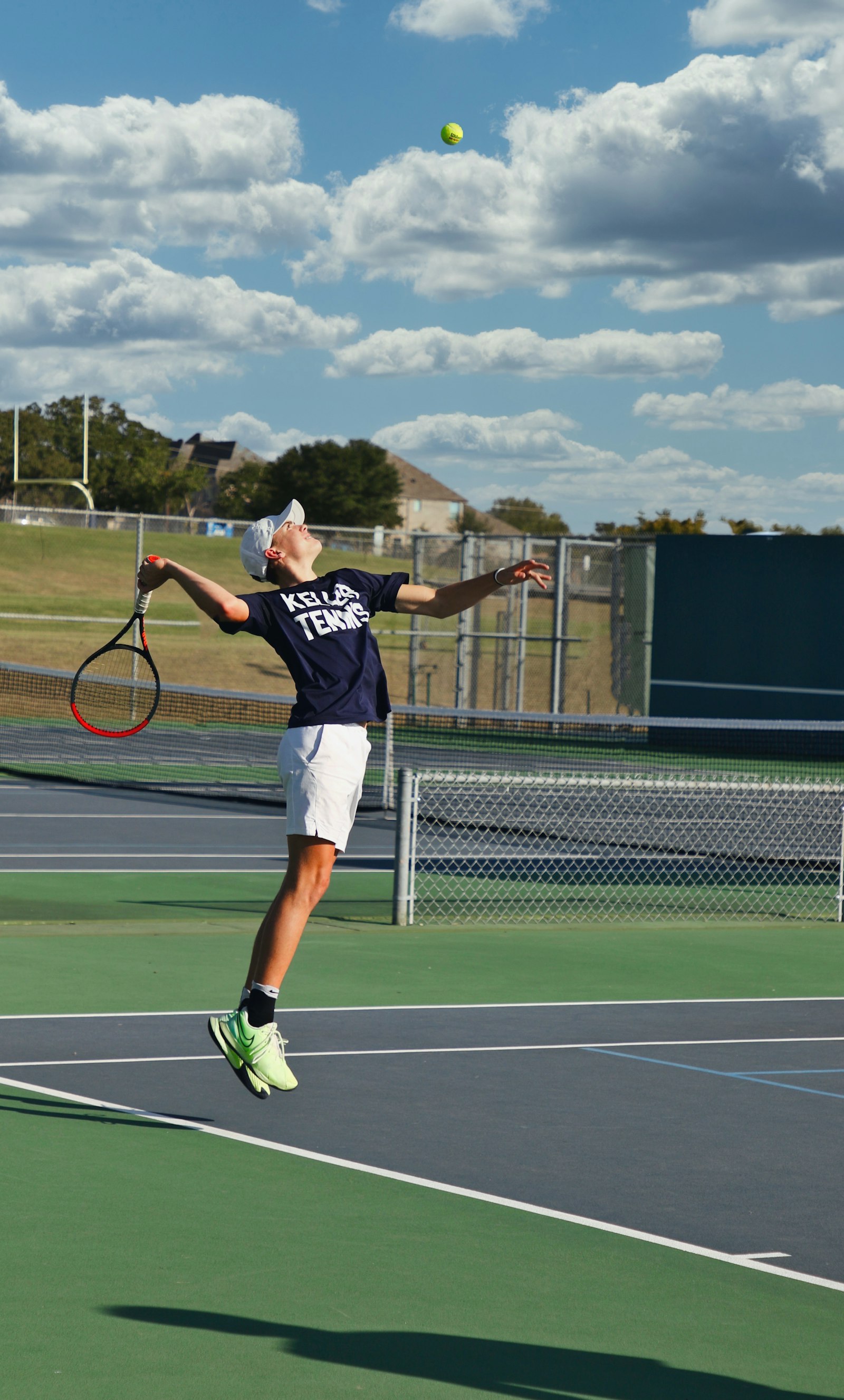
If a serve breaks down, the toss is where to look first. A toss that lands somewhere different every time forces the contact point to move, which forces the swing path, timing, and body rotation to all compensate on the fly — which is exactly why an inconsistent serve so often looks like a swing problem when it's actually a toss problem underneath. Hold the ball in your fingertips rather than your palm, keep the tossing arm straight through the release, and let go at roughly eye level rather than flicking it up from the wrist.
Test it honestly before changing anything else: toss the ball ten times without swinging and watch where it lands. Most recreational players are surprised by how inconsistent their "automatic" toss actually is — and no grip fix, stance adjustment, or swing cue will out-perform simply fixing that first.
The trophy position and the kinetic chain
The serve is a kinetic chain — power generated from the ground up and transferred link by link through the legs, hips, trunk, shoulder, elbow, and finally the wrist, rather than produced by arm strength alone. Skip a link (say, no leg drive) and the chain leaks power at the very start, no matter how fast the arm whips through at the end.
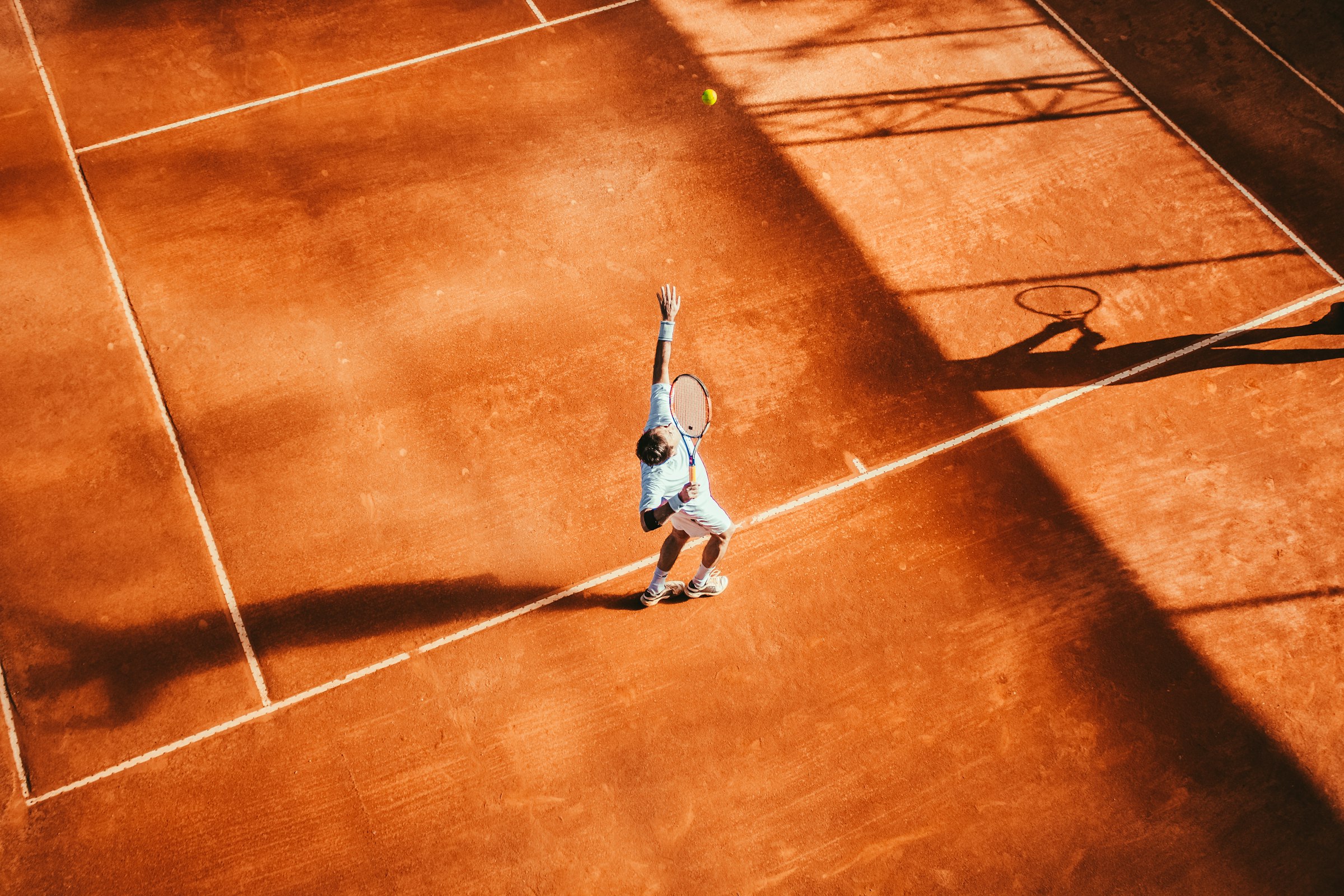
The trophy position is the recognizable midpoint of that chain: knees bent and loaded, both arms extended — the tossing arm reaching up toward the ball, the racquet arm bent roughly 90 degrees with the racquet head dropped behind the back (sometimes called the "back-scratch" position). Reaching it without tension, rather than muscling into it, is what coaches consistently point to as the single biggest visible difference between a recreational motion and a trained one — a tense, forced trophy position stores no usable energy, while a relaxed one acts like a loaded spring the rest of the motion releases.
From the trophy position, the legs drive upward (most coaching guides describe roughly a 45-degree jump, up and into the court) as the hips and shoulders rotate through, whipping the racquet up to contact.
Contact and pronation: the part that can't be taught by instruction alone
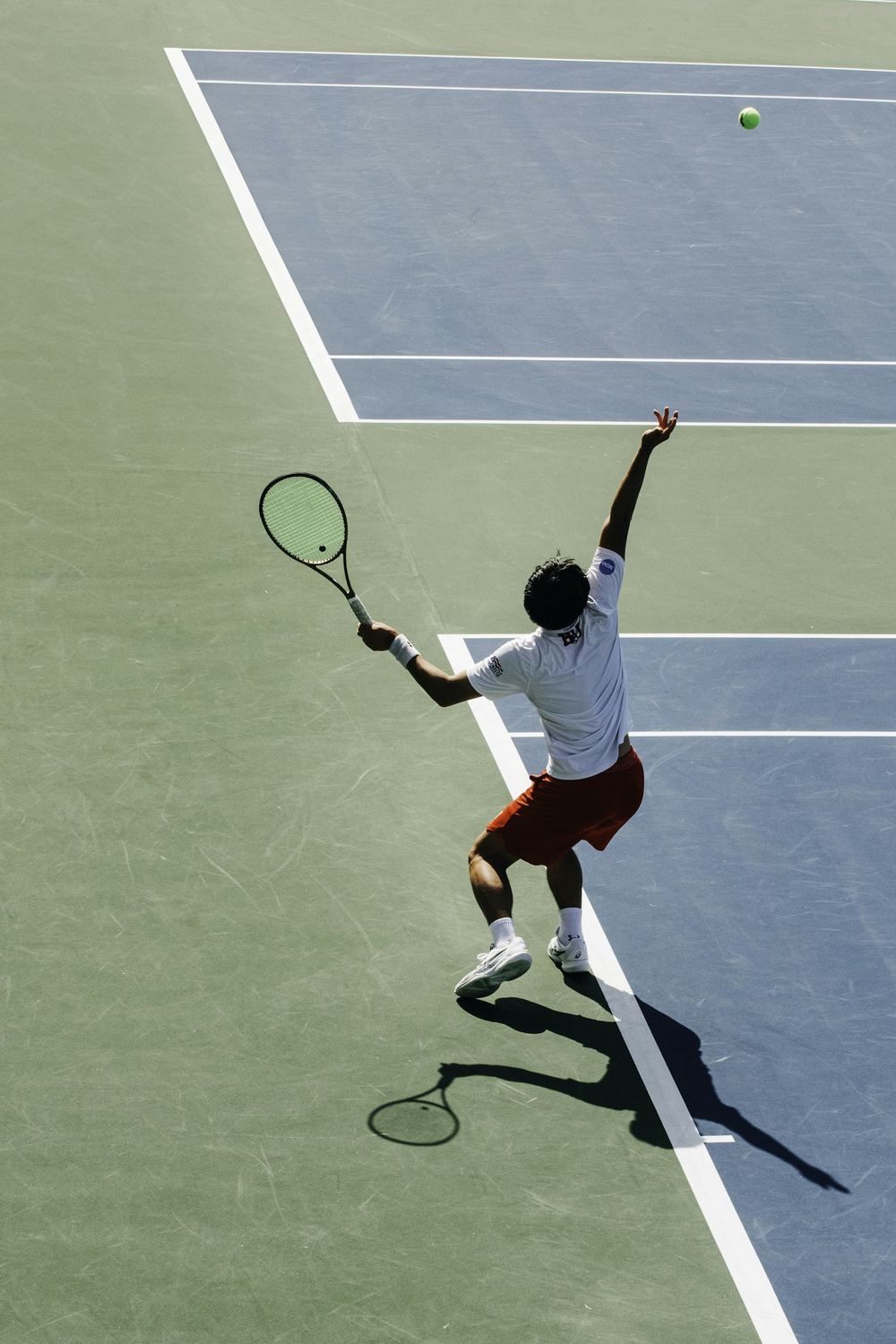
Contact happens at full arm extension, reaching as high as you comfortably can, slightly in front of your body rather than directly overhead. What happens in the fraction of a second before and after that contact point — pronation, the forearm's outward rotation that turns the racquet face over and through the ball — is, by most coaching accounts, the single element that most separates an advanced service motion from a beginner one. It isn't something to consciously insert as a separate move; it emerges on its own once the grip, the kinetic chain, and a relaxed arm are all in place, which is part of why it's so hard to fix by verbal instruction alone and why coaches spend more time on the toss and the trophy position than on telling a student to "pronate more."
Follow through completely. The racquet should keep moving after contact, finishing down and across the body near the opposite hip — a swing that stops dead at contact produces a short, floating serve with none of the pace or spin a full follow-through generates. Land inside the baseline on your front foot, then get into a split step and recover toward center; our racquet sport footwork guide covers that recovery step in more depth, since it's shared across every racquet sport, not just tennis.
Three serves, three tosses: flat, slice, and kick
Tennis players talk about "the serve" as if it's one shot, but the toss location changes meaningfully between the three standard spins — and getting that toss position right is most of what separates a real flat/slice/kick repertoire from just hitting the same serve three different ways and hoping.
- Flat serve. The toss sits in front of the body, roughly between the head and the hitting shoulder. Contact meets the back of the ball squarely, producing minimal spin, maximum pace, and the smallest margin for error of the three — this is the classic first-serve weapon, and the one most likely to produce an unreturnable ace when it lands, at the cost of missing more often.
- Slice serve. The toss is close to the flat serve's — most coaching resources describe it as nearly identical, maybe a touch further to the dominant side — but the racquet brushes around the side of the ball rather than through the back of it, roughly a 3 o'clock contact point on the ball's face. That side-spin curves the ball's flight and skids it low and wide after the bounce, which is why it's a common, lower-risk second-serve choice and why it plays especially well on fast, low-bouncing surfaces.
- Kick (topspin) serve. The toss moves noticeably — behind the head rather than in front of it, though still inside the baseline, not behind it, once the body's rotated into position. That toss position lets the racquet brush upward along the back of the ball, generating heavy topspin that clears the net with more margin and bounces unusually high on landing. It's the standard second-serve choice at the competitive level for exactly that reason: more margin for error than a flat serve, and a high, awkward bounce — especially effective jumping into an opponent's backhand — that a flat or slice serve can't produce.
Surface matters here more than it gets credit for. A kick serve's exaggerated high bounce is most disruptive on slower, higher-bouncing surfaces like clay, where a returner already has less time to adjust to an unusually high ball; on a fast, low hard or grass court, a well-placed slice that skids and stays low can be just as disruptive in the opposite direction. Our own dataset records at least 153 of 2,935 open tennis venues with a clay surface noted (surface detail is free-text and unrecorded for most listings, so the real clay share is almost certainly higher than that floor number) — worth knowing if you're choosing which serve to lean on at a specific club rather than in the abstract.
One toss to build all three from. The practical path most coaches recommend isn't memorizing three separate tosses — it's grooving one consistent, slightly-behind-neutral toss and disguising all three serves from it, so a returner can't read which spin is coming from the toss alone. That disguise only works once each individual toss is already reliable on its own, which is why it's the last thing to layer in, not the first.
Common mistakes that cap a serve for years
Treating the second serve as a weaker copy of the first. A tentative, arm-only second serve — hit softer out of fear of a double fault — gives a competent returner a free attacking opportunity. A well-built kick or heavy slice second serve, with a full motion and real spin, is a completely different shot from a slowed-down flat serve, and it's the difference between a second serve that's merely legal and one that still asks the returner a question.
No leg drive. Serving flat-footed, without bending the knees and driving upward through contact, is commonly cited as costing a serve a significant share of its potential racquet-head speed before the arm even starts moving — a problem no arm-speed fix downstream can fully compensate for.
An inconsistent or misplaced toss. Already covered above, but worth repeating as the single most common root cause coaches point to: fix the toss before touching the grip, the stance, or the swing path, because most of what looks like a swing flaw is really the swing compensating for a bad toss.
A tense trophy position. Muscling into the trophy position rather than reaching it loosely removes the stored, spring-like energy that position is supposed to build — the fix is almost always to slow the motion down in practice, not to swing harder.
Building a reliable serve
Work through this roughly in order, the same way you'd build any complex motion — one link of the chain at a time rather than all at once:
- Groove the toss alone, with no racquet swing. Ten tosses, same spot every time, before you ever hit a ball.
- Add a slow-motion trophy position. Check that it's reached loosely, not forced, with the racquet dropped behind your back and both arms extended.
- Add the full motion at moderate pace, flat serve only, aiming just for legal and in. Consistency before power.
- Layer in leg drive and full pace once the motion itself is repeatable.
- Add slice, then kick, each from its own toss position — only after the flat serve toss is already automatic.
Where to go next
Technique makes the serve good; the rules — foot position, the target box, the let, and the two-attempt structure — are covered in full in our tennis rules guide. If continental grip doesn't yet feel natural, our tennis grip types guide covers every grip on the racquet's eight bevels, not just this one. And once your serve is reliable, our tennis singles strategy and tennis doubles strategy guides pick up from there — what to do with the point your serve just set up. When you're ready to put any of this into practice, The Court Scout maintains a verified directory of tennis courts, rebuilt from each venue's own primary sources rather than scraped listings.
Sources
- ITF — Rules of Tennis (official rulebook)
- LTA (Lawn Tennis Association) — Flat, Kick & Slice: Your Guide to Serve Spins
- Feel Tennis — Tennis Serve Toss for Flat, Topspin and Slice Serves
- UTR Sports — Kick Serve in Tennis: Technique, Toss, Drills, and Pro Tips
- Optimum Tennis — Tennis Serve Technique: Toss, Trophy Position and Pronation
- WNY Tennis — Tennis Serve Techniques: Mistakes and How to Fix Them
- The Court Scout — tennis rules guide
- The Court Scout — tennis grip types guide
- The Court Scout — global tennis hub