Pick the constraint first, not the sport
Most "which racquet sport should I play" articles start with the sports and work forward — here's pickleball, here's tennis, now decide. That's backwards for most beginners, because in practice you're not choosing freely among four equally available options. You're choosing under a constraint: there's a court fifteen minutes away or there isn't, your knees can take a certain amount of pounding or they can't, you have a free Saturday morning or you have forty-five minutes twice a week, and you have some budget in mind whether or not you've admitted it yet.
This guide is organized around those constraints instead of around the sports. Find the section that matches what actually matters most to you right now, read the honest answer, and go. If you want a deeper narrative comparison of the three most-covered sports on this site, our pickleball vs. tennis vs. padel article goes sport-by-sport in more depth. This piece adds badminton to the mix and organizes everything by what you're actually optimizing for.
One honest caveat up front: none of the four is "best." They trade off against each other in predictable ways, and the right answer for a 28-year-old former college athlete in Miami is not the right answer for a 65-year-old in a mid-sized Midwestern city coming back from a knee replacement. Read for your situation, not for the abstract ranking.
If what matters most is finding a court near you
This is the constraint that actually eliminates options for most people, and it's worth being honest about before anything else.
Pickleball is, for most Americans right now, the easiest of the four to find locally. The sport's growth over the past several years has been widely reported as among the fastest of any sport in the country, and that growth shows up as courts: converted tennis courts, dedicated pickleball facilities, lined multi-use courts in parks, and community centers that added pickleball nets because demand was there. If you live in or near a US city or mid-sized town, there's a real chance you can find a public court without much searching. The Court Scout's own verified US pickleball directory is the largest sport in our dataset by a wide margin, which is itself a reflection of how much more built-out pickleball's US footprint has become.
Tennis has the deepest, longest-established infrastructure of the four, especially outside major cities. Nearly every US town of any size has had public tennis courts for decades — it's the sport most likely to already exist at your local park even if nobody's mentioned it in years. The infrastructure is old but it's genuinely everywhere, which matters if you live somewhere small or rural.
Padel is the newest of the four in the US and its courts are still concentrated in specific hubs — you're much more likely to find one in a handful of growth metros than in a typical mid-sized town. That's changing fast, but "fast growth from a small base" still means most US zip codes don't have one yet. Browse The Court Scout's padel hub to check your area; if you're outside a padel-heavy metro, this is worth checking before you commit to the sport.
Badminton is, in practice, the hardest of the four to find a court for in the US — not because the sport is unpopular globally (it isn't; it's massive in much of Asia and Europe), but because of a structural reason: badminton needs real ceiling clearance. Recreational play needs meaningful vertical space above the court and sanctioned competitive venues require much more than that, per the Badminton World Federation's facility standards, which rules out a lot of ordinary gyms and community spaces that can host pickleball or a folding badminton net casually but can't host a real game with any height on the shuttle. In the US, badminton tends to live in dedicated badminton clubs, some school and university gyms, and community centers built with high ceilings in mind — rather than being something you stumble into at a random park.
The practical move: search The Court Scout's directories for your own city before you decide anything else. If one sport clearly has options nearby and the others don't, that's usually the real decision, regardless of which sport you'd pick in the abstract.
If what matters most is physical demand and joint impact
This is the constraint that matters most if you're returning from injury, managing joint issues, or just being honest that you want a workout without punishing your body.
Tennis asks the most of your body of the four. Singles tennis in particular means covering a large court — 78 feet long — under repeated explosive sprints and direction changes, plus the overhead serve motion repeated dozens of times a match, which is genuinely hard on shoulders and elbows over time. It's also the best pure cardio workout of the four in a competitive match. If "sport that also functions as a serious workout" is what you want, tennis delivers that most reliably — but it's also the one that's least forgiving of bad knees or a bad rotator cuff.
Badminton is a strong second on cardio intensity, and arguably the most explosive of the four in short bursts. A serious badminton rally involves a lot of lunging, fast direction changes, and repeated overhead smashes — the shuttlecock's flight path (fast, then suddenly decelerating) means you're constantly starting and stopping rather than settling into a rhythm. Competitive badminton players are some of the fittest athletes in any racquet sport for exactly this reason. That explosiveness is also what makes it hard on knees and ankles if you're not used to lunging repeatedly.
Padel sits in the middle. The court is bigger than a pickleball court, so there's real ground to cover, but the enclosed format — glass back walls the ball can bounce off — means rallies stay alive longer without requiring the same all-out sprinting tennis demands to reach a would-be winner. You get sustained movement and a real workout without the same explosive strain.
Pickleball is the gentlest on joints of the four, which is exactly why it's become such a common recommendation for older beginners and people managing knee or hip issues. The court is small, points can be won with placement and touch rather than pure athleticism, and the underhand serve removes the shoulder strain tennis's overhead serve creates. That doesn't mean pickleball is never a workout — competitive pickleball involves real lateral quickness — but the floor is low enough that a genuinely unathletic beginner can play for an hour without much risk.
The honest ranking, most to least physically demanding: tennis and badminton at the top (roughly tied, in different ways), padel in the middle, pickleball at the gentlest end.
If what matters most is learning curve
How fast do you want to feel like you're actually playing, rather than just retrieving your own mis-hits?
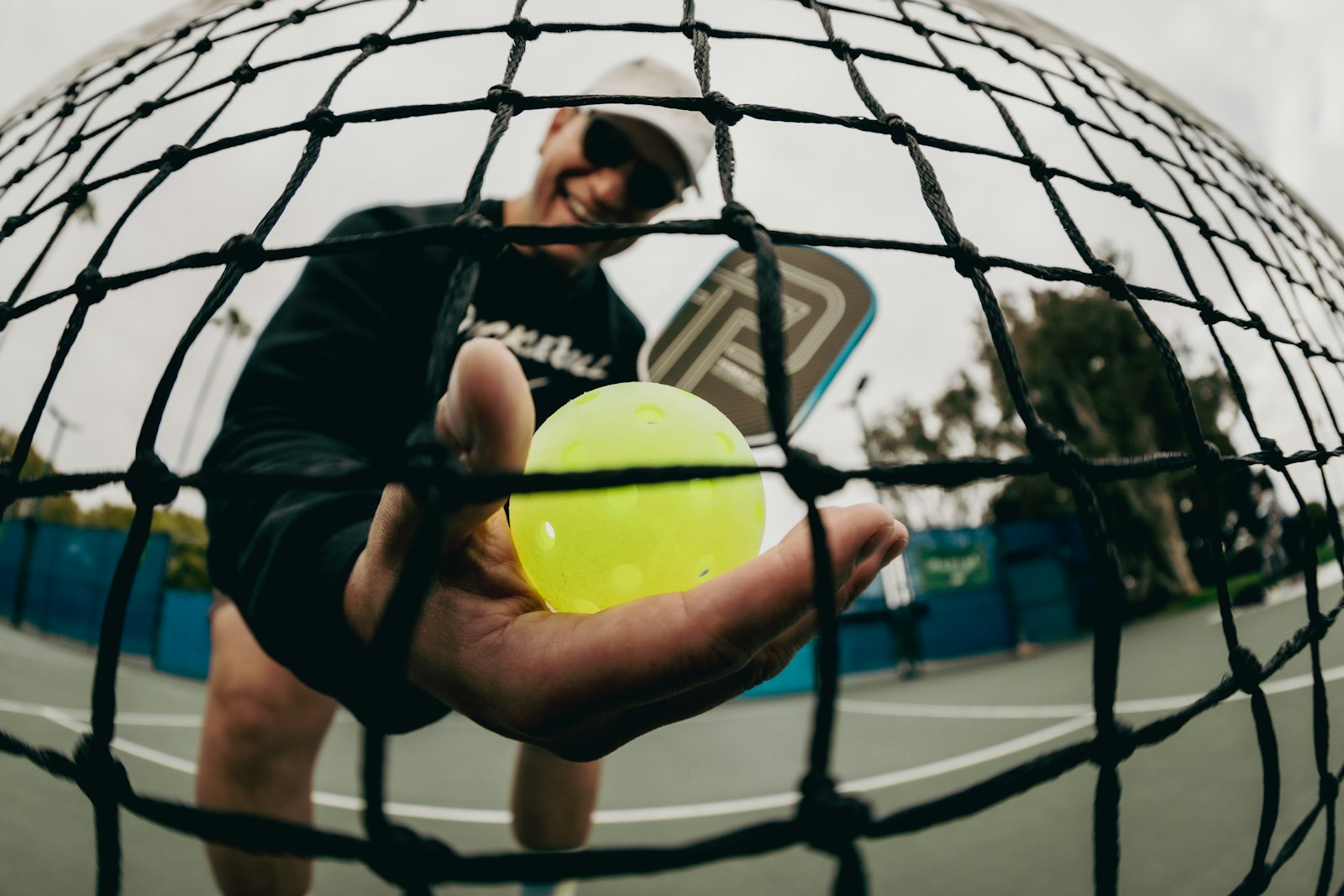
Pickleball is famously the fastest of the four to pick up basic competency in. Most first-timers have real back-and-forth rallies within their first fifteen minutes. The court is small, the serve is underhand, and the rule that prevents volleying out of the air near the net (the "kitchen" rule) keeps points from being decided by one player's raw power advantage. This is the single biggest reason pickleball has spread as fast as it has — the barrier between "never played" and "having fun" is almost nonexistent.
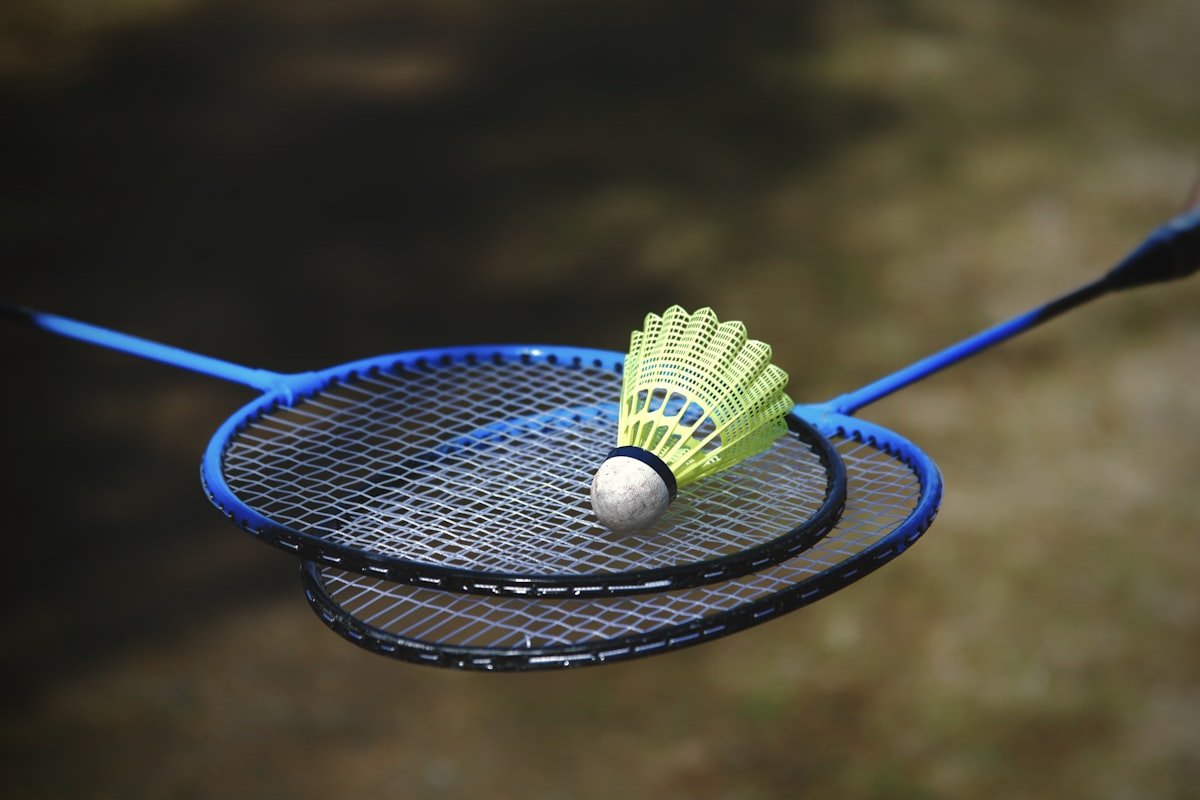
Badminton's rallying is more approachable early on than people expect, but the technique ceiling is real. Two beginners can bat a shuttlecock back and forth reasonably quickly — the shuttle is light and slow off a soft hit, which is forgiving. But the shots that define real badminton — the smash, the drop shot, deceptive net play — take genuine practice to develop, and the wrist-and-forearm technique involved is not intuitive. Expect an easy on-ramp to casual rallying and a longer runway to actually playing well.
Padel has a learning curve that surprises tennis players specifically, because the wall play is a new skill even for people who already know how to hit a ball. If you've never held any racquet, padel is close to as approachable as pickleball — the underhand serve and the walls that keep the ball alive both lower the bar. But the walls are also the whole tactical layer of the sport, and reading how a ball comes off glass, using the back wall on defense, and setting up wall-assisted attacks is a distinct skill you build over months, not your first session.
Tennis has the steepest technical learning curve of the four, and it's not close. A beginner's first session is mostly balls into the net or over the fence. Getting to the point of a real sustained rally typically takes multiple sessions of dedicated practice or lessons, and the serve — arguably the single hardest stroke in any of these four sports — can take months to become reliable. Tennis rewards patience more than any of the others.
For a rules-first approach to the two sports on this site with dedicated rules explainers, see pickleball rules and padel rules — understanding the actual rules before you step on court flattens the learning curve for both.
If what matters most is gear cost to start
We're keeping this section qualitative on purpose — real prices move, and we don't want to print numbers here that go stale. For actual current picks and price ranges, use the dedicated buying guides linked below; this section just orders the four sports relative to each other.
Pickleball and badminton have historically been the cheapest of the four to get started in. Paddles and rackets for both sports tend to sit at lower price points than tennis racquets or padel rackets, and neither sport requires the kind of specialized court-surface shoes that add real cost to a tennis or padel starter kit. See our pickleball paddle buying guide for the actual decision framework and current picks.
Tennis and padel are typically a bigger up-front investment. Tennis racquets span an enormous price range from genuinely cheap recreational frames to serious performance racquets, and padel rackets (solid foam-core, no strings, but engineered with real materials science around sweet spot and weight distribution) tend to sit in a comparable mid-to-upper range. Neither is prohibitively expensive to start, but expect to spend more than you would on a beginner pickleball paddle. See best padel rackets and the tennis racquet buying guide for real current picks and prices, and our dedicated badminton racket buying guide for what to actually look for in your first badminton racket.
The practical move: don't buy anything before your first session if you can avoid it. Every one of these sports has a rental or loaner culture — public pickleball courts often have community paddles, padel and badminton clubs frequently rent rackets by the session, and tennis pro shops will often let you demo a racquet. Try before you buy, then read the relevant guide once you know you're sticking with it.
If what matters most is doubles or social play
This is the constraint that matters if the whole point of picking up a racquet sport is meeting people or having a standing game with friends.
Padel is doubles-only by rule at any serious level. A narrower singles court exists on paper, but walk into a padel club anywhere and you are playing 2-versus-2. That's not incidental — the enclosed-court format and the glass walls are designed around four players, and the social culture follows: most padel clubs run rotating mixer sessions (often called "americanos") specifically so players without a fixed group of four can still get on court and meet people.
Badminton has a strong doubles culture, both casual and competitive, and doubles badminton is played and watched seriously at every level up through the Olympics. If you want a sport where doubles isn't a lesser recreational version of the "real" singles game, badminton (like padel) treats doubles as a first-class format in its own right.
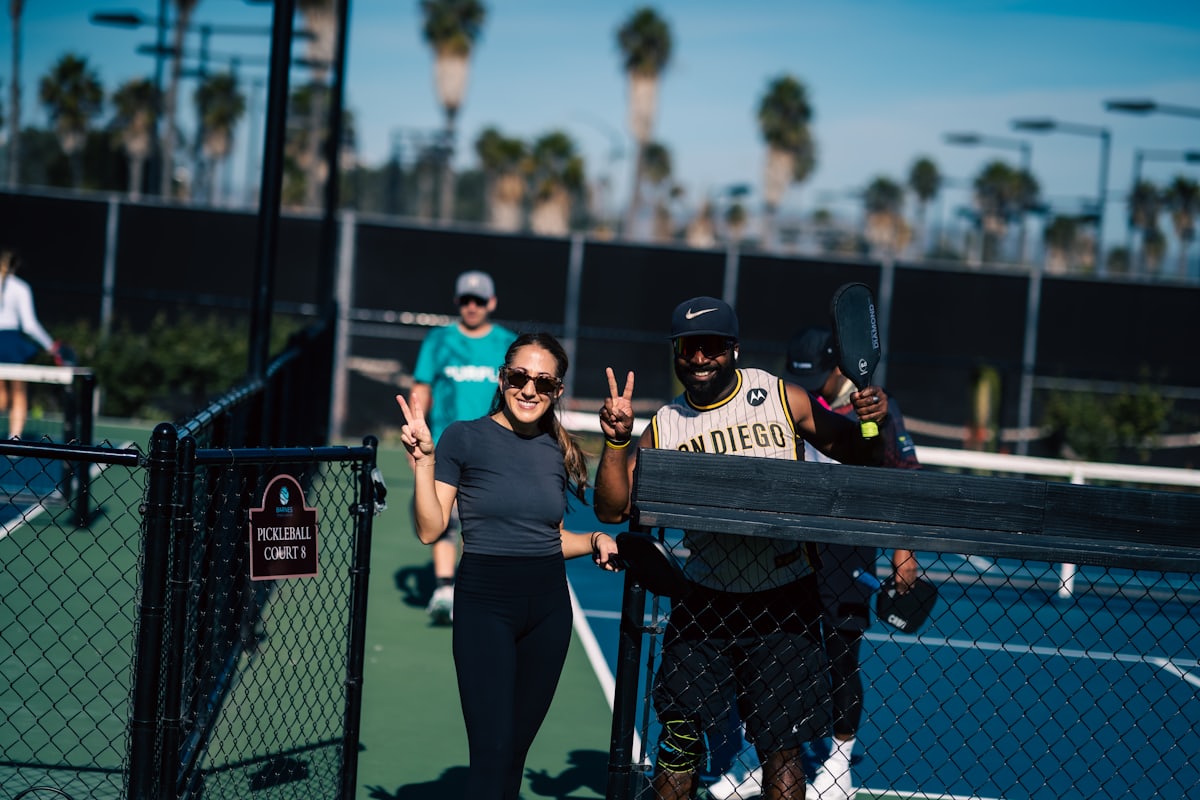
Pickleball is extremely social and doubles-centric in recreational play. The open-play culture — show up, put your paddle in line, rotate into games with whoever's next — is arguably the single biggest reason pickleball has built the community reputation it has. You don't need to arrive with a partner or a fixed group; the culture is built around folding strangers into games quickly.
Tennis is the only one of the four commonly played seriously as singles, both recreationally and professionally. Doubles tennis exists and has its own real competitive scene, but singles is the default format most people picture and most people play, which makes tennis the natural pick if what you actually want is a one-on-one sport you can play without needing to coordinate three other people every time.
Still not sure? Try this
If you've read all five sections and you're still torn, here's the least theoretical advice we can give: go hit balls before you decide anything else. Every one of these sports is more legible in person in twenty minutes than in any article, including this one.
A reasonable weekend: check The Court Scout's directories for pickleball, padel, tennis, and badminton courts near you, and see which ones actually have public or drop-in access close to home — that alone will probably narrow your real choices to one or two. Then go to an open-play session or a beginner clinic for each option that's realistically available, without buying any gear first. Most public pickleball courts have loaner paddles somewhere in the mix; padel and badminton clubs usually rent rackets by the session; tennis pro shops will let you demo a racquet. Forty minutes on court will tell you more about whether a sport's pace, learning curve, and physical demand fit you than any comparison article can.
And if you end up liking more than one — which happens constantly, especially between pickleball and padel, whose touch-and-placement instincts transfer well to each other — there's no rule that says you have to pick just one. A lot of serious racquet-sport players end up playing two or three of these regularly once they've found their local scene in each.
Sources
- USA Pickleball — official site
- USTA — official site
- International Padel Federation (FIP) — official site
- US Padel Association (USPA) — official site
- Badminton World Federation (BWF) — official site
- BWF — facility and court specifications
- USA Badminton — official site
- Sports & Fitness Industry Association — Participation Reports
- The Court Scout — pickleball vs. tennis vs. padel
- The Court Scout — US pickleball directory
- The Court Scout — global padel hub
- The Court Scout — how to choose a pickleball paddle
- The Court Scout — best padel rackets