The four decisions, not a shopping list
Most "what to wear" articles for pickleball are a photo gallery of outfits. That's fine for ideas, but it doesn't tell you why one shirt works and another doesn't, so you can't apply the advice to whatever's already in your closet. This guide does the opposite: four decisions, worked through in the order they actually affect your game, so you can evaluate any garment — something you own, something a friend recommends, whatever's on sale — against the same criteria.
- Fabric — moisture-wicking synthetic vs. cotton, and why it matters more in pickleball than in most sports
- Fit — loose enough to move, tight enough to stay out of your way
- Indoor vs. outdoor — sun exposure changes the calculus; so does a gym's still air
- Pockets and accessories — where the extra ball goes
We're not naming brands or products here. For specific picks at specific price points, our apparel roundup covers that. This piece is the reasoning underneath it.
Decision 1: Fabric — moisture-wicking vs. cotton
This is the decision that matters most, and it has the clearest right answer of the four.
Why fabric matters more in pickleball than in a lot of sports. Pickleball is a stop-start sport — short bursts of sprinting and lateral movement at the kitchen line, punctuated by dead time between points and long pauses between games. That pattern creates a specific problem: you sweat during the point, then stand still while it cools. A fabric that holds moisture against your skin (cotton) turns that cooldown into a clammy, sometimes cold few minutes, repeated dozens of times over a two-hour session. A fabric that pulls moisture away from your skin and lets it evaporate (polyester, nylon, and most synthetic blends marketed as "moisture-wicking" or "performance") mostly skips that discomfort.
The mechanism, briefly. Moisture-wicking fabrics are woven or knit so sweat is drawn along the fiber to the fabric's outer surface, where more surface area is exposed to air and it evaporates faster. Cotton does the opposite — it absorbs and holds water within the fiber itself, which is why a cotton shirt gets heavier and stays wet rather than drying as you play. This is the same physics that applies to any athletic textile; it's why a $20 polyester shirt from a general sporting-goods aisle performs identically to a $60 shirt with a pickleball graphic on it.
When cotton is actually fine. Casual rec play in a cool climate, a short single game, or anything where you're not sweating heavily. It's also fine for before or after playing. The problem is specifically a 60–120 minute session generating real sweat volume with standing time between points — that's where cotton's moisture retention becomes a real comfort issue.
What to look for on a label. 100% polyester or a poly-blend, sometimes branded "performance," "dri-fit," or "moisture-management" — all describing the same underlying fiber behavior. A poly/spandex blend (usually 5–10% spandex) adds stretch on top of the wicking property, which matters for the next decision.
Decision 2: Fit — loose enough to move, tight enough to stay out of your way
Fit is the next biggest factor, and it's a genuine two-sided tradeoff — the correct fit depends on your body and your game, not a universal rule.
Why lateral movement changes the calculus. Pickleball's footwork is dominated by short lateral shuffles and split-steps at the kitchen line, plus quick pivots to cover the middle or retreat for a lob — different from a straight-line stride, where fit mostly matters for chafing. Lateral movement puts more demand on fabric across the hips, thighs, and shoulders; anything that binds in those ranges costs you a step on a ball you should have reached.
Too loose: the real cost. Baggy shorts or a boxy tee can bunch, ride up, or flap during a lunge, and in the worst case catch on your own leg or paddle mid-swing. Loose fabric also traps a layer of still air against your skin, which partially undercuts the point of wicking fabric — moisture pulled to the surface still needs airflow to evaporate. It's more of a distraction risk than a performance risk for most rec players, but a real one at the net, where fabric catching your peripheral vision is enough to cost a volley.
Too tight: the real cost. Compression-level tightness restricts the same lateral hip and shoulder movement it's supposed to protect, and can fatigue you faster over a long session by adding resistance to every stride. For a 90-minute rec session, true compression gear is solving a problem (recovery, blood flow) recreational pickleball doesn't really present — see the note on this in our apparel roundup.
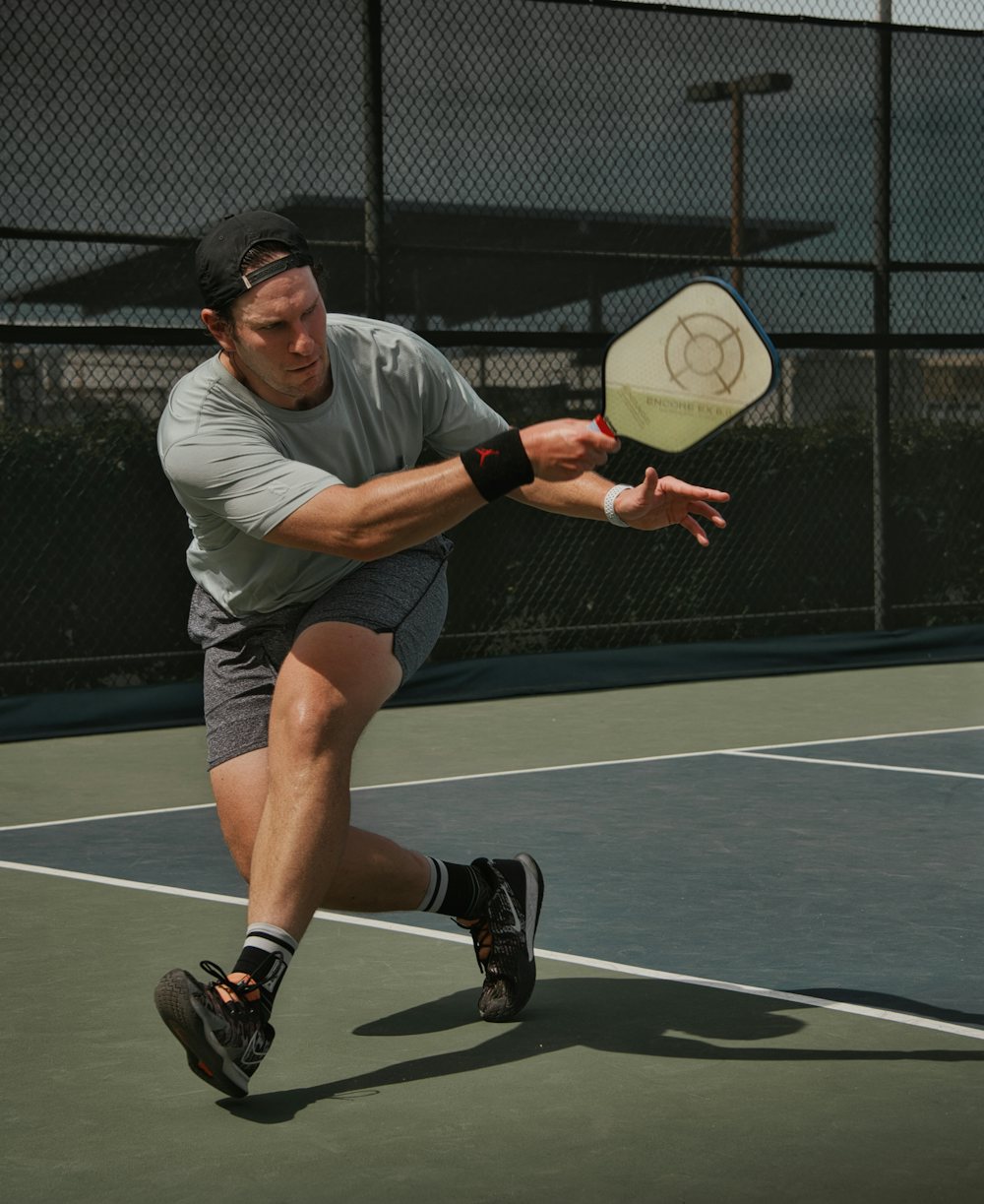
The target: athletic fit, not compression fit. What you want is usually labeled "athletic cut" — closer to the body than a loose casual cut, with enough give (typically a small percentage of spandex or elastane) to stretch through a lunge without binding. For tops, that means fitted through the shoulders and torso without being skin-tight. For bottoms, a short or skort with stretch at the waistband and seat handles lateral shuffling far better than a rigid woven fabric with no give.
A fit detail specific to reach shots. Sleeve length and shoulder cut matter more here than casual clothing shopping usually accounts for, because overhead smashes and reaching volleys put your shoulder through nearly its full range of motion. A shirt that's fitted everywhere except a tight shoulder seam will bind on exactly the shot where you need full extension.
Decision 3: Indoor vs. outdoor — the environment changes what "right" looks like
This is the decision most "what to wear" guides skip, and it's a real one: the correct answer is genuinely different depending on where you're playing, because indoor and outdoor courts create different environmental problems.
Outdoor: sun protection becomes a real factor. Outdoor pickleball means real sun exposure, often for a full session at midday when courts tend to be booked. Two considerations follow:
- UV protection. Performance polyester offers some inherent UV resistance from the density of the weave, but garments explicitly rated UPF 30+ (or UPF 50+) go meaningfully further — worth prioritizing if you play outdoors regularly, especially for shoulders and upper arms, which see more direct exposure during serves and overheads than almost any other body part.
- Color and heat absorption. Lighter colors reflect more sunlight and run cooler in direct sun than dark colors — a small effect on a mild day, a real one on a 90°F afternoon. Pair this with a hat or visor and sunglasses, which do more for sun management than any shirt choice; see our summer heat guide for outdoor heat strategy.
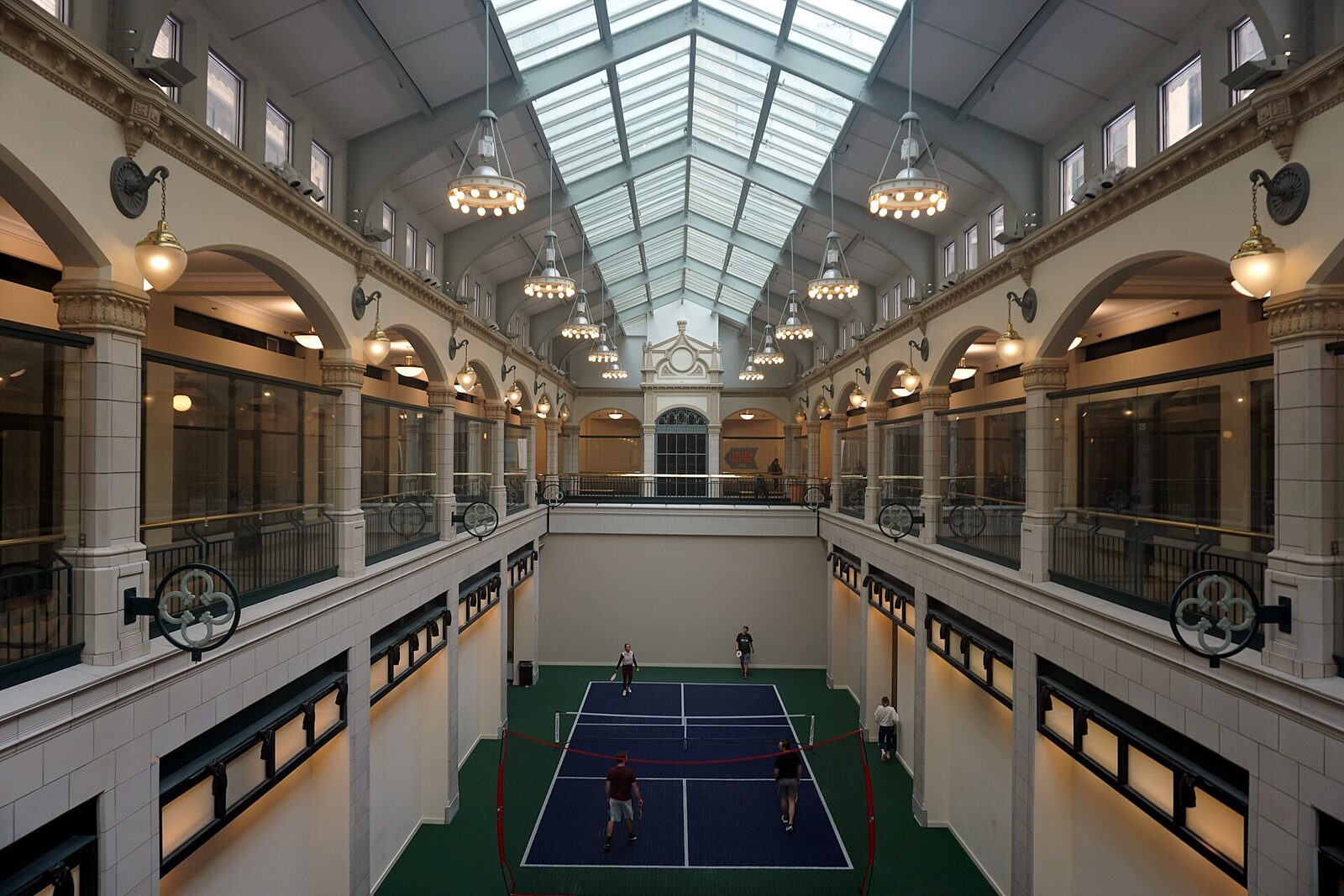
Indoor: breathability and airflow matter more than sun. Indoor facilities remove the sun problem but introduce a different one: many indoor courts (converted warehouses, gyms, dedicated pickleball clubs) have less airflow than an open outdoor court, and HVAC quality varies widely. Without a breeze to help evaporation along, your fabric's wicking property is doing more of the work by itself. Prioritize lightweight, breathable weaves (a 3.5–4 oz fabric moves more air than a heavier 6+ oz version built for outdoor durability) and sleeveless or short-sleeve cuts over long sleeves, unless you run cold.
One overlap worth naming. Indoor courts eliminate sun exposure but not sweat — still air can mean more visible sweating for the same effort, since evaporative cooling is less efficient without airflow. Moisture-wicking fabric (Decision 1) matters at least as much indoors as outdoors; it's UV protection specifically that becomes irrelevant under a roof.
Decision 4: Pockets and accessories — where does the extra ball go?
The smallest decision on this list, but a genuinely practical one: pickleball etiquette generally expects you to carry a spare ball, since a ball that flies off court mid-rally shouldn't stop play while everyone waits for someone to retrieve it. Where that spare ball (plus a phone or key) lives depends entirely on what you're wearing.
Built-in pockets. Many court-specific shorts, skorts, and some shirts include a hip or waistband pocket sized specifically to hold a pickleball — one of the few places "pickleball-specific" apparel design earns its premium over generic athletic wear, since a standard running-short pocket often isn't cut to hold a ball securely through a lunge. If you play regularly and find yourself constantly bending down for stray balls between points, a garment with a built-in ball pocket is a genuine quality-of-life upgrade.
No built-in pocket: your options. A ball pouch or holder that clips to a waistband or belt loop solves the same problem without requiring specific apparel — useful if you already like shorts that weren't built with pickleball in mind. Some players just tuck a ball into a waistband; it works but isn't secure through a hard lunge, and a loose rolling ball on court is a trip hazard for everyone.
Don't overload pockets for the sake of it. A single spare ball is the practical need; stuffing pockets with a phone, wallet, and extra gear adds bulk exactly where lateral movement (Decision 2) needs the least restriction. If you're carrying more than a ball and a key, a small court bag left courtside beats turning your shorts into cargo pants.
Putting it together
Work the decisions in order and you'll land on the right outfit for your situation without needing a product list:
| Decision | Default answer | When to deviate |
|---|---|---|
| Fabric | Moisture-wicking polyester or poly-blend | Cotton is fine for casual, low-sweat, or short sessions only |
| Fit | Athletic cut with light stretch | Loosen slightly if flapping fabric distracts you; never go full compression for rec play |
| Indoor vs. outdoor | Outdoor: UPF-rated, lighter color, hat + sunglasses. Indoor: lightweight, breathable, sleeveless/short-sleeve | Long sleeves outdoors if you're sun-sensitive; a light layer indoors if the venue runs cold |
| Pockets | Built-in ball pocket if you play regularly | A clip-on ball pouch if your favorite gear doesn't have one |
None of these decisions require spending more than $20–30 per garment — the physics of a moisture-wicking weave, an athletic cut, and a UPF rating are the same whether the brand name on the tag is a dedicated pickleball label or a general sporting-goods staple. If you want our current picks at specific price points across men's and women's tops, shorts, and skorts, see our pickleball apparel guide.
Sources
This framework reflects the same fabric-science and fit consensus covered by mainstream athletic-apparel guidance (moisture-wicking mechanics, UPF ratings, athletic-cut sizing conventions) that applies across racquet and paddle sports generally, cross-referenced against our own pickleball apparel roundup and summer heat guide for pickleball-specific detail on outdoor play and heat management.
Find courts and more gear
Dressed and ready? Browse the full US pickleball court directory — verified courts across 100+ US markets, indoor and outdoor. For paddles, balls, and more gear guidance, see how to choose a pickleball paddle.