The short answer, and why it isn't a single number
You can try padel once for the price of a court split four ways and a rented racket — often under $20 out of pocket. You can also spend $300 in a single week if you buy a mid-range racket, a can of tournament balls, dedicated shoes, and join a club before you know you'll stick with it. Both are honest answers, and neither is "the cost of padel," because padel's cost structure has two completely different line items that behave nothing alike: gear, which is a one-time purchase with a fairly narrow, verifiable price band, and court access, which varies enormously by city, facility, and time of day, and doesn't have a trustworthy national average.
This piece breaks the two apart. For gear, we'll give you real price bands. For court access, we'll tell you honestly that the number depends entirely on where you live, and explain how to find out your local number instead of pretending we can hand you one.
If you haven't played yet, start with our beginner padel guide for the rules, what a club actually looks like, and how to find partners. This article assumes you've read that or already know the basics, and just want to know what you're about to spend.
Gear costs: the part we can actually verify
Racket
A padel racket is not a tennis racket cut down — it's a solid-core paddle with no strings, a shorter handle, and holes drilled through the face, and it's the single required piece of equipment you can't easily borrow forever. Retail pricing for padel rackets clusters into a few recognizable bands:
- Budget/mass-market rackets: roughly $50–$80. Functional, usually heavier foam cores, less refined carbon or fiberglass face layups. Fine for figuring out if you like the sport; you'll likely feel their limits within a season of regular play.
- The beginner sweet spot: roughly $80–$180. This is where most purpose-built beginner and improver rackets from established brands (HEAD, Babolat, Adidas, Wilson) sit — round or teardrop heads, soft EVA foam cores, forgiving sweet spots. Our beginner padel racket picks and full padel racket buying guide go through specific models in this range.
- Advanced/pro-level rackets: $200–$400+. Stiffer cores, diamond-shaped heads, more power and less forgiveness — aimed at players who've already developed technique. A beginner gets nothing from spending here except a harder time controlling the ball.
The honest advice, echoed across manufacturer buying guides and independent racket reviewers: don't buy in the top band as a beginner. A $90–$150 racket will not hold you back in your first year, and by the time it does, you'll know enough about your own game to pick the upgrade intelligently instead of guessing.
Balls
Padel balls look like tennis balls but run at a lower internal pressure so they compress and rebound more predictably off the court's walls. A can of three padel balls from an established brand (HEAD, Wilson, Bullpadel) typically runs in the $12–$16 range at US retailers — comparable to a can of tennis balls, maybe a touch more.
Here's the good news: most clubs include balls in your court rental fee, and if you're renting a court through a club rather than practicing solo, you may never need to buy a can yourself in your first several months. Budget for a can only once you're playing outside organized club sessions or want a consistent ball for practice.
Shoes
This is the gear category beginners most often skip and shouldn't. Padel is played on artificial turf with sand infill, and running shoes — built for straight-line forward motion — are a real ankle-roll risk the first time you plant hard and change direction. You want either a clay-court tennis shoe (herringbone outsole) or a dedicated padel shoe.
If you already own clay-court tennis shoes, you likely don't need to buy anything new for your first months — that outsole pattern crosses over cleanly. If you're starting from zero, budget for a real purchase here rather than treating it as optional; our best padel shoes guide breaks down the price range and specific picks across dedicated-padel and tennis-crossover options in more detail.
What renting gear for your first session actually looks like
You do not need to own anything to try padel once. The general pattern at US clubs — and this varies club to club, so confirm with whichever one you're booking — is that front desks keep a small stock of loaner rackets, often included in the court fee or available for a small add-on charge, and balls are supplied for the session. This is genuinely the best way to find out if you like the sport before spending on gear: show up in athletic shoes you already own (clay-court tennis shoes if you have them), rent a racket, and see how the first hour feels. Buy nothing until you've played at least once, ideally twice.
Court access: the part that genuinely varies by market, and why we won't fake a number
This is where a lot of "how much does padel cost" articles go wrong: they publish a single "average" hourly rate as though padel court pricing works the same way nationally. It doesn't, for reasons that are structural, not incidental:
- Padel courts are still scarce in the US relative to tennis or pickleball, and pricing in a scarce market tracks local supply and demand hard. A metro with one club and no competitor can charge what the market will bear; a metro with several competing clubs prices differently.
- Real estate cost drives court economics directly. A club paying Miami or coastal-California commercial rent has a fundamentally different cost base than one in a lower-cost metro, and that shows up in court fees.
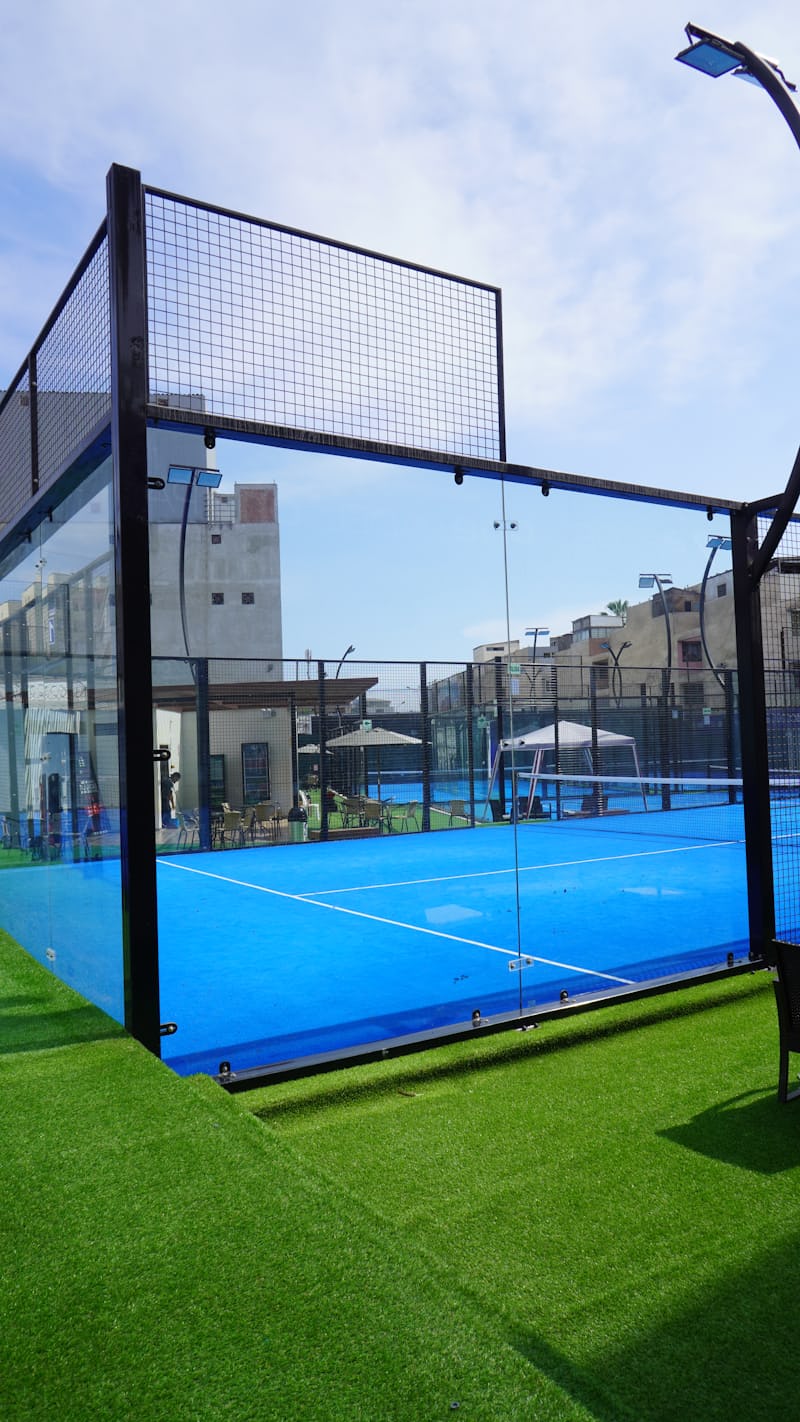
- Facility type matters. Indoor, climate-controlled courts in a dedicated padel-only facility carry different overhead than outdoor courts bolted onto an existing tennis or country club.
- Time of day and day of week swing the price meaningfully at almost every club — peak evening and weekend slots cost more than a Tuesday midmorning.
Because of that spread, any single "the average padel court costs $X" claim you see online is doing you a disservice — it's smoothing over a real difference between, say, an off-peak weekday court in a market with several clubs and a prime Saturday-evening slot in a market with one. The only number that matters is the one at the club you're actually going to play at, and that's on their booking page or a phone call away, not a blog post's average.
What we can tell you honestly, because it's a structural fact rather than a specific price claim: a padel court is rented per court, not per player, and padel is always doubles, so a court fee splits four ways. Whatever the hourly rate is at your club, divide it by four to get your real per-person cost for an hour of play — that's usually a more useful number to hold onto than any national average, because it's the one you can actually calculate once you know your local rate.
Beyond pay-per-play, many clubs also offer membership tiers that bundle a set number of monthly court hours, priority booking, and sometimes free racket rental or discounted lessons, at a price meant to beat the walk-in rate if you play regularly. Whether a membership makes sense depends entirely on how often you'll actually play — the math only works if you'd otherwise be paying for that many walk-in sessions anyway.
The one action that actually answers "what will padel court time cost me": find your nearest clubs and look at their own posted rates. Our padel directory lists verified US venues with links back to each club's own site, where current pricing lives. We deliberately don't publish a scraped or estimated price per venue in the directory — that number changes, and a stale price is worse than no price. Go to the source.
What a realistic first month looks like
Putting the verifiable gear numbers together with the honest "check your local rate" reality on court access, here's how the first month tends to shake out for two different beginners.
Beginner A: rents court time, no membership, plays twice a week
- Racket: rented for the first 1–2 sessions, then buys a beginner racket in the $80–$180 band once they know they'll keep playing — call it a one-time $100–$150 hit sometime in month one.
- Balls: included in court rental most sessions; maybe one $12–$16 can bought for extra practice.
- Shoes: either already owns a usable pair or makes a single purchase in month one.
- Court time: roughly 8 sessions (twice a week) at whatever the local per-person rate works out to. If that's on the lower end of what markets report — call it $10–$15 per person per hour — that's roughly $80–$120 for the month; in a higher-cost market it could run meaningfully higher. This is exactly the number you get from your own club's posted rate divided by four, not from a national figure.
- Rough month-one total, gear plus court time: commonly somewhere in the low-to-mid hundreds of dollars, with the racket purchase being the single biggest line item and court time being the most locally variable one.
Beginner B: joins a club membership, plays 3+ times a week
- Same gear purchases as Beginner A — the racket, shoes, and ball costs don't change based on how you pay for court time.
- Court time: a monthly membership instead of per-session payment. Reported US padel membership pricing spans a wide range depending on the club and what's bundled (court hours, lesson credits, priority booking), and — same caveat as court rentals — the only trustworthy number is the one on your target club's own membership page.
- The membership math works out in the player's favor specifically when they're playing often enough that the per-session cost under the membership beats what they'd pay walking in each time. For someone playing once a week or less, walk-in rates are usually cheaper; for someone playing three or more times a week, a membership often pays for itself.
The honest takeaway across both scenarios: gear is a real but bounded, one-time cost you can budget precisely — plan on roughly $150–$300 all-in for a racket, a couple of ball cans, and shoes if you need them, spread across your first month or two of play. Court access is the open variable, and it's not evasive to say "it depends on your market" — it's the accurate answer. Check your nearest club's own posted rates before you commit to a membership, and start with pay-per-play or a rented racket until you know how often you'll actually show up.
The cheapest legitimate way to find out if you like it
If cost is the thing holding you back from trying padel at all: rent a racket at your first session (most clubs offer this), wear clay-court tennis shoes or supportive court shoes you already own, and split a single court booking four ways. That's a real first session for well under $20 per person in most markets, with zero commitment to buy anything. Decide whether you like the sport before you decide how much of it you want to own.
Sources
- HEAD — Speed Motion padel racquet
- HEAD — padel balls
- Babolat — official padel racquets
- Wilson — padel balls
- The Court Scout — beginner padel guide
- The Court Scout — best padel shoes
- The Court Scout — US padel directory
Ready to find your local rate?
Skip the national averages and go straight to the source: The Court Scout's padel directory lists verified US clubs with links to each venue's own site, where current court and membership pricing actually lives. We rebuild every listing from the club's own primary sources — no scraped or estimated numbers.