Badminton clubs run almost entirely on self-officiating. That's exactly why the unwritten rules matter.
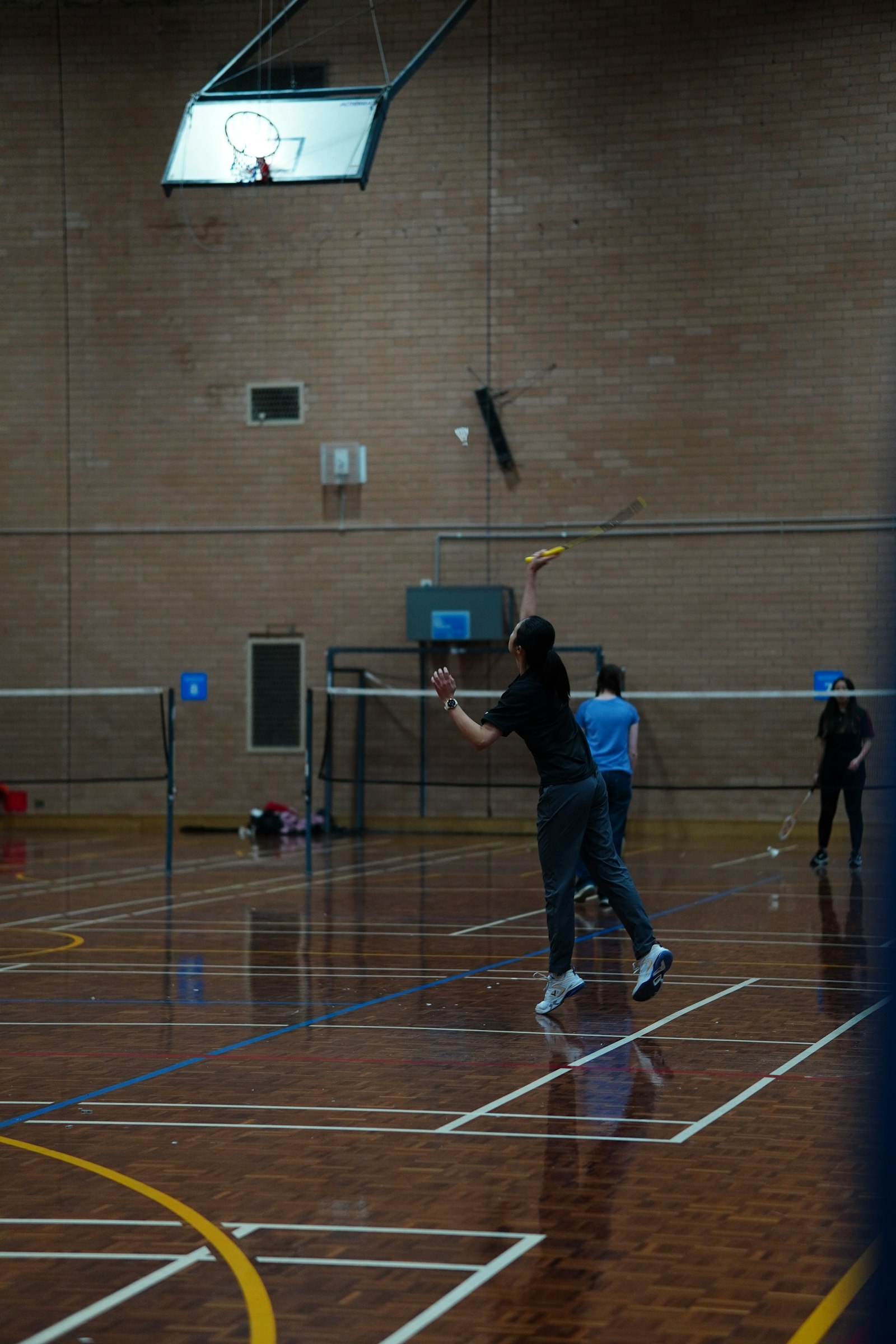
Walk into most badminton club nights anywhere in the world and there's no umpire, no line judge, and often no scoreboard beyond whatever the players are tracking in their heads. Almost all of the game — from most public leisure-centre sessions in the UK to college intramural nights in the US to community-hall drop-ins in India — is self-officiated: the players make their own line calls, track their own score, and manage their own rotation onto and off the court. It works because everyone follows the same unwritten code. It breaks down fast when someone doesn't.
Most of what follows isn't written on a sign at the door. A few pieces genuinely are codified — the Badminton World Federation's own Laws include a section specifically on misconduct and continuous play, because even elite competition needs a formal backstop for the same courtesy club players extend to each other for free. The rest is convention, built up over decades of shared gym halls, borrowed shuttles, and the reality that almost every badminton court in the world (95%+ of the 932 open venues in our own directory are indoor) is a shared wood floor where four other pairs are usually rallying ten feet away.
This guide covers the 10 things worth knowing before your first drop-in session, the footwear rule that's stricter and more specific than almost any other racquet sport's dress code, and the community norms around rotation and skill-level honesty that decide whether you get invited back next week.
The 10 etiquette rules
1. Wear genuine non-marking indoor court shoes — this one isn't optional
Unlike most racquet sports, badminton has a real, frequently-enforced footwear rule: non-marking, indoor-only soles, full stop. Running shoes, outdoor court shoes, and anything with a dark rubber compound leave visible black scuff marks on a polished wood gym floor — the same floor that's often shared with basketball, volleyball, and other indoor sports and that clubs pay real money to have refinished. Most club committees will stop you at the door if your soles are marking the floor, not because they're being precious, but because they're the ones covering the resurfacing bill.
This is also a genuine safety rule, not just a cosmetic one. Badminton involves more explosive lateral and lunging movement than almost any other racquet sport — the fastest recorded shuttle speeds in the sport come off a smash, and returning one means a split-second lunge in any direction. A shoe built for running or general athletic wear has the wrong sole compound and tread pattern for that kind of stop-start lateral movement on a polished floor; it's a genuine ankle-roll risk, not just an etiquette one. If you're serious enough to be reading this, a real pair of indoor court shoes is worth the investment before your second session — our badminton shoe buying guide breaks down what actually matters (sole compound, lateral support, cushioning) versus what's just marketing.
2. Only call a shot "out" if you clearly saw it out — same rule as everyone else's court
In self-officiated club play, the side the shuttle lands on makes the call, and the standard convention — the same one that governs honest self-officiating in every racquet sport — is: if you didn't clearly see it land out, you call it in. Don't guess against yourself, but don't guess in your own favor either.
The practical version: if the shuttle clips the line, it's in (the entire line counts as part of the court). If you were mid-recovery and genuinely didn't track where it landed, say so — "I didn't see that one, your call" — rather than making a confident call you can't actually back up. A club where everyone plays this straight is a genuinely more relaxed place to be a beginner, because nobody's litigating close calls for the next three points.
3. Wait for a break in play before you enter or leave a court
Never walk across a live court, or even along its back or side boundary, while a rally is in progress on it. The shuttle moves fast and the players are watching it, not the walkway behind them — stepping into their sightline right as they're tracking an overhead clear is how good rallies turn into collisions.
The convention: wait at the edge until the rally ends, cross quickly and quietly between points, and don't linger to chat mid-crossing. If you're arriving for a session that's already underway, stand near the entrance until there's a natural break — end of a game, a shuttle retrieval, someone tying a shoe — rather than walking straight in.
4. Retrieve a stray shuttle the moment the neighboring rally ends — and feed it back gently
Shared gym halls mean shuttles land on the wrong court constantly — a mishit clear, a wide smash, a shuttle that clips the net and drifts sideways. When it happens on your court, stop your own rally immediately (a shuttle underfoot mid-lunge is a real fall risk) and let the other court retrieve it. When it's your shuttle that's wandered onto someone else's court, go get it as soon as their point ends, not after you've finished your own game.
When you're the one returning a shuttle to another court, toss it back gently and directly to a player's hand, not a hard smash or a lob over their heads. It's a small courtesy, but landing a fast return unannounced next to someone who's mid-rally on their own game is a good way to be the person the whole hall remembers for the wrong reason.
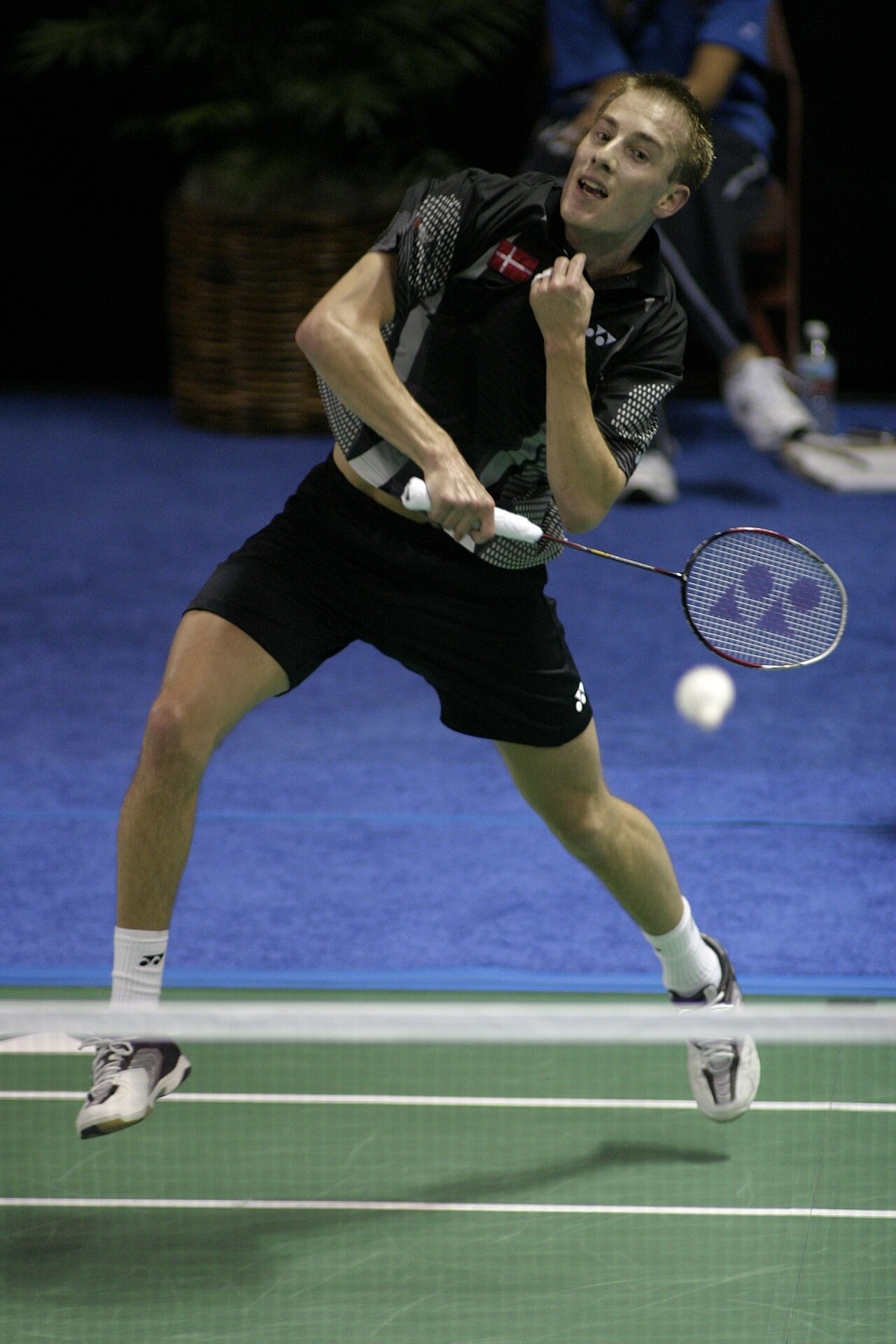
5. Don't smash at someone's face or body in a casual rally
A full-power smash from close range at the net is one of the fastest shots in any racquet sport, and it is a completely legitimate, legal shot to hit at your opponent's body when the situation calls for it in competitive play — that's genuinely part of the game at higher levels. But in recreational and mixed-ability club sessions, aiming a hard smash directly at an opponent's head or torso from close range, especially against a beginner or in a friendly social game, reads as either careless or deliberately intimidating. Nobody enjoys ducking a shuttle at a Tuesday night drop-in.
The convention most clubs follow: play smashes to open space, not at bodies, unless it's an explicitly competitive match where both sides understand the intensity. If you do catch someone with a shot, a quick raised hand or "sorry, you okay?" costs nothing and the room notices when you skip it.
6. Call a "let" honestly when something genuinely disrupts the point
A let — stopping play and replaying the point with no score change — is a real, legitimate call, not just an excuse to redo a point you're losing. The standard situations: the shuttle gets caught in the net and hangs over the top after passing over, a shuttle disintegrates mid-rally (feathers come apart — it happens more than you'd expect with well-used shuttles), the server serves before the receiver is ready, or a shuttle from another court rolls or flies onto yours mid-rally.
What a let is not: a way to redo a point because you mishit an easy shot, or because you didn't like how a rally ended. Calling genuine lets — and only genuine lets — keeps the game fair for everyone and keeps your reputation intact. Callers who "discover" a let every time they're about to lose a point get noticed fast, and not in a good way.
7. Say "ready?" before you serve, and don't serve until your opponent actually is
Before serving, especially at the start of a game or after a point, take half a beat to make sure your opponent is actually set — eyes up, racket ready, feet positioned. Serving into someone who's still adjusting their grip or hasn't looked up yet isn't a legal ambush; if the receiver genuinely wasn't ready, a let should be called and the serve replayed.
This matters more in badminton than it might seem because the serve is genuinely fast and close-range compared to other racquet sports — the server and receiver are only separated by the short service line distance, not a full court length. A half-second of shared awareness before every serve keeps points fair and keeps the game moving without arguments.
8. Rotate through the queue fairly at drop-in sessions
Most club drop-in nights run on some version of a shared court system — a sign-up sheet, a physical queue of rackets or shuttles lined up at the sideline, or a rotating "winners stay, losers rotate off" system. Learn whichever version your club uses on arrival (ask a regular or check for a posted board — most clubs have one) and don't jump the queue, even if a court frees up and you're technically closer to it than the next name on the list.
If your club uses "winners stay on," remember the spirit of it: it's meant to keep games competitive and moving, not to let one dominant four hold a court all night while six other people wait. Most clubs that run this system also run an informal cap — two or three games before you rotate off regardless — specifically so newer or less confident players actually get court time. Respect that cap even if nobody's enforcing it strictly.
9. Applaud good shots — including your opponent's
A genuinely well-placed drop shot, a diving retrieve, or a clean winner deserves a "nice shot" or a light racket-tap acknowledgment, whether it came from your side of the net or the other. This is one of the most consistently cited pieces of badminton culture across clubs worldwide: the sport is fast and physically demanding enough that a good rally is worth recognizing regardless of who wins the point.
The inverse matters too — don't celebrate loudly over an opponent's unforced error or a shuttle they mishit into the net. Celebrate your own genuine winners; extend basic grace on the other side's mistakes.
10. Shake hands (or racket-tap) at the net after every game — win or lose
The universal sign-off in badminton, at every level from club night to the Olympic final, is meeting at the net after the last point to shake hands (or, increasingly common post-2020, a racket-tap or fist-bump) and say "good game." Do this every time, including games you lost badly and games you dominated — the handshake isn't a reward for a close match, it's the closing ritual for all of them.
If you were playing doubles, this extends to all four players, not just your direct opponent. A quick "thanks for the game" to your partner too, especially if they carried a rough patch for you, goes a long way toward getting asked to partner up again.
The unwritten community norms
Be honest about your level when a club sorts by ability
Many clubs run separate sessions or courts by rough skill band (beginner, improver, intermediate, advanced) or use a club ladder/ranking system. Same principle as any level-sorted racquet sport: don't sandbag down to dominate an easier group, and don't overstate up to chase better competition you're not ready for. Both distort the session for everyone else on the court and get noticed within a game or two. If you're genuinely unsure where you land, say so honestly to whoever's organizing and let them place you — most clubs would rather adjust you after one session than have you self-select wrong for a month.
Bring your own shuttles if you can, and don't hoard the good ones
Shuttles — especially feather shuttles — wear out fast, sometimes within a single intense rally sequence, and they're a real, recurring cost for whoever's supplying them. If your club doesn't provide shuttles for casual play, bring your own tube when you can, and if you're sharing a club supply, don't quietly pocket the newest, roundest shuttles for your own game while leaving the beat-up ones for the next court. Our feather vs. synthetic shuttlecock guide covers why the two types perform so differently and why feather shuttles specifically don't last — useful context for why this convention exists at all.
Welcome new players in, and adjust your intensity when you're hosting one
If you've been in a club for a while and you see someone new standing awkwardly at the sideline with a shuttle tube and no idea how the rotation works, wave them over and explain it. Most clubs grow this way. And when you're paired with a genuine beginner, dial back — hit some rallying shots they can actually return, hold off on the full-power smashes covered in rule #5, and let them find a rhythm. You can play at full intensity again in the next rotation.
Where to go next
Once the etiquette is second nature, our badminton scoring explained guide covers the actual rules of play — including the 3×15 scoring format the BWF's members approved in 2026 — and our doubles and singles strategy guides cover the tactics once you're comfortable with the format. If your shoes are still the running kind, start with the badminton shoe buying guide before your soles get you turned away at the door.
When you're ready to find a place to play, The Court Scout maintains a verified directory of badminton courts — every listed venue confirmed against a primary source, with real Google ratings where available. Find badminton courts near you.
Quick answers
Do I really need special shoes for badminton, or will regular sneakers work? For indoor courts — which is nearly all of badminton — you need genuine non-marking soles. Regular running shoes both scuff shared wood floors (many clubs will turn you away at the door) and lack the lateral support badminton's explosive side-to-side movement actually needs.
Who makes line calls in a casual club match with no umpire? The side the shuttle landed on calls it, following the same honesty convention as other self-officiated racquet sports: if you didn't clearly see it out, call it in.
What's a "let" in badminton, and when can I call one? A let stops play and replays the point with no score change. Legitimate reasons include the shuttle catching on the net cord and hanging over, a shuttle disintegrating mid-rally, or the receiver genuinely not being ready when served to. It isn't a redo button for a point you simply lost.
Is it rude to smash hard at a beginner in a friendly game? Generally, yes. A close-range smash aimed at an opponent's body or head is a legitimate competitive shot, but most clubs treat it as poor form in casual or mixed-ability play — aim smashes at open space instead unless everyone's playing at full competitive intensity.
How do drop-in club sessions usually decide who plays next? Most run a queue system — a sign-up sheet or a line of rackets/shuttles at the sideline — or a "winners stay on" rotation, often capped at two or three games so newer players still get court time. Ask a regular or check for a posted board when you arrive.
Sources
This guide draws on the Badminton World Federation's own Laws of Badminton (the continuous-play and misconduct provisions, and the players' code of conduct that governs even elite play) plus established badminton club and coaching resources for the unwritten, club-level conventions that aren't formally codified:
- BWF — Laws of Badminton (Statutes Section 4.1, PDF) — Law 16: Continuous Play, Misconduct and Penalties
- BWF Statutes, Section 2.2.4 — Code of Conduct: Players
- BWF — BWF Members Approve 3×15 Scoring System (April 2026)
- Badminton Bible — Rules and Etiquette
- BadmintonBites — 7 Unspoken Practices of Badminton Etiquette
- IBC Edmonton — Club Rules and Etiquette
Find a court near you: see where to play badminton in the US, state by state, with drop-in prices.