The return of serve is the most undercoached shot in pickleball
Everyone drills their serve. Almost no one drills their return. That's backwards, because the return of serve sets up every single point you receive, and a bad one hands the serving team exactly the advantage the third shot drop exists to fix. If you return short, weak, or straight at your opponents' feet as they approach the net, you've just made their hardest shot easy. If you return deep, you've bought yourself time and forced them to hit a genuinely difficult shot from a bad position.
This guide is the receiving-side companion to our how to serve guide: where to stand, why depth is the entire priority on a return, what to do with your feet the instant after you hit it, the two mistakes that account for most bad returns, and how your return strategy should actually change depending on whether you're facing a hard drive serve or a spin serve. For the legal mechanics of serving and receiving — including the two-bounce rule that makes all of this necessary in the first place — see our pickleball rules guide.
Why you stand deep, behind the baseline
The single biggest positioning mistake among newer players receiving serve is standing too close to the baseline, or even a step or two inside it. It feels natural — you want to be near the action, and standing deep can feel passive. It's the wrong instinct.
Stand a foot or two behind the baseline, not on it or in front of it. There are two separate reasons this matters, and both come down to the fact that a serve, unlike almost every other shot in the game, is guaranteed to travel a long, predictable, mostly straight line before you have to do anything about it:
- A deep serve that lands near the baseline is the shot you're most likely to face from a competent server, since depth is the priority for servers too (our serve guide covers why). If you're standing on or inside the baseline, a deep serve arrives at your body at an awkward, rising contact height — you end up jammed, taking the ball late and off-balance, which is exactly how short, weak returns happen.
- Standing back gives you room to let the ball bounce and rise into a comfortable strike zone, then step into the shot as you make contact. A returner who has to retreat backward to reach a deep serve is almost always in a worse, more rushed position than one who was already back there and gets to move forward through the ball. Moving forward into a shot generates more control and more natural depth than backpedaling into one ever will.
Standing deep costs you almost nothing against a short serve — a serve that lands short is rare from anyone with reasonable serve mechanics, and even then you have plenty of time to move up and take it, since you're reacting to a ball that's already traveled most of its distance. The math heavily favors defending against the deep serve you're likely to get rather than hedging for the short serve you're unlikely to get.
Depth over power: the one priority that matters most
If there's a single idea to take from this guide, it's this: the goal of a return of serve is depth, not power, not placement finesse, not an early attempt to win the point outright.
Here's the structural reason why. After you return, the serving team has to hit a third shot — usually a drop shot, occasionally a drive — from wherever they're standing, on their way to the kitchen line. A deep return, ideally landing within a few feet of their baseline, forces them to hit that hard shot from as far back in the court as possible, off a ball that may still be rising or that pushes them backward. That's the hardest possible position to hit a good third shot drop from. A short return, by contrast, gives the serving team a comfortable, closer shot — often letting them approach the net faster and skip the hard part of their sequence almost entirely.
Trying to be too clever on the return — going for an aggressive angle, a drop shot of your own, or extra pace to "win the point early" — sacrifices the one thing that reliably helps you: depth. A firm, moderately paced return down the middle or to the backhand that lands deep is worth far more than a flashy, lower-percentage return that occasionally wins a point outright but frequently sails long or sits up short. This is the same logic that governs the serve itself — a shot with a real structural job to do (pushing the opponent back, buying time) beats a shot chasing an outright winner, especially early in a rally when the odds of that winner actually landing are low.
Move to the kitchen line immediately after you return
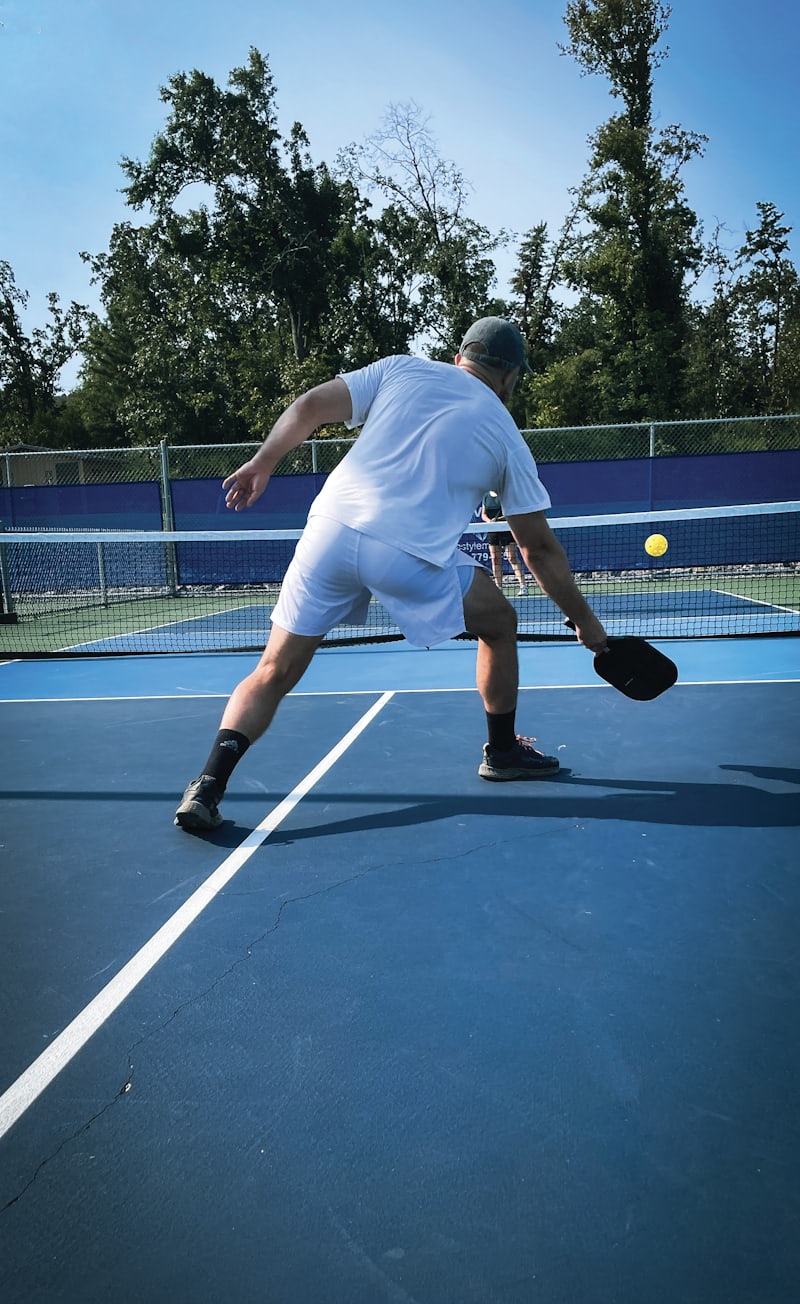
Hitting a good, deep return is only half the job. The moment the ball leaves your paddle, you need to start moving forward toward the non-volley zone line — not standing still to admire the shot, and not staying parked at the baseline out of habit.
This matters because of basic court geography: pickleball is won and lost at the kitchen line, where both teams eventually want to be to control the net exchange. The serving team is already working toward that line via their third shot drop. If you stay at the baseline after your return, you're voluntarily giving up the same positional advantage they're trying to earn — and by the time you do decide to move up, they may already be set at the net while you're still in transition, which is the most vulnerable position on the court.
Practical mechanics: split-step as the serving team makes contact with their third shot, so you're balanced and ready to react rather than caught mid-stride. Advance in a few controlled steps rather than sprinting flat-out, since a player charging forward off-balance is easy to wrong-foot with a well-placed drop or a body shot. The goal is to arrive at the kitchen line under control, at roughly the same time the point transitions into the dinking phase — not necessarily before the serving team gets there, but not noticeably after them either.
Two mistakes that account for most bad returns
Returning too short. This is the single most common return error, and it usually comes from one of two habits: swinging too hard and misjudging the pace, or trying to angle the return sharply crosscourt instead of hitting a simple, deep shot down the middle or to the backhand. A short return is a gift — it lets the serving team approach comfortably and often skip straight to an aggressive third shot rather than needing the rescue shot the rules are structurally designed to force out of them. If you only fix one thing about your return game, fix this: prioritize a shot that clears deep, even if it means taking some pace off.
Standing too close to the baseline (or inside it). Covered above, but worth repeating as a standalone mistake because it's so common and so easy to fix: it's simply a matter of habit and confidence, not skill. Newer players often crowd the baseline because it feels more active or aggressive, without realizing it makes the return of a deep, well-placed serve significantly harder to execute cleanly. Reset your habit to a foot or two behind the baseline as a default starting position, then adjust forward only when you actually see a short serve coming.
A close cousin of both mistakes: freezing after contact. Even a good, deep return does nothing for your positioning if you stand at the baseline admiring it instead of transitioning forward. Treat the return and the move to the kitchen line as one continuous sequence, not two separate decisions.
Adjusting your return against a drive serve vs. a spin serve
Not every serve asks the same question, and your return should adapt accordingly.
Against a drive serve — flat, low, hard, and deep — your job is largely about timing and stability rather than generating your own pace. A hard, flat serve already has plenty of pace on it; you don't need to add much of your own. Focus on a stable, compact swing, take the ball at a comfortable height on the rise or just after the peak of the bounce, and redirect its existing pace back deep rather than trying to overpower it. Rushing your swing to match the serve's speed is a common way drive-serve returns sail long or catch the frame — a shorter, more controlled stroke that uses the incoming pace is far more reliable than a big, hard swing of your own.
Against a spin serve — topspin that kicks up off the bounce, or slice/underspin that skids low — the return challenge shifts from pace management to contact-point management. A topspin serve tends to jump up higher and faster than it looks, pushing your comfortable strike zone up and out; letting the ball rise a beat longer than you would against a flat serve, and meeting it slightly later, helps you catch it in a more controllable spot rather than getting jammed by the extra bounce. A slice or underspin serve does close to the opposite — it stays low and skids, so you often need to bend your knees and get your paddle down to the ball's actual height rather than swinging through where a flat serve would have been. In both cases, resist the urge to match the incoming spin with your own aggressive swing; a slightly more compact, controlled stroke that just neutralizes the spin and sends the ball back deep is more reliable than trying to overpower an already unpredictable bounce. Recognizing which serve is coming — watching the server's paddle angle and swing path in the split second before contact — matters more on spin serves than on drive serves, since the correct adjustment (later contact for topspin, lower contact for slice) depends entirely on reading it correctly.
Where to go next
Once your return is reliably deep and you're getting to the kitchen line without hesitation, the next skill that compounds fastest is what happens once you're there — dink patience, when to speed up, and how not to give away the point you just worked to get into. Our pickleball dinking strategy guide and strategy basics guide both cover that next phase. And if you haven't yet, it's worth reading the serving side of this exchange in our how to serve guide — understanding what a good server is trying to do to you is half of knowing how to beat it.
Sources
This guide is written and fact-checked against official USA Pickleball instructional content and the two-bounce rule mechanics laid out in our own pickleball rules guide, plus established pickleball coaching outlets covering return-of-serve technique:
- USA Pickleball — Rules Summary (two-bounce rule)
- USA Pickleball — Pickleball Fundamentals For Beginners
- USA Pickleball — Official Rulebook (current edition, PDF)
- The Dink Pickleball — Pickleball Serving Strategy: Spin, Speed & Depth Tips
- Sarah Ansboury Pickleball Academy
Ready to put this return to work? The Court Scout maintains a verified directory of pickleball courts across the US — every venue confirmed against a primary source, with real Google ratings, real hours, and honest cost info. Find courts near you and get some reps in.